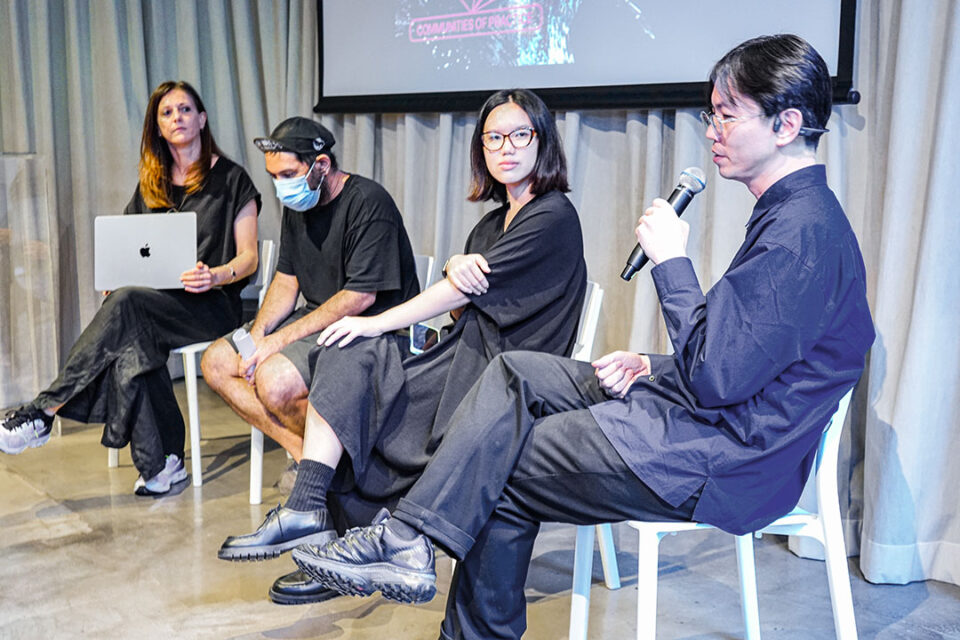
Coastal communities and island populations, such as those in Singapore and Bintan, are increasingly vulnerable to the impacts of climate change, particularly sea level rise. Coral reefs play a critical role as natural breakwaters, aiding to defend against coastal erosion. However, their survival is threatened by the implications of Singapore’s urbanisation on Bintan —through economic and touristic development—, alongside overfishing, rising sea temperatures, and the potential runoff impacts of industrial developments such as petrochemical plants. The lecture opens with a presentation by Professor Ute Meta Bauer (School of Art, Design and Media, NTU) on sea-based livelihoods in the Riau Archipelago and features lectures by coral restoration diver Rudi (Bintan Black Coral Dive) and Associate Professor Peter Todd, (Experimental Marine Ecology Laboratory, NUS; Director, Tropical Marine Science Institute, NUS) , with a response by Dr Karenne Tun (Director, Coastal and Marine Branch, National Biodiversity Centre, NParks) and moderated by Associate Professor Laura Miotto (School of Art, Design and Media, NTU). The session explores current coral restoration projects initiated by Rudi in Bintan, including nature-based solutions, highlighting their significance for coastal communities reliant on reef coastlines for their livelihood. Returning to urban Singapore, Associate Professor Todd will discuss eco-engineered seawalls that function as surrogates for natural habitats, supporting coral growth while simultaneously serving as coastal defense structures against rising tides.
Tuesday Lecture
26 August 2025, 6:30pm – 8:00pm
The Hall, NTU CCA, Blk 6 Lock Road, #01-10 Gillman Barracks, Singapore 108934
The Climate Transformation: Sustainable Societies Series is organised by members of the Climate Transformation Programme (CTP) Cross-Cutting Theme 1: Sustainable Societies research team, Senior Principal Investigator Professor Ute Meta Bauer, research fellow Joshua Vince Gebert, research associate Ng Mei Jia and research assistant AngelaRicasio Hoten.
Sustainable Societies
Senior Principal Investigator, Professor Ute Meta Bauer (NTU ADM)
Principal Investigator, Associate Professor Laura Miotto (NTU ADM)
Principal Investigator, Professor Dr Thomas Schroepfer (SUTD)
This Lecture Series is supported by the Singapore Ministry of Education Academic Research Fund Tier 3 grant [MOE-MOET32022-0006] for the Climate Transformation Programme.
Centered around the theme of biocultural worlding, these keynote lectures will explore the processes that shape our understanding of the world through the deep interconnections between cultural and biological life. Dr Lisa Onaga, Senior Research Scholar at the Max Planck Institute for the History of Science, will reflect on the intersections of biological materiality, cultural practice, and the authorship of knowledge. Curator and researcher Dr Margarida Mendes will explore the concept of worlding from the ocean point of view. This lecture foregrounds ecosystemic, political and ontological relations across aquatic realms. It introduces ongoing research and activism on ecoacoustics, deep sea mining, and remote sensing, proposing how different modes of ocean monitoring may contribute to plural oceanic worldings and alliances in the making. Together, their lectures will illuminate how Biocultural Worlding unfolds across land and sea, and how attending to these entanglements opens new ways of imagining collective futures in times of environmental and epistemic loss.
22 September 2025
6:30pm – 8:00pm
The Hall, NTU CCA Singapore
What is ‘Worlding’ in Biocultural Worlding? is supported by CLASS JOINT NTU-ANU NTU-KCL CONFERENCE, SYMPOSIUM, AND WORKSHOP SCHEME.
NTU Centre for Contemporary Art Singapore (NTU CCA Singapore) presents the two-part research presentation Climate Crisis and Cultural Loss. First unfolding at TBA21–Academy’s Ocean Space in Venice, Italy, the research inquiry later materialises in another configuration at ADM Gallery, a university gallery under the School of Art, Design, and Media (NTU ADM) at Nanyang Technological University Singapore.
This twofold exhibition marks the conclusion of the eponymous research project led by Principal Investigator Ute Meta Bauer at NTU ADM. The inquiry started by asking: how has the slow erosion of diverse, multicultural, and more-than-human ways of living over time impacted the environments in which we live, and what are the longer-term consequences on habitats? Can we begin again with culture, to induce a necessary paradigm shift in the way we think about and respond to the climate crisis? Extending connections and conversations seeded during the inaugural cycle of TBA21–Academy’s The Current fellowship programme led by Bauer from 2015 to 2018, Climate Crisis and Cultural Loss continues to build archipelagic networks across the Alliance of Small Island Developing States, deepening existing collaborations with Oceania Centre for Arts, Culture and Pacific Studies in Fiji, and developing new ones further in the South Pacific Ocean, through the art and media non-profit organisation Further Arts in Vanuatu.
Bridging conversations from the Pacific to Singapore in the Riau Archipelago, former fellows of TBA21–Academy’s The Currentand current research collaborators artist Nabil Ahmed, social anthropologist Guigone Camus, artist Kristy H.A. Kang, legal scholar Hervé Raimana Lallemant-Moe, and artists Armin Linke and Lisa Rave, join Singapore-based researchers Co-Investigator Sang-Ho Yun and Denny Chee of the Earth Observatory of Singapore – Remote Sensing Lab (EOS–RS) and the Asian School of the Environment, NTU ADM research staff Soh Kay Min and Ng Mei Jia, historian Jonathan Galka, and community organiser Firdaus Sani, as they explore the impacts of extreme weather, rising seas, climate displacement, ocean resource extraction, and the disappearance of material cultural traditions, occurring across what the visionary Pacific thinker Epeli Hau’ofa has termed “our sea of islands.” Featuring interviews, data visualisations, documentation, writings, and artisanal crafts made in collaboration with or generously gifted to the research team by knowledge bearers, community leaders, scientists, scholars, and artists, including writer and curator Frances Vaka’uta, masi artist Igatolo Latu,human rights defender Anne Pakoa and anthropologist Cynthia Chou, the exhibitions present the rich, complex, and multi-layered research findings accumulated over three years, since the Climate Crisis and Cultural Loss project first started in 2021.
At TBA21–Academy’s Ocean Space, the Climate Crisis and Cultural Loss research inquiry sits adjacent to the exhibition Restor(y)ing Oceania, comprising two new site-specific commissions by Latai Taumoepeau and Elisapeta Hinemoa Heta. Curated by Bougainville-born artist Taloi Havini, whose curatorial vision is guided by an ancestral call-and-response method, the exhibition materialises as a search for solidarity and kinship in uncertain times, in order to slow down the clock on extraction and counter it with reverence for the life of the Ocean.
At ADM Gallery, Climate Crisis and Cultural Loss is presented alongside the companion show Sensing Nature, curated by Gallery Director Michelle Ho. The exhibition showcases artists representing diverse disciplines, each offering their interpretation of the natural world and its intersection with urban life. Through reflection and experimentation, these works invite viewers to reassess our perceptions and behaviors toward the environment and phenomena beyond human influence. They advocate for a renewed understanding of society’s connection to nature and the land.
Climate Crisis and Cultural Loss is supported by the Ministry of Education, Singapore, under its Academic Research Fund Tier 2 grant. The research presentation at Ocean Space coincides with the 60th International Art Biennale in Venice, Italy, with public programmes taking place through the exhibition durations in both Venice and Singapore.
Opening Dates
Ocean Space exhibition preview:
March 22, 6pm
Ocean Space, Venice, Chiesa di San Lorenzo Castello
Opening hours
March 23–October 13, 2024: Wednesday to Sunday, 11am–6pm
Ocean Space
Chiesa di San Lorenzo Castello 5069, Venice
April 12–May 24, 2024: Monday to Friday, 10am–5pm
ADM Gallery
81 Nanyang Drive, Singapore 637458
In recent years, climate change has triggered alarming environmental scenarios in the region. Artists and climate activists have reacted to these circumstances by proposing methods to create awareness and navigate the environmental collapse. This research project aimed to identify artistic inquiries focused on addressing environmental challenges in South, Southeast Asia and the Pacific. By establishing a methodology to evaluate the significance and impacts of each inquiry, it will investigate the capacity of these art projects to deepen the understanding of the effect of accelerated climate change in the aforementioned regions. This project aims to foster a dialogue between artistic forms of knowledge production and the scholarly knowledge generated by scientific practitioners engaged in climate change matters. This research project generated the Environmentally-Engaged Artistic Practices in South, Southeast Asia and the Pacific Database, with over 100 datasets of artistic research projects that are engage in environmental challenges spanning over 20 territories, it offered a first touchpoint for researchers to engage with artists that align across similar themes. This open database, was launched at the eponymous ‘Environmentally-Engaged Artistic Practices’ two-day symposium that took place during Singapore Art Week. Hosted at the NTU Centre for Contemporary Art Singapore, this symposium brought together local and regional artists, scientists, engineers, historians and climate initiatives to discuss the potential and possibilities of transdisciplinary and cross disciplinary collaborations geared towards climate and environmental aware inquiries and solution finding.
Research Outputs
Environmentally-Engaged Artistic Practices in South, Southeast Asia and the Pacific Database
Environmentally-Engaged Artistic Practices in South, Southeast Asia and the Pacific Symposium
Publications
Min, S.K. (2024). Telemetric Feeling in Tita Salina and Irwan Ahmett’s The Ring of Fire (2014–Present). Southeast of Now: Directions in Contemporary and Modern Art in Asia 8(1), 67-89.
This project examines how climate crisis and cultural loss interconnect. The core objective is the co-production of knowledge that can lead to a changed understanding of environmental justice, which, in turn, will suggest changes in existing legal and policy frameworks. The project hypothesises that a fundamental connection between people and their environments has been lost in contemporary urban contexts, resulting in feelings of indifference towards the climate crisis or unexplained feelings of climate anxiety.
It deploys a research team with transdisciplinary methods to build on emerging environmental jurisprudence in the Pacific region and produce narrative visualisations demonstrating the links between cultural loss and climate change. By combining scholarly knowledge with cultural and artistic practices, the project will develop an innovative framework for addressing the impact of accelerated climate change. Using tools from visual studies and forensic architecture, from ethnography and law, to make scientific evidence on climate change socially robust and impactful, it will also create a relay between local perspectives and knowledge generated in different academic fields. Data visualisation and audiovisual presentations of ecological and cultural loss will be instrumental to transform ecological grief and loss into catalysts for climate action. Such narrative visualisations make visible the necessity to re-establish a direct relation between human societies and the environment, especially in the rapidly-changing urban fabric of a metropolis like Singapore.
Research Outputs
Climate Crisis and Cultural Loss Research Presentation, 23 March–13 October 2024, TBA21-Academy Ocean Space, Venice, Italy
Climate Crisis and Cultural Loss Research Presentation, 12 April–24 May 2024, ADM Gallery, 81 Nanyang Drive, Singapore
Special Issue: Climate Crisis and Cultural Loss (Vol. XXVII, 2024), Comparative Law Journal of the Pacific (CLJP), Victoria University of Wellington
Research Publications:
Ahmed, N., Bauer, U. M., & Lallemant-Moe, H. R. (2024, October). Introductions to Cultural loss and climate change. Comparative Law Journal of the Pacific, Special Issue: Climate Crisis and Cultural Loss.
Ahmed, N., Camus, G., Lallemant-Moe, H. R., & Rave, L. (2022, November). Cultural loss and climate change – A new field of research. Comparative Law Journal of the Pacific, 28.
Soh, K. M. (2024, May). Monsoon equinox. Issue 13: Weather. LASALLE College of the Arts.
Shaleh, A. (2024, October). Linking the commons and climate change to collective actions. Comparative Law Journal of the Pacific, Special Issue: Climate Crisis and Cultural Loss.
This talk looks at the Non-Aligned exhibition as a speculative point-of-view on the past that suggests that the capacity to imagine new or other futures emerges only from an embodied encounter with disappointment. Taking this as a point of departure, Dr Roy will discuss the figurative and formal legacies of “Third World Man” as a way of engaging the historiographical and artistic strategies of the works on view, and their evocation of image-based temporalities that survive the episode of postcolonial closure.
BIOGRAPHY
Dr Tania Roy is Senior Lecturer, and Chair of the Graduate Programme, in English Literature at NUS. She is the author of Adorno and the Architects of Late Style in India: Aesthetic Form after the Twentieth-century Novel (Routledge, 2020). At NUS, she teaches topics in Critical Theory, especially the aesthetics of the Frankfurt School, trauma studies, postcolonial and world literatures. Related interests on art after the liberalization of the Indian economy considered, especially, as a response to civic violence under the current dispensation of far-Right supremacism, have appeared as book-chapters and articles in journals, including, boundary 2, Theory, Culture and Society, Political Culture, The European Legacy, and The Journal of French and Francophone Philosophy.
This special issue strings together authorial perspectives from across disciplines and geographies that are concerned with topics at the nexus of the climate crisis and the links to cultural loss. This issue points to the needed legal approaches within the wider context of the Pacific. Writers include researcher Jake Atienza, artist Stefano Cagol, art critic and curator Maria Chiara Wang, law scholar Johanna Gussman, researcher Shabana Khan, climate advisor Renard Siew, computer scientist Nova Ahmad, and artist-activist Yoon Sun Woo.
Edited by Professor Nabil Ahmed, Professor Ute Meta Bauer, and Dr Herve Raimana Lallemant-Moe, assisted by Research Fellow Dr Adha Shaleh.
We thank the Editors-in-Chief Sage Yves-Louis and Tony Angelo.
This special issue is supported by the MOE AcRF Tier 2 Award, led by Principal Investigator Professor Ute Meta Bauer, with Research Associate Soh Kay Min, Research Assistant Ng Mei Hia, and Research Fellow Dr Adha Shaleh.
Journal on handwoven pandanus mat gifted by Further Arts, Vanuatu.
NTU Centre for Contemporary Art Singapore is pleased to announce the launch of STAR Residencies (Science, Technology, Art & Research), a new residency programme aimed at fostering the cross-pollination between artistic and scientific research. Through partnerships with select NTU research institutes, STAR Residencies embeds artistic residencies at the core of the University, creating a unique opportunity for exchange between artists and academic researchers. A pioneering programme in the context of Singapore and Southeast Asia, STAR Residencies stems from NTU CCA Singapore’s decade-long expertise in developing innovative platforms for knowledge making, creative experimentation, and transdisciplinary collaborations.
For its inaugural cycle, STAR Residencies unfolds in partnership with NTU Earth Observatory of Singapore (EOS), a research institute of Nanyang Technological University dedicated to the scientific observation of the forces that shape our changing planet. Regarded as a leader on a broad spectrum of geosciences in the Asia-Pacific region, EOS gathers critical data and develops vital knowledge about geohazards, climate change, and their impact on human societies. This collaboration expands Centre’s long-standing research on Climates.Habitats.Environments. and its continued commitment to critical artistic practices that engage with ecological complexities, climate change, and sustainability to advance the collective awareness of planetary interconnectedness in times of environmental distress.
The artists participating in the first iteration STAR Residencies are: Ng Hui Hsien, The Observatory (Dharma, Cheryl Ong, Yuen Chee Wai), and Zarina Muhammad. They were selected from a pool of 19 candidates (nominated by experts in the field) by a Selection Committee composed of: Dr Karin Oen, Director, NTU CCA Singapore, Senior Lecturer and Head of Department, Art History, NTU School of Humanities; Lauriane Chardot, Assistant Director, Community Engagement, Earth Observatory of Singapore, NTU; and Haeju Kim, Senior Curator and Head of Residencies, Singapore Art Museum.
The first cycle of STAR Residencies takes place from April 2025 to March 2026. Within the programme’s framework, artists are granted unprecedented access to processes and methodologies of fundamental scientific research, state-of-the-art laboratories, data sets, and extensive international networks, being provided with the exceptional opportunity to immerse themselves in EOS’s dynamic scientific community wherein they can expand their intellectual horizon, explore ideas, forge new means of artistic inquiry, and engage creatively with Earth systems and ecological complexities. The programme will conclude with an exhibition in March 2026 that will showcase the research projects developed during the residency. In the words of Karin Oen, “STAR Residencies mark an important new chapter for NTU CCA Singapore in which the intersections of artistic and scientific research can thrive with the support of the broader academic community at NTU.”
With creative practices that span photography, performance, installation, and sound, the artists will conduct independent research on a variety of Earth systems, interweaving different bodies of knowledge in aesthetic outcomes that foster the awareness of ecological interconnectedness and of the complexity of human relation to nature. Drawing on her background in ethnography, Ng Hui Hsien intends to complement the scientific strategies used to evaluate environmental changes and geohazards with indigenous ecological knowledge shaped by lived experience, oral traditions, and direct observation, creating evocative insights into practices of ecological coexistence. The Observatory will expand their engagement with subterranean phenomena and geological formations. Deepening their understanding of the volcanic arcs that shape Southeast Asia and of the processes of rock formation, they will develop a project that resonates from deep time to contemporary existence. Driven by a process-led and constellatory approach to collaboration, Zarina Muhammad will engage with different scientists to expand epistemic frameworks for ecological witnessing, looking at weather formations, underwater ecologies, polycosmologies and the interdependency of environmental knowledge systems.
STAR Residencies is developed and curated by Dr Anna Lovecchio, Curator, NTU CCA Singapore.
DESIGN EARTH‘s latest project is a series of fables that addresses the elephant in the room—the climate crisis—by animating charismatic figures from natural history museums. This design research identifies and leverages figures from the collections all while unsettling the museum apparatus—the devices, archives, histories, and audiences. Some such figures include a taxidermy of an African matriarch elephant, the skeleton of a stranded blue whale, and a composite structure of a Diplodocuscarnegii. The fragmentary remains of such creatures are animated, brought back to life, so to speak in rhyming verse, colorful imagery, and with some poignant humor. These speculative afterlives stir up potent trouble on the breath-taking capture of life in the Anthropocene to ask how cultural institutions may be responsible to calls for decolonisation and decarbonisation. In Singapore, this hands-on, participatory workshop will focus on the cultural prehistory, present, and speculative futures of the Singapore saltwater (estuarine) crocodile and the Malayan tiger. Facilitated by Rania Ghosn, El Hadi Jazairy, and DESIGN EARTH team member Kelly Koh. Beginning with the Artist Talk on 13 June, participants will engage in DESIGN EARTH creative methodologies including site visits and the building of a research archive while looking into the facts and fictions of these creatures and their homes.
For registration, please visit here.
Join DESIGN EARTH co-founders and co-directors Rania Ghosn and El Hadi Jazairy for their first presentation in Singapore, where they will share insights into their collaborative research practice centred on the speculative architectural project as a mode of making the climate crisis public. Their design research brings together spatial history, geographic representation, projective design, and material public assemblies to speculate on ways of living with legacy technologies on a damaged planet. Recipients of the United States Artist Fellowship and the Architectural League Prize for Young Architects and Designers, among other honors, Ghosn and Jazairy have made a practice of telling complex and unwieldy stories of the Earth. Learn more about their ongoing explorations of visual and spatial storytelling.
Friday, 13 June 2025
6:30 – 8:30 pm
The Hall, NTU CCA Singapore
6 Lock Rd, #01-09/10 Gillman Barracks 108934
Free registration here.
Over the past decade, deep-sea minerals like polymetallic nodules containing copper and cobalt have gained attention as a potential resource for green energy technologies such as batteries, computers, and electric cars. Found mainly on the international seabed, these nodules are regulated by the International Seabed Authority (ISA), which will finalize a mining code in 2025 that determines future deep-sea exploration and exploitation. Following Singapore’s Deep-Sea Mining Act of 2015, Ocean Mineral Singapore, a subsidiary of Keppel Offshore and Marine conducted two deep-sea expeditions to the Pacific Ocean. While some argue this extraction is crucial for the green transition, Pacific nations warn of its harmful impact on marine biodiversity and climate change.
This lecture will explore the environmental and societal implications of deep-sea mining, starting with a screening of the film Blue Peril, 2022 (INTERPRT / Professor Nabil Ahmed, Deep Sea Mining Campaign & Ozeanian Dialog), a science-based visual investigation using architectural and spatial analysis to model the potentially irreversible effects of deep-sea mining in the Pacific Ocean. Paired with testimonies from Pacific Island communities, this film addresses the impacts on their economies and ways of life. Afterward, Tara Maria Davenport (Assistant Professor, Faculty of Law, National University of Singapore and Deputy Director, Asia-Pacific Centre for Environmental Law) and Jonathan Galka(PhD Candidate, History of Science Department, Harvard University) will discuss the historic mining code and its future impact on resource extraction, drawing from legal, historical, and community perspectives.
Tuesday Lecture
10 December 2024, 6:30pm – 8:00pm
The Hall, NTU CCA Singapore
Blk 6 Lock Road, #01-09
Gillman Barracks, Singapore 108934
Today, a growing number of social interactions, economic transactions, political engagements, and affective relations are enabled and regulated by a global network of online platforms operated through algorithms. As algorithmic infrastructures become enmeshed in the fabric of society, more and more aspects of everyday life are being captured and released in data streams that feed digital entities unilaterally coded and controlled by profit-driven tech companies. Through extensive online and offline fieldwork conducted across the Global North and the Global South, Tiziano Bonini and Emiliano Treré—co-authors of Algorithms of Resistance. The Everyday Fight Against Platform Power (The MIT Press, 2024)—ventured into uncharted alghoritmic territories. They encountered forms of agency, practices of resistance, and bonds of solidarity enacted by users who negotiate their own terms of existence within the platform regime. In this lecture, the speakers will reflect on how grassroots practices can spark emancipatory frictions that reinvent and disrupt the uneven power relation between users and platforms.
This event is generated by bani haykal within Communities of Practice. Techno Diversions, a research programme that aims to propel a transformative understanding of technology through artistic practices and transdisciplinary synergies.
Lecture & Screening of Kimi Takesue’s film That Which Once Was (2011)
Low-lying islands, including Singapore, are increasingly exposed to the risks of sea level rise caused by multiple factors, including the rapid melting of ice at the two poles. This event explores the diverse impacts of climate change, such as displacement. In Kimi Takesue’s fictional film, That Which Once Was, that takes place in 2032, an eight-year old boy from the Caribbean, is coming to terms with a new life in a harsh northern climate. Haunted by memories of the flooding that left him homeless and orphaned, he forms a bond with an Inuk ice carver, likewise displaced, who helps him confront his past. Kim Hie Lim (Associate Professor, Asian School of Environment, and Singapore Centre for Environmental Life Sciences Engineering) will introduce the history of forced migration, already caused by rising sea levels, overlaying data on physical landscapes with genomic data in order to trace gene flow from Southeast Asia to South Asia. Followed by a conversation between film director Kimi Takesue, Assistant Professor Kim Hie Lim and Professor Ute Meta Bauer (Professor, School of Art, Design, and Media, Nanyang Technological University and Senior Principal Research Fellow, NTU Centre for Contemporary Art Singapore).
Tuesday, 18 March 2025
6:30pm – 8:30pm
The Hall, NTU CCA Singapore
Free admission. Register here.
This event is part of The Cross-Cultural Gaze: A Retrospective of Kimi Takesue’s Films curated by Dr Ella Raidel (Assistant Professor, School of Art, Design and Media, NTU) with the support of NTU CCA Singapore and Women@NTU.
Kimi Takesue’s retrospective is a special segment of the programme Look / See: The Female Gaze in Cinema (7 – 30 March 2025) organised by Asia Film Archive to celebrate International Women’s Day.
Find out about Kimi Takesue’s other talks and screenings through the link below.
The first iteration of NTU CCA Singapore’s new research platform, Communities of Practice. Techno Diversions convenes three Singaporean artists—Chok Si Xuan, bani haykal, and Ong Kian Peng—whose practice engage with the material, cultural, and emotional layers of technology, its evolving role in contemporary life, and the complexity of our relation to it. As a multidimensional platform that entwines artistic research, experimentation, and the formation of communities across shared interests, Techno Diversions aims to propel a transformative understanding of what technology is through the lens of artistic practices that pursue the renewal of our agency within the technosphere and the re-enchantment with its tools. In an increasingly techno-driven society, these artists embrace the urgency to think critically about the conceptual parameters and material manifestations of technological progress charting new paths of significance by creative acts of repurposing, disrupting, and re-envisioning commonly accepted ideas and existing devices.
As participants in the programme, the artists are offered a five-month residency at the NTU CCA Singapore Research Centre from October 2024 to February 2025 and the agency to shape a research framework in ways that are conducive to the advancement of their practice. The research framework may entail seminars, screenings, peer-oriented sessions, workshops or other programmes engaging interlocutors from various fields. Oriented towards the production and circulation of knowledge, these gatherings will be organised in close collaboration with the participating artists with the goal to unravel their aesthetic inquiries while also catalysing communities and propelling public discourse around the subjects and methodologies of their research.
The programme will culminate with the production of new artworks that will be presented in an exhibition at NTU CCA Singapore during the Singapore Art Week 2025 (17 – 26 January 2025).
Communities of Practice. Techno Diversionsis curated by Dr Anna Lovecchio, Curator, Programmes.
About Communities of Practice
Conceived as seedbed for experimentation, Communities of Practice is a shapeshifting research platform that brings forth communities at the intersection of artistic practices. Holding a communal space where artistic research can develop through interdisciplinary collaborations, exchanges, and processes of co-creation, Communities of Practice situates NTU CCA Singapore within the research-driven core of Nanyang Technological University by configuring the Centre as an interdisciplinary body and advancing its role as convener, capacity builder, and leading-edge incubator in the arts sector.
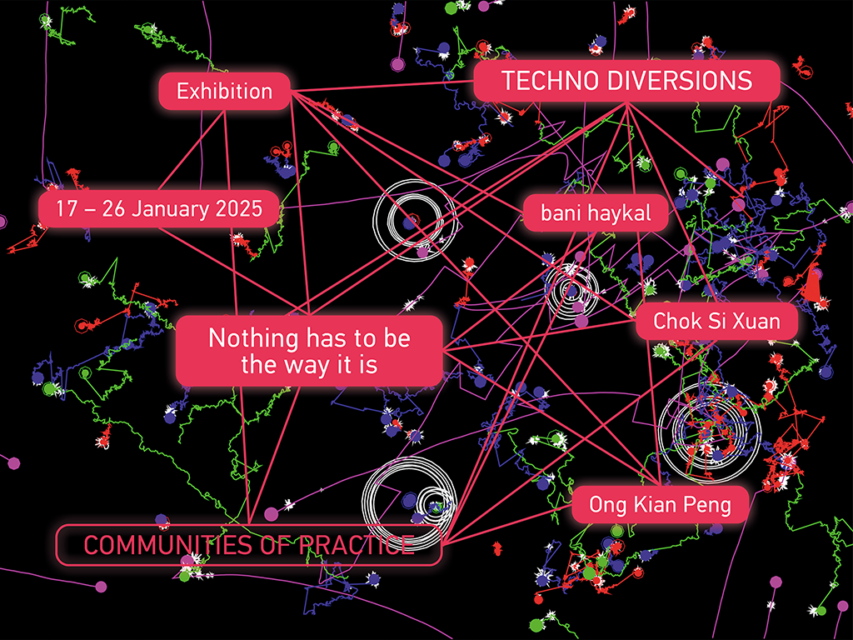
Exhibition from 17 to 26 January 2025
NTU Centre for Contemporary Art Singapore is pleased to present Nothing has to be the way it is, an exhibition featuring the artistic propositions created by Chok Si Xuan, bani haykal, and Ong Kian Peng as part of their involvement in Communities of Practice. Techno Diversions, a five-month programme curated by Anna Lovecchio that interlaces artistic research, transdisciplinary encounters, and the formation of communities around shared interests to propel transformative understandings of technology.
The uncanny symbiosis between humans and the digital devices, interactive interfaces, online platforms, and global infrastructures that increasingly operate our lives is a defining feature of contemporary society. In these wired times of machine intelligence and computational acceleration, microchip wars and platform powers, the artworks featured in this exhibition cast a sideway look at techno-driven progress. Moving across different conceptual frameworks and a multiplicity of mediums, Chok Si Xuan, bani haykal, and Ong Kian Peng share a common investment in reclaiming agency within the technosphere. They divert, possess, possibly disrupt the undisturbed existence of technological artefacts through gestures that question the escalation of technological sovereignty and, ultimately, the role of technology in our lives. Purposefully, these artists do not position themselves at the edge of advanced technologies. Rather, they interfere with existing apparatuses and instil into them worldviews other than those that originally brought them about. The systems they envisioned proceed by appropriations and approximations, frictions and forays, scrambled codes and enigmatic conjectures. In the essay “It Doesn’t Have To Be the Way It Is” which inspired the title of this exhibition, Ursula K. Le Guin remarks that the subversive power of the imagination “gnaw(s) at the very foundation of the belief that things have to be the way they are”. Nothing has to be the way it is hints at the endless permutations of how things can be.
Nothing has to be the way it is will take place in The Hall, NTU CCA Singapore’s programme space nestled at the heart of the Research Centre and launched in September 2024. This event marks the first time The Hall hosts a group exhibition, bringing home the Centre’s longstanding commitment to dwell upon and experiment with the spaces of the curatorial.
As participants in Communities of Practice. Techno Diversions, Chok Si Xuan, bani haykal, and Ong Kian Peng are conducting a residency at NTU CCA Singapore from October 2024 to February 2025. Revolving around critical engagements with the material, political, and spiritual layers of technology and the complexity of our relation to it, this multidimensional programme is a generative platform that provides artists with time, space, and resources to unravel their aesthetic inquiries and catalyse communities around their interests and creative processes.
The exhibition is couched between two series of public programmes— Empirical Workshops and the Transdisciplinary Lectures—developed in conversation with the artists themselves. Steeped in a do-it-yourself ethos, the Empirical Workshops took place in December 2024. Each workshop germinated by the artist’s own research and was aimed at creating knowledge through skill-sharing and the creative dabbling with raw materials. In Temporal Oscillations, Chok Si Xuan dived into the physics of circuitry and erratic electronics, teaching participants how to assemble common electronic components to modulate the flow of electricity and hijack standard systems of temporality. With METAL MACHINE MISCHIEF (or how to make noise music with bicycles), bani haykal took his workshop participants on an unconventional group ride. Through tinkering and drilling, cranking and whirring, discarded bicycle parts were assembled into unorthodox musical instruments activated in a final jam session that produced a one-of-a-kind audiovisual experience. Different wavelenghts resonated in Ong Kian Peng’s Natural Radio workshop where participants could explore a range of low frequency waves emitted by natural electromagnetic phenomena as a way to tune in to the inaudible voices of the environment.
Coming up in February 2025, the Transdisciplinary Lectures will bring the artists in conversations with philosophers, sociologists, scientists, and other creatives whose work significantly inspired them. Deepening the ramifications of their research in different disciplines, the Transdisciplinary Lectures will feature contributions by: Tiziano Bonini (Associate Professor, Sociology of Culture and Communication, University of Siena, Italy), Eugene Yew Siang Chua (Nanyang Assistant Professor of Philosophy, School of Humanities, NTU, Singapore), Lee Pooi See (Professor, School of Materials Science and Engineering, NTU, Singapore), Emiliano Treré (Beatriz Galindo Distinguished Professor, Language Theory and Communication Sciences, University of Valencia, Spain and Reader, Data Agency and Media Ecologies, Cardiff University, United Kingdom), and Boedi Widjaja (interdisciplinary artist, Singapore).
17 to 26 January 2025
Opening hours
Tuesday to Sunday, 12:00 – 7:00pm
Friday 24 and Saturday 25 January, 12:00 – 10:00pm
Closed on Monday
Curator Tours
Saturday 18 January, 3:00pm and 5:00pm
Artists Tour
Saturday 25 January, 3:00 – 4:00pm
The Hall
NTU CCA Singapore
Block 6 Lock Road, #01-09
Gillman Barracks, 108934
Part Of

by Chok Si Xuan, bani haykal, and Ong Kian Peng
What drives an artist to reconfigure the inner mechanisms of devices we have grown increasingly reliant upon? What acts of mobilisation can an artist perform within existing technological infrastructures to cultivate different types of cultural, social, and emotional agency? Can the artistic imagination interrogate the spiritual dimensions of technology and respond to escalating environmental crises determined by society’s current course of development?
In this joint talk, artists Chok Si Xuan, bani haykal, and Ong Kian Peng reflect upon how these and other similar questions have oriented recent developments in their practices. By addressing structural opacities and power structures, and by fostering an ecological understanding of the relation between humans and technology, their work illuminates some dark corners of fast-paced technological advancement and experiments with alternative forms of being within existing structures. Their research is currently unfolding within the framework of Techno Diversions, the inaugural iteration of NTU CCA Singapore’s research platform Communities of Practice.
Communities of Practice fosters interdisciplinary collaborations and the coming together of communities around shared interests. It situates NTU CCA Singapore as an interdisciplinary body within the research-driven core of Nanyang Technological University, advancing its role as convener, capacity builder, and leading incubator in the arts sector.
Saturday, 9 November 2024, 3.00 – 4.30pm
The Hall, NTU CCA Singapore
Block 6 Lock Road, #01-09
Gillman Barracks, 108934
EMPIRICAL WORKSHOPS
This workshop will introduce participants to natural radio. Natural radio is the emission of Very Low Frequency (VLF) and Extremely Low Frequency (ELF) radio waves due to electromagnetic energy from natural phenomena. These emissions originate terrestrially from lightning and from the Sun’s interactions with the Earth’s magnetosphere, they are among the inaudible voices of the environment. If the low frequencies of these electromagnetic outbursts are transformed into acoustic waves, many of these signals may fall within the range of human hearing. Experiencing electromagnetic waves as acoustic waves will allow listeners to connect with the beauty and complexity of natural radio waves in a unique aural experience.
By the end of the workshop, participants will be able to assemble an analogue handheld radio device that tunes in to natural radio frequencies.
Participants are encouraged to bring their own headphones with a 3.5mm audio jack, along with an optional audio recorder to capture and share their auditory discoveries.
This workshop is part of the Empirical Workshop Series of Communities of Practice. Techno Diversions.
This workshop is suitable for age 18 and above.
No prior knowledge of electronics is required.
Saturday, 21 December 2024, 2 – 5pm
The Hall, NTU CCA Singapore
Block 6 Lock Road, #01-09
Gillman Barracks, Singapore, 108934
METAL MACHINE MISCHIEF (or how to make noise music with bicycles) by bani haykal
“Riding bikes ain’t s#!+ without climate justice, without land back, without liberation of everybody”
Christina Torres, Cyclista Zine
The bicycle is more than just a means of transportation. In our increasingly car-centric and carbon-heavy lifestyle, cycling is a climate action that slows down the rate at which our planet is burning. Inspiring stories from Gaza have shown us how bicycles can be radically repurposed into washing machines, sewing machines, and even power generators.
In the first part of the workshop, participants will be offered a set of unused bicycle components gathered by artist bani haykal and they will be guided to devise and conceptualise new musical or sonic instruments with them. In the second part, these unorthodox instruments will be played in a group jam session!
Participants are encouraged to bring personal items such as mallets, drumsticks, clarinet mouthpieces, and/or any musical bobs and bits they can incorporate into the instruments.
This workshop is part of the Empirical Workshop Series of Communities of Practice. Techno Diversions.
This workshop is suitable for age 18 and above.
No prior knowledge or experience is required.
Saturday, 7 December 2024, 10:30am – 12:30pm
The Hall, NTU CCA Singapore
Block 6 Lock Road, #01-09
Gillman Barracks, Singapore, 108934
Temporal Oscillations. Electronics workshop led by artist Chok Si Xuan
This workshop will explore how to use common electronic components to modulate the flow of electricity, assemble and hijack standard systems of temporality. Participants will learn how a 555 timer integrated circuit (IC) forms an astable multivibrator. The 555 timer IC is a tiny chip found in many everyday devices—blinking LED lights, kitchen timers, alarm systems, sound makers, etc.—that modulates the frequencies of electrical signals. The term ‘astable’ means ‘not stable’ because the circuit never settles into a single state, is a basic electronic circuit that generates a continuous oscillating output, switching between two voltage levels.
Working with pre-assembled circuits created by artist Chok Si Xuan, participants will be able to experiment with various components (small motors, LED lights, and speakers, etc) as outputs. Exploring the transformation of different forms of energy—chemical energy from batteries, mechanical energy , kinetic energy and byproduct thermal energy, the workshop accesses materiality as a manner of understanding the fundamental ways systems unfold.
Through engaging with electronic circuits in a hands-on and accessible way, participants can expect to develop a direct understanding of some visible and less visible aspects that power everyday technology. Participants are encouraged to bring their own components for experimentation. These may include battery-operated toys, LED lights or small light strips, buzzers or small speakers, direct current (DC) motors, small fans, switches or buttons, old electronic parts like sensors or wires, and similar items.
This workshop is part of the Empirical Workshop Series of Communities of Practice. Techno Diversions.
This workshop is suitable for age 18 and above.
No prior knowledge of electronics is required.
Saturday, 7 December 2024, 10:30am – 12:30pm
The Hall, NTU CCA Singapore
Block 6 Lock Road, #01-09
Gillman Barracks, Singapore, 108934

Transdisciplinary Lectures
Presentations by Dr Eugene Chua (Singapore) and Boedi Widjaja (Indonesia/Singapore) followed by a conversation with ong kian peng (Singapore)
What is reality? The models we use to conceptualise the world are increasingly under scrutiny, reshaped by the ecological crises of our time and the revelations of quantum theories. Classical distinctions between humans, non-humans, and objects are dissolving as we zoom in at the quantum level, revealing a world of entanglements and uncertainties. This event brings together artist Boedi Widjaja, whose practice explores the intangible and ephemeral, and philosopher of physics Eugene Chua, whose work delves into the complexities of quantum mechanics. Their presentations will be followed by a dialogue moderated by artist ong kian peng. The panel will unfold some intersections of art, science, and philosophy, offering new perspectives on how we perceive, construct, and engage with reality. Through this exchange, the audience will be offered new lenses for understanding the world and reimagine their place within a dynamic, interconnected cosmos.
Wednesday, 12 February 2025
7 – 8:30pm
The Hall, NTU CCA Singapore
Block 6 Lock Road, #01-09
Gillman Barracks, Singapore, 108934
Lecture by Professor Pooi See Lee (Singapore), followed by a conversation with artist Chok Si Xuan (Singapore)
Will electronics become flexible and soft? As technological advances shrink systems and transition from hard robots to soft machines, how will this affect the way we understand and relate to the devices we interact with?
Professor Lee Pooi See, whose research delves into human-machine interface, hybrid materials for soft robotics, and nanostructures, will share about the influences and current trajectories of material sciences and human-machine interfaces articulating her insights into the future of a softer and smaller world of technology. In conversation with Chok Si Xuan, the scientist and the artist will discuss the implications of a world driven by mechanisms that escape human vision and they will exchange ideas about the relational qualities of interfaces and the rise of biomimicry in the realm of technological innovation.
This event is generated by Chok Si Xuan within Communities of Practice. Techno Diversions, a research programme that aims to propel a transformative understanding of technology through artistic practices and transdisciplinary encounters.
Wednesday, 19 February 2025
7 – 8:30pm
The Hall, NTU CCA Singapore
Block 6 Lock Road, #01-09
Gillman Barracks, Singapore, 108934
Algorithms of Resistance. Tracing tactics of agency and solidarity within platform society
Online lecture by Tiziano Bonini (Italy) and Emiliano Treré (Italy/United Kingdom) followed by a conversation with bani haykal (Singapore)
oday, a growing number of social interactions, economic transactions, political engagements, and affective relations are enabled and regulated by a global network of online platforms operated through algorithms. As algorithmic infrastructures become enmeshed in the fabric of society, more and more aspects of everyday life are being captured and released in data streams that feed digital entities unilaterally coded and controlled by profit-driven tech companies. Through extensive online and offline fieldwork conducted across the Global North and the Global South, Tiziano Bonini and Emiliano Treré—co-authors of Algorithms of Resistance. The Everyday Fight Against Platform Power (The MIT Press, 2024)—ventured into uncharted alghoritmic territories. They encountered forms of agency, practices of resistance, and bonds of solidarity enacted by users who negotiate their own terms of existence within the platform regime. In this lecture, the speakers will reflect on how grassroots practices can spark emancipatory frictions that reinvent and disrupt the uneven power relation between users and platforms.
This event is generated by bani haykal within Communities of Practice. Techno Diversions, a research programme that aims to propel a transformative understanding of technology through artistic practices and transdisciplinary synergies.
Wednesday, 26 February 2025
7 – 8:30pm
The Hall, NTU CCA Singapore
Block 6 Lock Road, #01-09
Gillman Barracks, Singapore, 108934
As an artist and musician, bani haykal (b. 1985, Singapore) experiments with language, sound, and fiction. His work revolves around human-machine relationships / intimacies, and cultural identity formations reflecting critically on how language, tools and technologies have shaped and continue to shape our life experiences. From interfaces to interactions, from fictions to frictions, from commuting to communicating, the creative output of his research often involves the creation of DIY tools and it encompasses site-responsive installations, poetry, and performance as well as publications and music releases. He has participated in various festivals and exhibitions including Busan Biennale (South Korea, 2024), Seeing Sound (touring exhibiton, 2023 -2027), The Rumbling In-between with ila (Jendela Visual Arts Space, Esplanade, Singapore, 2023), [Alternate / Opt] Realities, State of Motion (Singapore, 2021) among many others. He has been a member of several music bands including B-Quartet, Erik Satay & The Kampong Arkestra, and The Observatory.
Yan Jun (China) and Yuen Chee Wai (Singapore)
Time is still and we are in revolution
Live performance streamed through LCD screens, approx. 30 min.
Saturday, 16 September 2023
3:30pm – 4:15pm
NTU CCA Singapore Seminar Room
37 Malan Road, #01-04
Singapore 109452
Performance will start on time.
Admission is free on a first-come first-served basis.
Isn’t there a paradox in any revolution in that they circle back as they move forward? A revolving disc spins the two performers, together with their respective environments and audiences, at the same speed across vast geopolitical distances: an apartment in Bejing (Yan Jun) and former military barracks converted into artist studios in Singapore (Yuen Chee Wai). Set in a mysterious code, Time is still and we are in revolution is an experiment in remote improvisation made of electronics and vocals, cyclical contacts and recurring departures.
Time is still and we are in revolution results from an experimental working methodology developed by Yan Jun and Yuen Chee Wai. The first outcome of this ongoing collaboration, The Riddle of the Machine, was presented at the Trans-Southeast Asia Triennial Research Exhibition Series Review, Guangzhou, China, earlier in 2023.
BIOGRAPHIES
Yuen Chee Wai (Singapore) is a musician, artist, designer, and curator. Often inspired by perspectives glimpsed through the filmic eye and photographic lens, Yuen’s stylistic oeuvre in improvised music is marked by internalised reflections on memory and loss, invisibility and indeterminacy. His latest research interests are in mycology and caves. In 2008, together with Otomo Yoshihide (Japan), Ryu Hankil (South Korea), and Yan Jun (China), he formed FEN (Far East Network), an improvised music unit focusing on the multifaceted networks and collaborations between musicians and artists in Asian countries. He is also a member of The Observatory, in which he plays guitar, synth, and electronics. He tours extensively with FEN and The Observatory, and has presented at MIMI Festival, Lausanne Underground Music and Film Festival, All Ears Festival, Ftarri Festival, Gwangju Biennale and CTM Festival. Yuen was an Artist-in-Residence with NTU CCA Singapore in Cycle 8.
Yan Jun (China) is a musician and poet based in Beijing. His works involve electronics, feedback, site-specific installations, and noise. His improvisation sets follow the unstable relationship between microphones, speakers, the space and his body movement, to create subtle and unstable sound. He is a member of FEN (FarEastNetwork), Tea Rockers Quintet and Impro Committee, and has toured in the US, Australia, Europe and Asia. He has performed at Shanghai Biennale and received an honorary mention by Ars Electronica (Austria), and is the founder of Sub Jam label/organization. As a writer he has published and translated several books and poetry collections and attended the Rotterdam International Poetry Festival, and Berlin International Poetry Festival. Yan Jun was an Artist-in-Residence with NTU CCA Singapore in Cycle 2.
Tekla Aslanishvili (b. 1988, Georgia) is an artist, filmmaker and essayist based between Berlin and Tbilisi. Her works emerge at the intersection of infrastructural design, history and geopolitics.
Tekla graduated from the Tbilisi State Academy of Arts in 2009 and she holds a MFA from the Berlin University of the Arts – the department of Experimental Film and New Media Art. Aslanishvili’s films have been screened and exhibited internationally at PACT Zollverein, Neue Berliner Kunstverein, Baltic Triennial, Short Film Festival Oberhausen, Kasseler Dokfest, Kunsthalle Münster, EMAF – European Media Art Festival, Videonale 18, Tbilisi Architecture Biennial. She is a 2018–2019 Digital Earth fellow, the nominee for Ars-Viva Art prize 2021 and the recipient of the Han Nefkens Foundation – Fundació Antoni Tàpies Video Art Production Award 2020.
Committed to socially engaged practices, multi-disciplinary theatre practitioner Han Xuemei (b. 1987, Singapore) employs art as a tool for bringing communities together and engaging the audience in visceral and personal ways. In her practice, she creates spaces and experiences that incite participants to think outside the box of existing paradigms and articulate forms of hope and resistance. Since 2012, she is Resident Artist at the Singapore-based theatre company Drama Box. Her recent projects include the experiential installation FLOWERS (2019), the community project The Gift (2018), and the participatory experience Missing: The City of Lost Things (2018).
Alecia Neo develops long-term projects that involve collaborative partnerships with individuals and communities. Her socially engaged practice unfolds primarily through photography, video, and participatory workshops that address modes of mobility, reciprocity, caregiving, and well-being to explores issues of identity and the search for self. Her recent projects include a collaboration with the community engagement platform Both Sides, Now, Singapore (2019-2017); Touch Collection, Singapore Art Museum, and Personally Speaking, Objectifs (both Singapore, 2018-ongoing). She is the co-founder of Brack, a platform for socially engaged art. Neo was the recipient of the Young Artist Award in 2016. Between October 2019 to April 2020, she was an Artist-in-Residence at NTU CCA Singapore.
Lee Wen has been exploring different strategies of time-based and performance art since 1989. His project Malevich looks at the idea of going back to “square one”. Within his residency, Lee has focused on drawing and improvisation through music and performance and as an opportunity to revisit and revive past projects.
His recent concerns have revolved around the memory of Singapore’s art history through the initiation of the Independent Archive and Resource Centre documenting performance art and recent conversations with art historian and NTU visiting faculty, Nora Taylor have result in a wider discussion on how to remember performance art practices here.
Responding to the concept of The Making of an Institution, Maria Hlavajova will discuss the notion of “instituting otherwise” using BAK, basis voor actuele kunst, in Utrecht, an institution of which she is the founding director, as an example. Dedicated to thinking about, with, and through art, BAK engages in long-term research trajectories engaging with the urgencies that define our contemporary, including issues of social and environmental justice and the relevance of digital technologies. Hlavajova will draw upon her research within a number of interrelated projects she is involved with, including Former West (2008–2016) and Future Vocabularies (2014–ongoing), all the while exploring the shifts within our existing conceptual lexicon for artistic, intellectual, and activist practices.
Ibrahim Hamid is a comic artist who has been collaborating with artist Roslisham Ismail aka Ise since 2018. The works were shown at Campur, Tolak, Kali, Bahagi, Sama Dengan (Add, Subtract, Multiply, Divide, Equals) in 2021, at The Lab in NTU CCA Singapore.
Mary Otis Stevens (b.1928) is a pioneering American architect. Her architectural designs, along with the founding of i Press (1968-1978), an important publisher of books on architecture, urbanism, and social space, were linked to her ability to radically re-envision space and relationships. In the context of the Cold War and American political activism in the 1960s, her work, which were often in collaboration with her partner, fellow architect and i Press co-founder Thomas McNulty, revealed her foundational training in philosophy and her commitment to de-centralising hierarchies.
Binna Choi will research the Singapore art scene and the wider Southeast Asian region as represented in Singapore Biennale 2016 – An Atlas of Mirrors. She will give a public lecture on the relationship between artistic projects and social movements drawing from her recent collaborative projects The Grand Domestic Revolution and Composing the Commons and will share models of collaboration and self-organisation developed at Casco.
Ready, Steady, Go (2 — 8 August 2017)
Incidental Scripts (10 — 15 August 2017)
Proximities and Encounters (16 — 22 August 2017)
Islanded (23 — 31 August 2017)
Speakers’ Corner is a selection of video documentations of former public events and related research materials from its archives. Here, the term “Speakers’ Corner” stands as a metaphor for public discourses created through the various programmes of NTU CCA Singapore. Outreach not only means to create discussions but also to find different languages, or to question under what premises we create our knowledge. Altogether this is what creates a public discourse or a “speakers’ corner” within an institution, which can be academic, literary, or performative. It opens up the possibility for encounters with the known and unknown, the expected and unexpected, as a form of its lively activities.
NTU CCA Singapore’s public programmes reflect on our present world through culture and art. Unfolding over two months will be four chapters: Islanded, Incidental Scripts, Proximities and Encounters, and Ready, Steady, Go. Each chapter is related to an exhibition held at NTU CCA Singapore such as Incidental Scripts by Yang Fudong (2014) or SEA STATE by Charles Lim Yi Yong (2016), or to invited local and international Artists-in-Residence and their artistic research and practices like Heman Chong (2017) or Zac Langdon-Pole (2014). On a broader scheme, the events offer an expanded reading and understanding of the complexity and diversity of the contemporary art production of today and how it intersects with current developments in culture, society, and politics.
Amanda Heng has championed the representation of women within exhibitions in Singapore through examining notions of the female body through her performances, her work with WITAS (Women in the Arts Singapore) and through various artists’ initiatives in the early 1990s.Heng’s recent work is focused on the issues of history, memory, communication and human relationships in urban conditions.
On the occasion of the launch of the Digital Resource Platform, NTU CCA Singapore is presenting a selection of materials from Singapore’s Independent Archive (IA), a research and resource platform dedicated to time-based media, established by internationally-renowned artist Lee Wen (Singapore) in 2012. For the past six years, the IA captured the zeitgeist of performance art in Singapore and larger (South-)East Asia through artistic collaborations.
This presentation in The Lab is organised into five chapters —“Condition,” “Body,” “Formation / Gestalt,” “Absence,” and “Memory”—that look at the development of performance art as a new medium as well as its political conditions. Journey of a Yellow Man. takes visitors through the archive with photographs, videos, writings, sketchbooks, while simultaneously, introducing the digital archive. As of today, the Centre has digitalised 20,000 files from the IA.
The practice of Lee Wen is motivated by social investigations that use art to interrogate stereotypical perceptions of culture and society. He became famous for his performance series Journey of a Yellow Man (1992—), where he embodied his Chinese descent and its relationship to oppressive systems.
The presentation provides insight into a continuously expanding resource platform that highlights ephemeral moments in the history of performance art in Singapore. The project addresses the importance of providing historically significant source material for researchers and the wider public. The digitalised files will be integrated into NTU CCA Singapore’s Public Resource Platform and will be accessible at the Centre, the Independent Archive, and the Asia Art Archive, Hong Kong, a collaborative partner of this project.
With IA, a series of public programmes will take place in both The Lab at the NTU CCA Singapore and in the IA. The programme highlights IA as a “living archive” that not only serves as a reference library and archive focusing on time-based and event-specific art, but is also a gathering space that offers dynamic programmes in a vibrant network of artists, musicians, and the public.
Journey of a Yellow Man is curated by Sophie Goltz, Deputy Director, Research and Academic Programmes, NTU CCA Singapore, in collaboration with Lee Wen, artist and Founder, Independent Archive, Singapore, Bruce Quek, Research, Independent Archive, and Kamiliah Bahdar, Public Programmes, Independent Archive. Project Assistant: Ho See Wah, Young Professional Trainee, NTU CCA Singapore. Assistant to Lee Wen: Liu Wen Chao, Library, Independent Archive.
The NTU CCA Digital Resource Platform was initiated in 2016 by Ute Meta Bauer, Founding Director, NTU CCA Singapore, and Professor, NTU ADM Singapore and Lee Wen, in collaboration with Chương-Đài Võ, Researcher, Asia Art Archive, Hong Kong. Assistant to the project: Bruce Quek with the support of Samantha Leong Min Yu, Executive, Conferences, Workshops & Archive, NTU CCA Singapore (till May 2018), Corine Chan Li Ling, Executive Archive, NTU CCA Singapore (May to July 2018), and Pooja Paras Mehta (2017), Ho See Wah (2018), Young Professional Trainees, NTU CCA Singapore.
Tun Win Aung (b. 1975, Myanmar) employs a wide range of mediums including photography, video, and installation. His practice focuses on local histories and environments and he often collaborates with artist Wah Nu on large-scale art projects and activities. Their works as a duo have been exhibited in institutional venues such as the Guggenheim Museum, New York, United States (2013); 21st Century Museum of Contemporary Art, Kanazawa, Japan (2011); and biennials including Singapore Biennale (2016); 4th Guangzhou Triennial, China (2011); and the 6th Asia Pacific Triennial, Brisbane, Australia (2009).
Through performance, installation, painting, sculpture, and drawing, Tang Da Wu explores social and environmental themes including deforestation, animal endangerment, and urban transformation. Acquired for the Guggenheim’s collection, his three-part sculpture Our Children (2012) references a story from Teochew opera in which a young boy experiences illumination at the sight of a baby goat suckling at its mother. Tang is credited as the founder of the Artists Village, a collective that has become synonymous with experimental art in Singapore. In 1999, he was awarded the 10th Fukuoka Asian Culture Prize in Arts and Culture. He has had solo exhibitions at Valentine Willie Fine Art, Kuala Lumpur (2006); and Goodman Arts Centre, Singapore (2011), and was featured in the Singapore Pavilion at the Venice Biennale in 2007. Tang lives and works in Singapore.
Sherna Dastur (born 1971, lives in New Delhi, India) is a graphic designer and filmmaker. Her film Manjuben Truck Driver (2002) has been screened at the Museum of Modern Art, New York, United States, and the International Documentary Film Festival, Amsterdam, The Netherlands, among several other festivals. Her recent design work includes Project Cinema City (eds. Madhusree Dut ta, Kaushik Bhaumik, and Rohan Shivkumar, Tulika Books, 2013), Trace Retrace: Paintings, Nilima Sheikh (ed. Kumkum Sangari, Tulika Books, 2013), and The Khoj Book, 1997–2007: Contemporary Art Practice in India (ed. Pooja Sood, Harper Collins, 2010). She has also worked on a range of interventions for social campaigns and films on issues of fundamentalism and women’s rights. She has taught the foundation course of colour and form as visiting faculty at the National Institute of Design, Ahmedabad, India, also her alma mater. Dastur has been collaborating on The Sovereign Forest since 2011, experimenting with making paper and the handmade books, and designing the installation as it travels and evolves.
Sudhir Pattnaik (born 1962, lives in Bhubaneswar, Odisha, India) is an independent media activist who has been intensely engaged in social issues for the last 25 years. He is associated with print and electronic news magazines as a part of non-profit collective Samadrusti, and is the editor of fortnightly Oriya news magazine The Samadrusti. He is also a lyricist, playwright, and theatre director. His views are non-ideological and secular. He “firmly believes that it is only love and peace preached, practiced, and propagated by the bold and the brave minority that may bring lasting change in society.” Pattnaik has collaborated on The Sovereign Forest since 2011, and has hosted its installation in the Samadrusti campus in Odisha since 2012.
Invisible to the human eye, geological kinships flow under the oceans and lay deep into the earth’s crust. When they manifest themselves, it is often in apocalyptic forms that disrupt existing ecosystems and the course of human life. In geography, The Ring of Fire denotes the volcanic belt and the collision zone of tectonic plates running around the edges of the Pacific Ocean, a deadly area where the majority of the world’s earthquakes and eruptions occur. For Irwan Ahmett and Tita Salina, this geologically unstable territory demarcates a field of artist inquiry.
Since 2014, the Indonesian duo have embarked upon a journey that engages issues of social injustice, political struggles, colonial histories, and environmental crises encountered along erratic routes that stretch from Indonesia to New Zealand, from Taiwan and South Korea to Japan. The Ring of Fire (2014–ongoing) brings together for the first time the most significant works realised by the artists, either together or individually, since the inception of the project.
Mary Otis Stevens (b.1928) is a pioneering American architect. Her architectural designs, along with the founding of i Press (1968-1978), an important publisher of books on architecture, urbanism, and social space, were linked to her ability to radically re-envision space and relationships. In the context of the Cold War and American political activism in the 1960s, her work, which were often in collaboration with her partner, fellow architect and i Press co-founder Thomas McNulty, revealed her foundational training in philosophy and her commitment to de-centralising hierarchies. Revisiting her work more than fifty years later, the themes of active citizen participation in government, integrated planning, and genuine risk-taking to make substantial change in people’s lives remain relevant and crucial means of incorporating a social context into the practice of architecture. On view is Mary’s sensitivity to variations, large and small, visible in her work as a publisher as well as her drawings and architectural designs. This research presentation also explores The Ideal Communist City, an i Press publication by Alexei Gutnov et al. from 1970 that offers a deep dive into a utopian proposition that “the new city is a world belonging to all and to each.”
In order to help introduce the i Press series on the human environment to a wide audience, NTU CCA Singapore, with series editors Ute Meta Bauer (Founding Director, NTU CCA and Professor, NTU ADM), James Graham (Director of Publications, Columbia University GSAPP), and Pelin Tan (2019-2020 Keith Haring Fellow in Art and Activism, Bard College), is currently working with i Press and Mary Otis Stevens to republish several original i Press books with revisions and commentary by contemporary theorists and practitioners.
Mary Otis Stevens. The i Press Series is curated by Dr Karin Oen, Deputy Director, Curatorial Programmes, NTU CCA Singapore
The national archives contain numerous documents related to public assemblies (strikes, sit-ins, student protests, demonstrations, etc.), and yet collective gatherings aimed at voicing dissent have disappeared from the streets of present day Singapore. How do today’s youth address social issues and global emergencies? Where do they voice concern and manifest disagreement? Focusing specifically on student bodies, Green Zeng plans to investigate the history of public expressions of dissent and assess their relevance for younger generations. His efforts will be first directed at creating an archive of public assemblies in Singapore. This will allow him to engage university students on a series of workshops and participatory platforms aimed at understanding the performative function inherent in such actions. Ultimately, he will devise strategies of (re)enactment to reflect on how public assemblies embody the often strained relations between power and the people and shape our understanding of democracy, freedom, and civil rights.
As artist and musician, bani haykal (Singapore, b. 1985) experiments with language, sound, and fiction. His work revolves around human-machine relationships/intimacies, and cultural identity formations reflecting critically on how language, tools and technologies have shaped and continue to shape our life experiences. From interfaces to interactions, from fictions to frictions, from commuting to communicating, the creative output of his research often involves the creation of DIY tools and it encompasses site-responsive installations, poetry, and performance as well as publications and music releases.
Eunsong Kim is Assistant Professor in the Department of English, and an affiliate faculty of the department of Cultures, Societies and Global Studies at Northeastern University, Boston.
Fabrizio Terranova is a filmmaker, activist, dramaturge, and lecturer at the École de Recherche Graphique (ERG) in Brussels, where he launched and co-runs the Master’s programme in Narrations and Experimentation/ Speculative Narration. His films include Josée Andrei, An Insane Portrait (2010), an experimental documentary that was later published into a book by Les Editions du Souffle. He is also a founding member of DingDingDong, an institute to jointly improve knowledge about Huntington’s disease.
Genevieve Quick (United States) is an artist and arts writer in San Francisco.
Jungmin Choi is a campaigner and nonviolence trainer at World Without War, Seoul, an organisation that supports conscientious objectors. She also works at My Sister’s Place, an organisation that assists Korean and migrant women who live and work near US military bases in South Korea.
Jungmin Choi is a campaigner and nonviolence trainer at World Without War, Seoul, an organisation that supports conscientious objectors. She also works at My Sister’s Place, an organisation that assists Korean and migrant women who live and work near US military bases in South Korea.
Kim Nguyen (United States) is Curator and Head of Programmes at the CCA Wattis Institute for Contemporary Arts.
Lee Wenwas awarded the Cultural Medallion of Singapore in 2009. He entered the art scene comparatively late in the ‘80s, but quickly gained attention. His early practice was associated with The Artists Village in Singapore and later forged a more individuated artistic career. Lee Wen has been exploring different strategies of time-based and performance art since 1989. He helped initiate both R.I.T.E.S. (Rooted In The Ephemeral Speak) (2009-) and Future of Imagination (2003-), an international performance art event. Since 2012, he has taken an active interest in the memory of Singapore’s performance art history through the initiation of the Independent Archive. Recent group exhibitions include SUNSHOWER: Contemporary Art from Southeast Asia 1980s to Now, The National Arts Centre and Mori Art Museum, Japan (2017), Secret Archipelago, Palais de Tokyo, France (2015) and a solo show at the Singapore Art Museum (2012). Lee Wen was an NTU CCA Singapore Artist-in-Residence from August 2014 to February 2015.
Matthew Mazzota is a conceptual artist whose work lies at the intersection of art, activism, architecture, design, and urban planning. His interactive public projects explore the relationship between people and their environments, as well as between each other. Between November 2014 and January 2015, Mazzotta was Artist-in-Residence at NTU CCA Singapore where he recreated his community-specific public art project Outdoor Living Rooms at a hawker centre in Singapore. In 2017, Mazzotta was one of the speakers in the Centre’s public summit Cities for People NTU CCA Ideas Fest 2016/17. He received an undergraduate degree from the School of the Art Insitute of Chicago, and a Master of Science in Visual Studies from the Massachusetts Institue of Technology, Cambridge, United States.
Ranu Mukherjee (United States) is an artist and Associate Professor in Fine Art and Film at California College of the Arts, San Francisco.
Co-founded in 2005 by curator Nur Hanim Mohammed Khairuddin and Ise, sentAp! fostered for ten years writing about contemporary art in Malaysia and the region. Informed by the social nature of Ise’s artistic process, his penchant for connectivity and exchanges, this special issue embraces the dialogic form. In-depth interviews conducted by writer Tan Zi Hao with curators Ark Fongsmut, Russell Storer, and Khairuddin, a hybrid exchange by curator Anca Rujoiu with different members of ruangrupa close to the artist provide context, reflections, and intimate insights on Ise’s work. Full reproduction of the works Operation Bangkok (2014) and Comic Drawings (2018–20), exhibition documentation, and a related essay capture at length the artist’s much-contemplated solo project, completed posthumously.
SentAp!
Special Issue for Roslisham Ismail aka Ise
Published by Teratak Nuromar with support from NTU CCA Singapore and A+ Works of Art, 2021
Edited by Nur Hanim Mohamed Khairuddin and Anca Rujoiu
Design by Yan
© 2021 Teratak Nuromar, NTU CCA Singapore, and A+ Works of Art
ISBN: 978-983-43887-6-8
To purchase your copy, please contact ntuccapublications@ntu.edu.sg
How to breathe deeply and sing expressively in this moment when the mouth and nose embody danger? How to have pleasure in music when in its essences it is airborne and moist?
Let us return power and agency to the mouth and voice while still protecting ourselves and others. Let us express our emotions freely into the air that we all share. The Mouthful mask is both conceptual and practical. It exposes the breath and gives us an earful and eyeful of air. Mouthful projects a new sound which follows the guidelines of our time while it overcomes and embraces the obstacles we face with poetry and humor.
Mouthful is conceived by Ana Prvački, produced and manifested by Galina Mihaleva and activated by Reginald Jalleh and Zerlina Tan with original music by Joyce Bee Tuan Koh. A transdisciplinary, collaborative work, Mouthful is realized with two performative activations and as an installation and sound work in The Vitrine at NTU CCA Singapore, Block 43 Malan Road.