Special Issue: Thinking the World from the Deep Ocean: Seabed Mining Across Resource, Regulatory and Ethical Frontiers.
Comparative Law Journal of the Pacific (CLJP)
Deadline for Abstract Submissions:
15 February 2025
Following the recent publishing of the Climate Crisis and Cultural Loss (Vol. XXVII, 2024) special issue, the editorial team—Professor Ute Meta Bauer, Dr Hervé Raimana Lallemant-Moe, Professor Nabil Ahmed, extended by, Jonathan Galka—invites submission for a special issue to be published with the Comparative Law Journal of the Pacific (CLJP). CLJP is a journal published by Victoria University of Wellington Faculty of Law that aims to publish innovative academic research in the comparative legal contexts of the Pacific region.
Its focus “Thinking the World from the Deep Ocean: Seabed Mining Across Resource, Regulatory and Ethical Frontiers”,emerged from the urgency to think expansively and critically about how to know, live with, and govern our shared ocean. In recent years, deep-sea mining (DSM) and its attendant institutions, regulatory frameworks, and ethical questions have become emblematic of the kinds of dilemmas we will collectively confront with increasing frequency as the demand for battery-grade ores to fuel a green energy transition runs up against a range of related anxieties concerning the health of the deep-sea environment, the sociopolitical implications of opening seabeds for extraction, and the capacity of international law and regulatory institutions to adequately plan for the future. It also necessitates the examination of the plausible ramifications for coastal communities whose ways of living and livelihoods are interdependent on healthy ocean ecosystems.
The present call thus begins from the deep ocean—its diverse identities and histories, its overlapping scales of meaning and governance—to think upward and outward, starting from the context of seabed mining’s potential arrival while also moving beyond to rethink the horizons of possibility in the wider world for ocean geographies, legal frameworks and collective governance, as well as addressing who benefits from deep sea resource extraction.
We welcome submissions across the full spectrum of disciplines and methods on the following themes:
Submissions should consist of a title, five keywords, and an abstract (max. 250 words), sent via email to ntuccaresearch@ntu.edu.sg with subject line “CLJP Special Issue – [Surname]”.
Please refer to the Call for Papers for further information.
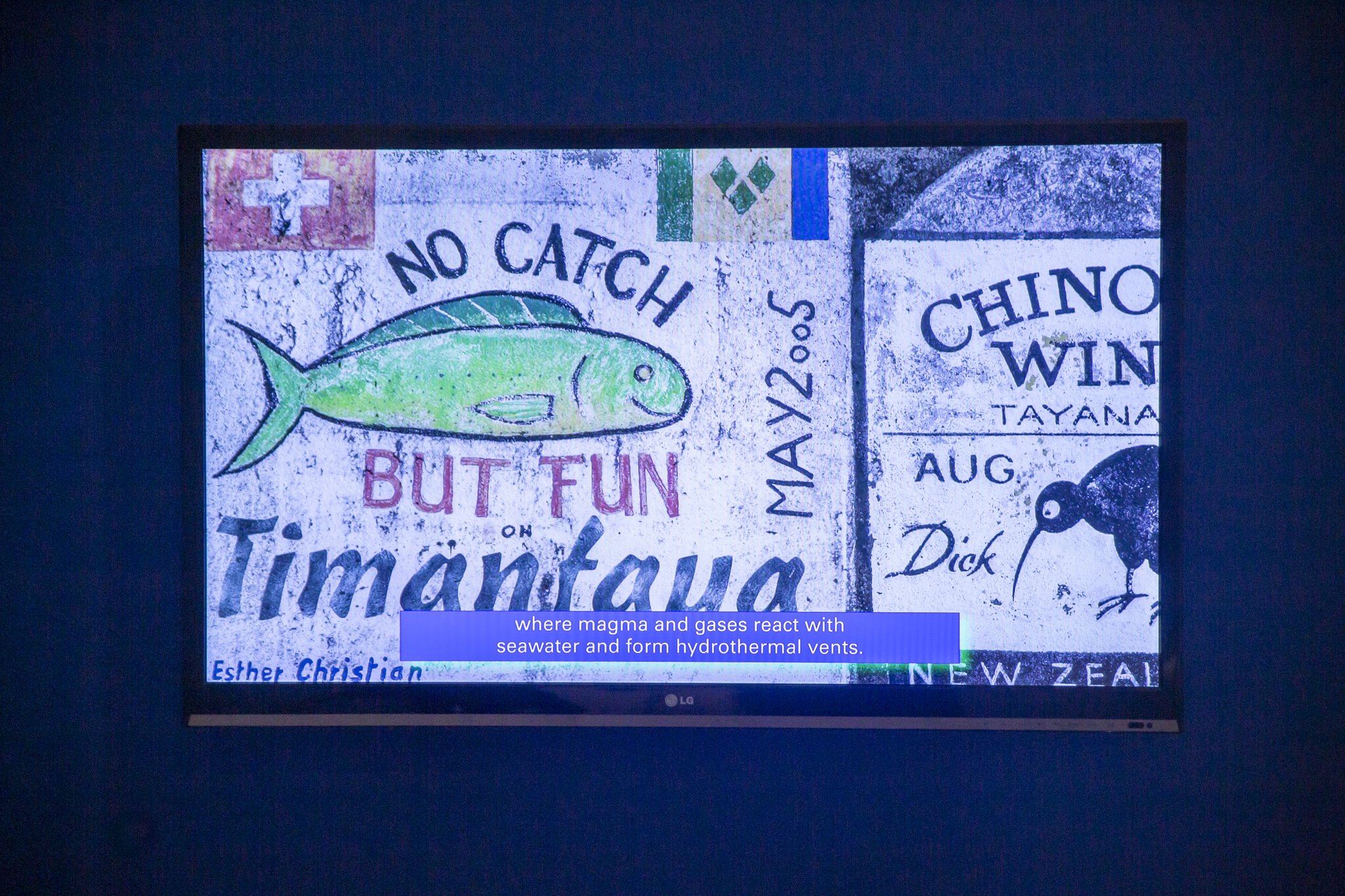
Image credit: inhabitants with Margarida Mendes, What is Deep Sea Mining? (2019–20), installation view, NTU CCA Singapore.