Centered around the theme of biocultural worlding, these keynote lectures will explore the processes that shape our understanding of the world through the deep interconnections between cultural and biological life. Dr Lisa Onaga, Senior Research Scholar at the Max Planck Institute for the History of Science, will reflect on the intersections of biological materiality, cultural practice, and the authorship of knowledge. Curator and researcher Dr Margarida Mendes will explore the concept of worlding from the ocean point of view. This lecture foregrounds ecosystemic, political and ontological relations across aquatic realms. It introduces ongoing research and activism on ecoacoustics, deep sea mining, and remote sensing, proposing how different modes of ocean monitoring may contribute to plural oceanic worldings and alliances in the making. Together, their lectures will illuminate how Biocultural Worlding unfolds across land and sea, and how attending to these entanglements opens new ways of imagining collective futures in times of environmental and epistemic loss.
22 September 2025
6:30pm – 8:00pm
The Hall, NTU CCA Singapore
What is ‘Worlding’ in Biocultural Worlding? is supported by CLASS JOINT NTU-ANU NTU-KCL CONFERENCE, SYMPOSIUM, AND WORKSHOP SCHEME.
As artificial intelligence (AI) becomes increasingly embedded in the systems that shape our world, its growing environmental impact cannot be ignored. This lecture brings into focus the often-overlooked environmental costs of AI: the vast energy consumption required to train and operate large-scale models, the expanding carbon footprint of data centres, and broader planetary implications. In this critical conversation, speculative architect and filmmaker Liam Young draws from his recent work The Great Endeavour (2023) in which he presents his vision of infrastructures capable of removing atmospheric CO₂ at scale. Framing climate mitigation as a monumental design challenge, his film imagines the largest machines ever conceived, inviting us to think in planetary terms and confront the climate crisis not just as a technical problem but a deeply imaginative one. In dialogue with him is Professor Weisi Lin, whose research advances machine-learning approaches for climate science. Moderated by Professor Ute Meta Bauer, this lecture brings together speculative design and cutting-edge AI research, inviting us to examine the environmental costs of intelligence and imagine sustainable futures.
Tuesday Lecture
16 September 2025
6:30pm – 8:00pm
The Hall, NTU CCA Singapore
Free with Registration
The Climate Transformation: Sustainable Societies Series is organised by members of the Climate Transformation Programme (CTP) Cross-Cutting Theme 1: Sustainable Societies research team, Senior Principal Investigator Professor Ute Meta Bauer, research fellow Joshua Gebert, research associate Ng Mei Jia and research assistant Angela Ricasio Hoten.
Sustainable Societies
Senior Principal Investigator, Professor Ute Meta Bauer (NTU ADM)
Principal Investigator, Associate Professor Laura Miotto (NTU ADM)
Principal Investigator, Professor Dr Thomas Schroepfer (SUTD)
This Lecture Series is supported by the Singapore Ministry of Education Academic Research Fund Tier 3 grant [MOE-MOET32022-0006] for the Climate Transformation Programme.
The conference Instruct & Being Instructed seeks to explore the multifaceted role of instructions within the domain of art, from historical and contemporary perspectives. Central to this inquiry is the interrogation of how instructions—whether textual, verbal, or performative—mediate the multifaceted relationships between artists, artworks, audiences, collections or institutions in a wider global context. The conference will critically examine instructions as a tool of artistic authority, a frame to manifest crafts for art-making practices, a form of artistic experimentation and resistance, and it will also reflect on the educational dimension of instructions within the historical and contemporary curricula of art academies. By drawing on theories from curatorial practices, art history, pedagogy, cultural studies, and critical theory, the conference will investigate the ways in which instructions operate as a site of tension between prescriptive frameworks and the creative autonomy of the artist. Through a varied lineup of presentations and panel discussions, Instruct & Being Instructed aims to scrutinise the historical evolution of instructional paradigms in art, the impact of instructions on the materiality of artworks, and the socio-political implications of instructional art creating a critical and inclusive platform to rethink the function and implications of instructions in contemporary art practices, institutional frameworks, and broader socio-cultural contexts.
The conference programme is structured around three thematic panels: “Art and Power,” “Art and Technology,” and “Art and Embodiment.” These themes will be explored through a range of formats—including keynote lectures, artistic performances, presentations, and panel discussions—designed to encourage active dialogue, cross-disciplinary insight, and critical reflection among participants.
The conference is convened by Dr Marc Glöde, Associate Professor at the School of Art, Design and Media, Nanyang Technological University (NTU), in collaboration with Dr. Agnieszka Chalas, Assistant Professor at the National Institute of Education, NTU, and Dr. Sushma Griffin, Lecturer at the School of Humanities, NTU. Collectively, their diverse expertise across curatorial studies, education, art history, and cultural theory informs a dynamic and interdisciplinary approach to the theme of instruction in art.
The conference Instruct & Being Instructed has a hybrid format. The online presentations will be live-streamed at The Hall, NTU CCA Singapore, to welcome in-person participation.
Free upon registration.
PROGRAMME SCHEDULE
Friday, 5 September 2025, 6:30 – 8.00 pm (SGT)
Register: Online / On-site
6:30 – 7:00 pm
Opening remarks by organisers
7:00 – 8:00 pm
[online] Keynote Lecture: Ever Prompt – From “Do It” to Protocol Art
by Hans Ulrich Obrist, Artistic Director, Serpentine Galleries, London
8:00 – 9:00 pm
Reception with complimentary refreshments
Saturday, 06 September 2025, 10:00 am – 2:30 pm (SGT)
Register: Online / On-site
Panel 1: ART AND POWER
Moderated by Dr Sushma Griffin, Lecturer in the Department of Art History, School of Humanities, Nanyang Technological University
This panel examines the nuanced operations of instructions in their interplay between authority and negotiation within artistic, curatorial, and pedagogical contexts. It considers how certain overlooked elements of arts programming that might seem unwarranted and redundant actually provide value and access relating to the discursive realms of curatorial, artistic, and design practices. It looks beyond received narratives to speculate on the influence and implications of instructions in art and design pedagogies on the longer histories of contemporary art and art institutions.
10:00 – 10:15 am
[online] Constellations of the Paracurricular and Paracuratorialby Dr Karin G. Oen-Lee, Assistant Professor, Art History and Museum Studies, University of Maryland Baltimore County
Centring concepts of the curatorial, the paracuratorial, and the constellation, this presentation situates Nanyang Technological University Centre for Contemporary Art Singapore (NTU CCA Singapore), a unique research-oriented contemporary art centre, as a “paracurricular” resource for and of the university while also serving as a bridge for non-university publics and collaborators. The Centre’s diverse modes of conducting and sharing research, including but not limited to exhibitions and other curatorial projects, suggest that while exhibition facilities are helpful in convening community around artistic knowledge production, there are multiple and various formats that can contribute to a robust paracurricular environment. Artists’ residencies, publications, and discursive programmes each offer a way to encourage lively transdisciplinary connections to the realm of contemporary art and other fields in ways that tangibly benefit and enrich the experiences of both students and faculty through formal and informal connections. As a brief coda, the Centre’s mode of distributing power and interrogating power structures in higher education through non-curricular and atypical knowledge production can be read differently when compared to another constellation– the student-led extra-curricular explorations of philosophy and theory in mainland Chinese art academies in the 1980s in the context of “high culture fever.”
10:15 – 10:30 am
[online] Framework and Principles of Asian American Critical Pedagogy in Art Education by Dr Ryan Shin, Professor, School of Art, University of Arizona
The Asian American Critical Pedagogy Framework (AACP) addresses and challenges the systemic marginalisation of Asian art and culture within art education curricula and teaching practices. It proposes a new critical approach centered on the lived experiences of Asian American artists and communities. The framework was developed to address the curricular neglect and othering of Asian art and the underrepresentation of Asian artists in art education. The framework consists of four key principles: Asian American critical consciousness, counternarratives and reclamation, heterogeneity and intersectionality, and joy and wellness. The first principle, Asian American critical consciousness, confronts white supremacy and Orientalism by urging educators and students to recognize and critique existing power structures. Counternarratives and reclamation focus on centering Asian American voices, reclaiming their stories, histories, and identities. Heterogeneity and intersectionality recognise the diverse and complex nature of Asian American identities, acknowledging how experiences of oppression and power differ based on factors such as class, gender, age, and ability. Lastly, joy and wellness emphasize the importance of healing and empowerment for Asian American students and educators, fostering psychologically safe spaces for collective mourning, celebration, and exploration. The AACP framework can serve as a foundation for developing culturally relevant curricula that promote equity, inclusivity, and diversity within art education. It challenges the marginalization and cultural erasure of Asian art and culture to dismantle narrow representations that inhibit a full recognition of Asian artistic contributions. Ultimately, this framework aims to disrupt Eurocentric narratives and empower Asian American students and educators to thrive within the field of art education.
10:30 – 10:45 am
[online] Learning what can’t be taught: reflections on Zhang Peili and artistic ‘genealogy’ in narratives of contemporary (Asian) art by Dr Olivier Krischer, Lecturer, School of Art & Design, University of New South Wales
“Can artistic attitude be taught or passed down from one generation to another?” This simple question was at the heart of the interesting curatorial project Learning What Can’t Be Taught, organised at Asia Art Archive in 2021. Focusing on six artists from the China Art Academy, the first national art school in China, established in 1928, the project looked beyond the familiar avant-garde narrative of rupture, to consider similarities and influences across three pedagogical ‘generations’ of artists to emerge in contemporary China—in a period marked by radical material transformation. This paper, originally pitched for that project, draws on unpublished research taking the form of a somewhat speculative genealogy for Zhang Peili, in order to highlight early influences or parallels in the formation of his notably conceptual practice, initially through painting. It considers the curiously experimental nature of his peers at CAA’s No.1 Studio, under the tutelage of painter Jin Yide, who had received experimental training under visiting Romanian artists in 1960s Hangzhou, for example. I speculate on Zhang’s early assertion of conceptual, post-studio art practice might be rooted, or ‘seeded’, in the genealogy of his art education and experiences? Since Zhang was invited to establish the first course on new media art in China, at CAA in the early 2000s, these questions have broader implications for how we understand histories of art and institutions, and not just in the Chinese context.
10:45 – 11:15 am Joint discussion and Q&A
11:15 – 11:30 am Short break
Panel 2: ARTAND TECHNOLOGY
Moderated by Paul Lincoln, Head of the Visual and Performing Arts at National Institute of Education and the Director of the NTU Museum at Nanyang Technological University
Focusing on the entanglement of instructions and technological mediation, this panel explores how tools, codes, and digital systems reconfigure art-making, its reception and teaching. From historical craft practices to contemporary algorithmic and AI-driven approaches, it asks how instructions function as both enabling structures and constraints. The discussion will bridge art, design, and media perspectives with pedagogical concerns about how technology shapes artistic learning and experimentation.
11:30 – 11:45 am
[online] Aesthetic Illegitimacy in the Corpocene by Dr Katherine Guinness, Assistant Professor, Critical Studies in the Department of Art, University of Maryland, College Park and Dr Grant Bollmer, Associate Research Professor, University of Maryland, College Park
This talk describes a central contradiction in aesthetic theory today. On one hand there exists a range of seemingly insignificant, temporary trends linked with the political economy of identity and visibility on the internet; “aesthetics” online are a way of distinguishing oneself, linked with the desire to commodify oneself as an object of attention and, therefore, value. On the other hand are academic discussions that often defer to “art” in an institutionally legitimate sense, using the traditional object of aesthetic contemplation as a route to theorize technology, the body, emotion, and beyond. “Art” has become a way for cultural theorists to signify the legitimacy of their arguments, even though “aesthetics” more broadly, today, point to a range of phenomena that are seemingly illegitimate because of their imbrication with, and thus “corruption” by, capital and value. As we will develop in this talk, the foundations of aesthetic theory and philosophy emerge from a crisis of capital. This talk will return to the earliest development of aesthetic theory, the German philosopher Alexander Gottlieb Baumgarten. In responding to an emerging market for art called into being by a new wealth class, Baumgarten was the writer who transformed the meaning of “aesthetic” from one that merely referred to a kind of sensation or sensibility to its explicit linkage with questions of taste, of good and bad, of value and evaluation. In returning to Baumgarten, we seek to draw out parallels between our present and the context in which aesthetics, taste, and judgment initially appeared as problems for philosophy. If art and aesthetics are ultimately linked with the accumulation of capital and problems of value, then, we ask, what are the possibilities for a “political” art? If it is impossible to escape the link between art and market, then what might it look like to parasite capital today?
11:45 am – 12:00 pm
What Happens When AI Joins the Art Room? Insights from Students and Educators by Dr Joo Hong Low, Senior Teaching Fellow, the National Institute of Education, Nanyang Technological University
This presentation explores the integration of Artificial Intelligence (AI) in secondary art education in Singapore, drawing on classroom-based case studies from selected secondary schools. It investigates how AI tools—particularly generative image models—are being used by students to support ideation, enhance creative expression, and bridge the gap between conceptual thinking and visual realisation. Students responded positively to AI’s immediacy and versatility, noting how it helped them explore multiple possibilities, visualise abstract ideas, and personalise their creative process. At the same time, the presentation critically examines the challenges and limitations of AI in art classrooms. Some students voiced concerns about over-reliance on AI, expressing that it could diminish the tactile, imaginative, and experimental aspects of traditional artmaking. Others noted frustrations with inconsistent or inaccurate outputs, and a perceived risk of homogenisation—where artworks began to resemble one another due to similar prompt-based results. Beyond creative concerns, the talk will highlight key ethical considerations, including copyright, authorship, misinformation, and the need to uphold academic integrity. These issues point to the growing importance of AI literacy in the art curriculum—not just in terms of technical skills, but also in fostering critical awareness, aesthetic judgment, and ethical responsibility. Ultimately, this session advocates for a nuanced and transformative pedagogical approach, where AI is positioned as a co-creative partner rather than a replacement for artistic agency. It proposes that when used intentionally, AI can enrich the learning experience and empower students—if balanced with hands-on practice, teacher guidance, and thoughtful curricular design.
12:00 – 12:30 pm Joint discussion and Q&A
12:30 – 1:00 pm Lunch break
Panel 3: ART AND EMBODIMENT
Moderated by Dr Marc Glöde, Associate Professor and Co-Director of the MA in Museum Studies and Curatorial Practices at ADM, Nanyang Technological University
This panel turns to the corporeal and experiential dimensions of instructions, asking how bodies—of artists, audiences, and students—become sites of inscription, transmission, and enactment. By considering performance, pedagogy, and material engagement, the panel explores how instructions shape artistic knowledge not only through words and images but also through embodied practices. The emphasis here connects art history and education with lived, sensorial, and affective registers of artistic instruction.
1:00 – 1:15 pm
Learning through procession: ritual, embodiment, and shared knowledge in Thaipusam by Laura Miotto, Associate Professor and Co-Director of MA in Museum Studies and Curatorial Practices, Nanyang Technological University
This talk examines how knowledge is transmitted through embodied ritual practices, focusing on the Thaipusam procession in Singapore. As an ephemeral event, the procession becomes a site where learning takes place collectively—through bodily and sensory experiences in ritual acts—revealing how Thaipusam generates shared knowledge across religious, cultural, and artistic contexts.
1:15 – 1:30 pm
Memories and other instructional works by Heman Chong, Artist
In his ongoing project Memories, artist and writer Heman Chong explores the act of publishing through performance. Each work begins with a short story of around 500 words, written with a very specific form of transmission in mind. Participants are invited through an open call to memorise one story word for word with the help of a personal trainer. The performance ends only when the participant can flawlessly recite the entire text back to the trainer. These stories are never published — not in print, nor online. The only way to “receive” them is by memorising them, investing significant time and effort. Yet this gift is ephemeral: without constant rehearsal, the words quickly fade. Chong first devised this method of “publishing as performance” in 2009 during Ong Keng Sen’s Flying Circus Project at T:>Works in Singapore, which also featured Boris Charmatz’s expo zero, a performance exhibition using only the bodies of artists. As curator Anca Rujoiu notes, Chong’s practice is “a quest for writing, an exploration of its desires and disenchantments as well as the conditions that constitute it.” His works interweave writing, publishing, performing, and collaboration, creating a fluid and dynamic space where instructions shape both the artwork and its audience. In this presentation, Chong reflects on the role of instructions in his practice and how they reconfigure the boundaries between art, memory, and participation.
1:30 – 1:45 pm
Investigating Artistic Authority and Participation through Performative Instruction in Contemporary Southeast Asian Art by Yi Yinzi, PhD candidate at the School of Art, Design and Media, Nanyang Technological University
This presentation explores how performative instruction in contemporary Southeast Asian art mediates the complex dynamics between artistic authority and audience participation. On the one hand, artistic instruction can shape, enable, and at times restrict audience participation to the point of compromising participatory agency or even causing discomfort. On the other hand, there are moments in performance art when participants retain the choice to engage or not, based on their interest in the project, their informed knowledge of what may unfold, and their assessment of their own capabilities. This presentation considers Vietnamese artist Pham Ha Hai’s performance at the Asiatopia International Performance Art Festival II in Bangkok in 1999, in which he blindfolded participants and instructed them to smear black ink on their faces without disclosing what was in their hands, alongside Singaporean artist Heman Chong’s Memories, where an instructor reads a roughly 500-word story written by Chong to a participant, who is then required to memorize and recite the story word for word. In these examples, artistic and participatory choices both operate within the aesthetic realm and are shaped by the social realities that contextualize the practice. This raises questions about whether the aesthetic realm can serve as an exception to everyday social practices of acceptance and refusal, the different temporal phases of a project in which participants may initiate or revisit their judgment, and the modern notion of a contract based on mutual consent, where each party is assumed to be capable of making rational choices.
1:45 – 2:15 pm Joint discussion and Q&A
2:15 – 2:30 pm Final Remarks and Closing of Event
Instruct & Being Instructed is supported by CoHASS Interdisciplinary Conference, Symposium, and Workshop Scheme.
This project examines how climate crisis and cultural loss interconnect. The core objective is the co-production of knowledge that can lead to a changed understanding of environmental justice, which, in turn, will suggest changes in existing legal and policy frameworks. The project hypothesises that a fundamental connection between people and their environments has been lost in contemporary urban contexts, resulting in feelings of indifference towards the climate crisis or unexplained feelings of climate anxiety.
It deploys a research team with transdisciplinary methods to build on emerging environmental jurisprudence in the Pacific region and produce narrative visualisations demonstrating the links between cultural loss and climate change. By combining scholarly knowledge with cultural and artistic practices, the project will develop an innovative framework for addressing the impact of accelerated climate change. Using tools from visual studies and forensic architecture, from ethnography and law, to make scientific evidence on climate change socially robust and impactful, it will also create a relay between local perspectives and knowledge generated in different academic fields. Data visualisation and audiovisual presentations of ecological and cultural loss will be instrumental to transform ecological grief and loss into catalysts for climate action. Such narrative visualisations make visible the necessity to re-establish a direct relation between human societies and the environment, especially in the rapidly-changing urban fabric of a metropolis like Singapore.
Research Outputs
Climate Crisis and Cultural Loss Research Presentation, 23 March–13 October 2024, TBA21-Academy Ocean Space, Venice, Italy
Climate Crisis and Cultural Loss Research Presentation, 12 April–24 May 2024, ADM Gallery, 81 Nanyang Drive, Singapore
Special Issue: Climate Crisis and Cultural Loss (Vol. XXVII, 2024), Comparative Law Journal of the Pacific (CLJP), Victoria University of Wellington
Research Publications:
Ahmed, N., Bauer, U. M., & Lallemant-Moe, H. R. (2024, October). Introductions to Cultural loss and climate change. Comparative Law Journal of the Pacific, Special Issue: Climate Crisis and Cultural Loss.
Ahmed, N., Camus, G., Lallemant-Moe, H. R., & Rave, L. (2022, November). Cultural loss and climate change – A new field of research. Comparative Law Journal of the Pacific, 28.
Soh, K. M. (2024, May). Monsoon equinox. Issue 13: Weather. LASALLE College of the Arts.
Shaleh, A. (2024, October). Linking the commons and climate change to collective actions. Comparative Law Journal of the Pacific, Special Issue: Climate Crisis and Cultural Loss.
Course Details
Date:16 April 2022, Saturday
Time: 9:00am – 5:00pm
Venue: NTU CCA Singapore, The Seminar Room, Block 37 Malan Road, Singapore 109452
Course Fee: $513.60 (incl. GST) SkillsFuture Credits applicable for Singaporeans.
For enquiries, please email ntuccaeducation@ntu.edu.sg
To register, please click here
For enquiries, please email ntuccaeducation@ntu.edu.sg
About The Course
The Upward Trend: NFTs and On-Chain Art is an introductory course designed for those who are interested to learn about the background and history of crypto art, and are keen to navigate the concept of NFTs, the technology that underlies them and the ecosystems they propel.
During the course, our instructors from NFT Asia will provide an overview of the basic terminologies that surround NFTs, blockchain and Web 3.0. They will also spotlight the relationship between NFTs and contemporary art discourses, as well as its interactions and intersections with broader art communities, such as through Decentralised Autonomous Organisations (DAOs).
As a participant, you will examine case studies, recent writings on the technology and engage in group discussions. By exploring different considerations to utilising NFTs which include minting, displaying and community building you will gain insights into the future of NFTs and its potential impact on the roles of artists, creatives, museums, galleries and the art business at large.
Who Should Sign Up
Artists, Arts Managers, Cultural Workers, Designers, Collectors, Gallerists, Arts Enthusiasts
At The End of the Course, You Will…
1. Gain a confident and nuanced understanding of what NFTs are.
2. Be more familiar with art and creative infrastructures within and beyond the NFT ecosystem.
3. Develop a perspective of the implications of NFTs.
Your Course Instructors

Clara Peh is the founder of NFT Asia, the biggest digital-native community focused on Asian and Asia-based artists and creatives within the NFT space. She curated Right Click + Save, Singapore’s first large-scale NFT exhibition in 2021.
Clara is currently Art Lead and Curator at Appetite Singapore, and also an Adjunct Lecturer at LASALLE College of the Arts in the School of Fine Arts. She was an Ambassador for the Singapore Pavilion at the 58th Venice Biennale and has held positions at Christie’s, the Economic Development Board and NTU CCA Singapore. She is also an independent arts writer and researcher. Her works are published on Hyperallergic, Yishu Journal of Contemporary Chinese Art, Art and Market, and more.

Jonathan Liu is a Visual Artist working primarily with photography within his practice. He is interested in the narratives formed through text and photographs. Drawn from his fascination of narratives and the relationship between the artist and the poet, his recent works attempt to mirror and question our reality through representation and fragmentation of the landscape. His work deals with concepts such as memory, post-memory and the search for the layers in-between with works having exhibited in the United Kingdom, China and Singapore. He graduated from London College of Communication with a BA (Hons) Degree in Photography and currently lectures in LASALLE College of the Arts, Singapore.
Open College programmes are offered on 2 tracks; Discovery and Immersive Series. Discovery Series programmes are short exploratory courses that allow participants to explore topics outside their usual fields of interest, and acquire basic knowledge and skillsets that may be transferrable to other areas of study and work. By contrast, Immersive Seriesprogrammes are more in-depth and led by professional educators, researchers and critical thinkers in their fields of expertise. Through a blend of practical projects and discussions to stimulate critical thinking and dialogue, participants will deep dive into a subject matter and gain new perspectives.
As the climate crisis intensifies, Southeast Asia will experience more intense and frequent extreme weather patterns – including flooding, hurricanes and tornadoes. According to PUB, Singapore faces the risk of flash floods, from abrupt and heavy storms, and coastal flooding in low-lying coastal areas due to rising sea levels and storm surges. As disaster events increase around the region, how can Singapore become a climate-resilient city in light of these projections? Beginning with a presentation by artist Ong Kian Peng (Adjunct Lecturer, NTU Art, Design and Media) he draws on his AI film Disaster Free (2024), visualising urban flooding that challenges the public perception of Singapore as a disaster-free zone. Paired with PhD Candidate, Ning Ding (NTU Asian School of the Environment) and moderated by Dr Karin G Oen(Director, NTU CCA Singapore; Senior Lecturer and Head of Art History, NTU School of Humanities), this dialogue brings together engineering solutions and speculative filmmaking to consider how to prepare for future scenarios.
15 April 2025, 6:30pm – 8:30pm
The Hall, NTU CCA, Blk 6 Lock Road, #01-10 Gillman Barracks, Singapore 108934
The Climate Transformation: Sustainable Societies Series is organised by members of the Climate Transformation Programme (CTP) Cross-Cutting Theme 1: Sustainable Societies research team, Senior Principal Investigator Professor Ute Meta Bauer, research associate Ng Mei Jia and research assistant Angela Ricasio Hoten.
Sustainable Societies
Senior Principal Investigator, Professor Ute Meta Bauer (NTU ADM)
Principal Investigator, Associate Professor Laura Miotto (NTU ADM)
Principal Investigator, Professor Dr Thomas Schroepfer (SUTD)
This Lecture Series is supported by the Singapore Ministry of Education Academic Research Fund Tier 3 grant [MOE-MOET32022-0006] for the Climate Transformation Programme.
NTU Centre for Contemporary Art Singapore is pleased to announce the launch of STAR Residencies (Science, Technology, Art & Research), a new residency programme aimed at fostering the cross-pollination between artistic and scientific research. Through partnerships with select NTU research institutes, STAR Residencies embeds artistic residencies at the core of the University, creating a unique opportunity for exchange between artists and academic researchers. A pioneering programme in the context of Singapore and Southeast Asia, STAR Residencies stems from NTU CCA Singapore’s decade-long expertise in developing innovative platforms for knowledge making, creative experimentation, and transdisciplinary collaborations.
For its inaugural cycle, STAR Residencies unfolds in partnership with NTU Earth Observatory of Singapore (EOS), a research institute of Nanyang Technological University dedicated to the scientific observation of the forces that shape our changing planet. Regarded as a leader on a broad spectrum of geosciences in the Asia-Pacific region, EOS gathers critical data and develops vital knowledge about geohazards, climate change, and their impact on human societies. This collaboration expands Centre’s long-standing research on Climates.Habitats.Environments. and its continued commitment to critical artistic practices that engage with ecological complexities, climate change, and sustainability to advance the collective awareness of planetary interconnectedness in times of environmental distress.
The artists participating in the first iteration STAR Residencies are: Ng Hui Hsien, The Observatory (Dharma, Cheryl Ong, Yuen Chee Wai), and Zarina Muhammad. They were selected from a pool of 19 candidates (nominated by experts in the field) by a Selection Committee composed of: Dr Karin Oen, Director, NTU CCA Singapore, Senior Lecturer and Head of Department, Art History, NTU School of Humanities; Lauriane Chardot, Assistant Director, Community Engagement, Earth Observatory of Singapore, NTU; and Haeju Kim, Senior Curator and Head of Residencies, Singapore Art Museum.
The first cycle of STAR Residencies takes place from April 2025 to March 2026. Within the programme’s framework, artists are granted unprecedented access to processes and methodologies of fundamental scientific research, state-of-the-art laboratories, data sets, and extensive international networks, being provided with the exceptional opportunity to immerse themselves in EOS’s dynamic scientific community wherein they can expand their intellectual horizon, explore ideas, forge new means of artistic inquiry, and engage creatively with Earth systems and ecological complexities. The programme will conclude with an exhibition in March 2026 that will showcase the research projects developed during the residency. In the words of Karin Oen, “STAR Residencies mark an important new chapter for NTU CCA Singapore in which the intersections of artistic and scientific research can thrive with the support of the broader academic community at NTU.”
With creative practices that span photography, performance, installation, and sound, the artists will conduct independent research on a variety of Earth systems, interweaving different bodies of knowledge in aesthetic outcomes that foster the awareness of ecological interconnectedness and of the complexity of human relation to nature. Drawing on her background in ethnography, Ng Hui Hsien intends to complement the scientific strategies used to evaluate environmental changes and geohazards with indigenous ecological knowledge shaped by lived experience, oral traditions, and direct observation, creating evocative insights into practices of ecological coexistence. The Observatory will expand their engagement with subterranean phenomena and geological formations. Deepening their understanding of the volcanic arcs that shape Southeast Asia and of the processes of rock formation, they will develop a project that resonates from deep time to contemporary existence. Driven by a process-led and constellatory approach to collaboration, Zarina Muhammad will engage with different scientists to expand epistemic frameworks for ecological witnessing, looking at weather formations, underwater ecologies, polycosmologies and the interdependency of environmental knowledge systems.
STAR Residencies is developed and curated by Dr Anna Lovecchio, Curator, NTU CCA Singapore.
DESIGN EARTH‘s latest project is a series of fables that addresses the elephant in the room—the climate crisis—by animating charismatic figures from natural history museums. This design research identifies and leverages figures from the collections all while unsettling the museum apparatus—the devices, archives, histories, and audiences. Some such figures include a taxidermy of an African matriarch elephant, the skeleton of a stranded blue whale, and a composite structure of a Diplodocuscarnegii. The fragmentary remains of such creatures are animated, brought back to life, so to speak in rhyming verse, colorful imagery, and with some poignant humor. These speculative afterlives stir up potent trouble on the breath-taking capture of life in the Anthropocene to ask how cultural institutions may be responsible to calls for decolonisation and decarbonisation. In Singapore, this hands-on, participatory workshop will focus on the cultural prehistory, present, and speculative futures of the Singapore saltwater (estuarine) crocodile and the Malayan tiger. Facilitated by Rania Ghosn, El Hadi Jazairy, and DESIGN EARTH team member Kelly Koh. Beginning with the Artist Talk on 13 June, participants will engage in DESIGN EARTH creative methodologies including site visits and the building of a research archive while looking into the facts and fictions of these creatures and their homes.
For registration, please visit here.
DESIGN EARTH was founded by Rania Ghosn and El Hadi Jazairy in 2011. The design research practice deploys the speculative project—drawing and narrative—to make public the climate crisis. Their work has been featured internationally—most recently at Venice Biennale, Bauhaus Museum Dessau, SFMOMA, Milano Triennale—and is in the New York Museum of Modern Art permanent collection. Ghosn and Jazairy are authors of Geographies of Trash (2015); Geostories: Another Architecture for the Environment (3rd ed. 2022), The Planet After Geoengineering (2021) and Climate Inheritance (2023). DESIGN EARTH has been recognized with several awards, including United States Artist Fellowship, Architectural League Prize for Young Architects + Designers, Association of Collegiate Schools of Architecture Faculty Design Awards, and Graham Foundation for Advanced Studies in the Fine Arts Awards.
Rania Ghosn (Beirut, b. 1977) is Associate Professor and Director of the Master of Science in Architecture Studies (SMArchS) in Urbanism at the Massachusetts Institute of Technology. El Hadi Jazairy (Algeria, b. 1970) is Associate Professor of Architecture and Director of Master of Urban Design degree program at the University of Michigan.
How might the architectural imagination make sense of the Earth at a moment in which the planet is presented in crisis? For Design Earth, imagination fuels the production of stories and images that come together as geographically situated speculations—neither documentary nor completely fictional.
Today we live in an epoch shaped by extensive shifts in industrialization, with environmental risks and destruction felt at a planetary scale. Paradoxically, while the threats are serious, we remain little mobilized—in part because of the “abysmal distance between our little selfish human worries and the great questions of ecology.”[1] If we are worried once again that the sky may be falling on our heads, how is it that we have done so little about it? In this light, the environmental crisis can be seen not only as a crisis of the physical and technological environments; it is also a crisis of the cultural environment—of the modes of representation through which society relates to the complexity of environmental systems.
Design Earth: Speculative Fiction for the Climate springs from the conviction that climate change demands urgent transformations in the ways we care for and design the Earth, moving away from a visual rhetoric of crisis that aestheticizes calamity. Design Earth, a research practice founded and led by Rania Ghosn and El Hadi Jazairy engages the medium of the speculative architectural project to make public the climate crisis. Their design research brings together spatial history, geographic representation, projective design, and material public assemblies to speculate on ways of living with legacy technologies on a damaged planet. This work is developed simultaneously through the medium of drawing and the creation of books, two of which are excerpted and put in conversation in this art exhibition.
The first book, Geostories: Another Architecture for the Environment (Actar Publishers, 2018), is a manifesto for environmental imagination in twelve architectural projects engaging the planetary scale through drawing divided by the organising principles of Aquarium, Terrarium, and Planetarium. This exhibition highlights three chapters from the larger work, each addressing a planetary common as matter of concern – the atmosphere, deep seabed, outer space: After Oil (2016), Pacific Aquarium (2016), and Cosmorama (2018). It examines geographies of extractive technological systems, foregrounding externalities as political concerns for architecture. Geographic portraits employing axonometry, sections, and split-level views describe the political and ethical implications of our ecological actions while speculating on survival and adaptation strategies that invite us to make sense of the Earth envision it in ways that generate inquisitive, delightful, and potentially subversive responses.
The second book, The Planet After Geoengineering (Actar Publishers, 2021) is a graphic novel which imagines the worlds of climate modification technologies and their controversies. It thinks with and against geoengineering – technologies that counteract the effects of anthropogenic climate change by deliberately intervening in Earth systems as a form of planetary management. In five chapters, The Planet After Geoengineering assembles a planetary section that cuts through the underground, crust, atmosphere, and outer space. Each geostory— Petrified Carbon, Arctic Albedo, Sky River, Sulfur Storm, and Dust Cloud—depicts possible future Earths that we come to inhabit on the heels of a geoengineering intervention all while situating such promissory visions within a genealogy of climate-control projects from nineteenth-century rainmaking machines and volcanic eruptions to
Cold War military plans.
Together these projects help us begin to address the open question of how (else) could we tell the story of the Earth? Beyond the binaries of the preservation of a Blue Marble and the promises of technological solutionism, what geostories can we imagine or envision?
[1] Laura Collins-Hughes, “A Potential Disaster in Any Language: ‘Gaïa Global Circus’ at the Kitchen,” New York Times, September 25, 2014.
Design Earth: Speculative Fiction for the Climate is co-organised by NTU Centre for Contemporary Art and ADM Gallery
OPENING RECEPTION
Friday, 25 April 2025
6:30 – 8:30 pm
VENUE
ADM Gallery 2
NTU School of Art, Design and Media
81 Nanyang Dr, Singapore 637458
DATES
28 April to 13 June 2025
Open by appointment from 14 June to 15 August 2025
GALLERY HOURS
Monday to Friday: 10:00am to 5:00pm
Saturday: By appointment only
*Closed on Sunday and Public Holidays
ADMgallery@ntu.edu.sg
Public Programmes
Join DESIGN EARTH co-founders and co-directors Rania Ghosn and El Hadi Jazairy for their first presentation in Singapore, where they will share insights into their collaborative research practice centred on the speculative architectural project as a mode of making the climate crisis public. Their design research brings together spatial history, geographic representation, projective design, and material public assemblies to speculate on ways of living with legacy technologies on a damaged planet. Recipients of the United States Artist Fellowship and the Architectural League Prize for Young Architects and Designers, among other honors, Ghosn and Jazairy have made a practice of telling complex and unwieldy stories of the Earth. Learn more about their ongoing explorations of visual and spatial storytelling.
Friday, 13 June 2025, 6:30 pm – 8:30 pm
The Hall, NTU Centre for Contemporary Art Singapore
6 Lock Rd, #01-09/10 Gillman Barracks 108934
DESIGN EARTH Workshop: Elephant in the Room and Other Creatures
DESIGN EARTH‘s latest project is a series of fables that addresses the elephant in the room—the climate crisis—by animating charismatic figures from natural history museums. This design research identifies and leverages figures from the collections all while unsettling the museum apparatus—the devices, archives, histories, and audiences. Some such figures include a taxidermy of an African matriarch elephant, the skeleton of a stranded blue whale, and a composite structure of a Diplodocuscarnegii. The fragmentary remains of such creatures are animated, brought back to life, so to speak in rhyming verse, colorful imagery, and with some poignant humor. These speculative afterlives stir up potent trouble on the breath-taking capture of life in the Anthropocene to ask how cultural institutions may be responsible to calls for decolonisation and decarbonisation. In Singapore, this hands-on, participatory workshop will focus on the cultural prehistory, present, and speculative futures of the Singapore saltwater (estuarine) crocodile and the Malayan tiger. Facilitated by Rania Ghosn, El Hadi Jazairy, and DESIGN EARTH team member Kelly Koh. Beginning with the Artist Talk on 13 June, participants will engage in DESIGN EARTH creative methodologies including site visits and the building of a research archive while looking into the facts and fictions of these creatures and their homes.
13 – 19 June 2025
The Hall, NTU Centre for Contemporary Art Singapore
6 Lock Rd, #01-09/10 Gillman Barracks 108934
Curator’s Exhibition (de)Tour
Join NTU CCA Singapore Director Karin G. Oen for a closer look at the collaborative practice of DESIGN EARTH, including drawing, writing, animation, and sound components of Design Earth: Speculative Fiction for the Climate. Explore the research and influences that comprise these multi-layered artworks, from the terrestrial principles of geoengineering and petroleum geology, to the supranational domains of the deep seabeds and outer space. Highlighting the long traditions of poetry, science fiction, and image creation that help us to conceptualise these realms, we will consider what it means to tell the stories of the earth, and to live with unsightly “externalities.”
Saturday, 17 May 2025
11:00 am – 12:00 pm
ADM Gallery 2
NTU School of Art, Design and Media
81 Nanyang Dr, Singapore 637458
Student-Led Exhibition (de)Tour
Join Vaishnavi Peddapalli, NTU School of Humanities Class of 2025, for a student-led (de)tour of Design Earth: Speculative Fiction for the Climate that will explore how speculative fiction can reconsider Southeast Asian geographical catastrophes borne from human intervention. Considering localised discourse around climate change and its impact on younger generations, this experience provides space for speculation for our planet’s future.
Saturday, 31 May 2025
11:00 am – 12:00 pm
ADM Gallery 2
NTU School of Art, Design and Media
81 Nanyang Dr, Singapore 637458
Come walk, draw, and speculate. Drawing as a visual and creative practice can also be a tool for scientific inquiry and speculation. Plotting detailed lines can help process the larger picture of the distanced and abstracted planet crisis. Inspired by the exhibition, Design Earth: Speculative Fiction for the Climate, this drawing club invites artists, architects, designers, and students to probe how architectural drawings can unearth the more inconspicuous matters of climate change. Facilitated by Eunice Lacaste, Programme Associate, NTU CCA Singapore.
This Drawing Club invites artists, architects, designers, and students to present their annotated sketches at the NTU ADM Foyer from July to August 2025.
No technical drawing experience needed—just a willingness to trace complexity. Participants are encouraged to bring dry drawing media (markers, found images, etc) and reading references (articles, books, etc) to share, annotate, and get inspiration from during the session.
Saturday, 24 May 2025
3:00 pm – 5:00 pm
ADM Gallery 2
NTU School of Art, Design and Media
81 Nanyang Dr, Singapore 637458
Decay, decomposition, weathering, rot. Landscapes eroding, architectures disintegrating, bodies breaking down, coming apart, becoming dirt. We hardly have a kinship with decay for, like dirt, decay is—in the words of anthropologist Mary Douglas—matter out-of-place in our perpetually renewing cities. Indeed, the city we are brought to inhabit and desire is built with ever-more weatherproof architectures, with cosmetic treatments that maintain the hardness of the buildings and the smoothness of their surfaces impervious to the traces of Nature’s time. In waterfront cities, which novelist Amitav Ghosh regards as a showcase of architectural mastery over the unruly environment, the cartography of terrestrial edges continues to reinforce the separation of interiorised human-made worlds from exteriorised more-than-human environment. Seen through the lens of the city, the design of the future Earth aspires to be atemporal. And like so many transient and shifting environments stilled in human projections of the Earth (from maps to masterplans), the “unweathered” city must thrive outside of time, devoid of stains and discolouration. But does the city have to be in an anxious race against Nature’s time?
Created and led by Superlative Futures, Drawing Dialogues: Stories of Decay is a workshop for re-attuning our urban selves to Nature’s time. The programme focuses on rethinking the place of decay in the wellbeing of cities and on re-presenting stories of decay as matters of care. The workshop will start off with a walk in the Berlayer Creek—a rare remnant of Singapore’s mangrove histories once denigrated as a place of dankness and disease—where participants will be led to uncover stories of decay and gather thoughts and materials of decomposition. The second part of the workshop will take place at NTU CCA Singapore where, drawing and dialoguing with decay, participants will be guided to create their own narratives and landscapes of decay culminating in a collaborative artwork. Expanding on Superlative Futures’ speculative design research on new ecological practices for weathering the future city, this workshop marks the beginning of a propositional archive—A Cartography of Decay—that charts different relationships between decay and the city.
It is recommended to bring water, sunblock, umbrella, mosquito repellent, and notetaking materials (e.g. pencil/pen and paper). This is a rain or shine event.
This event is a public programme created in response to the exhibition Design Earth: Speculative Fiction for the Climate, on view by appointment at NTU ADM Gallery 2 until 15 August 2025.
This programme is free with registration. Limited capacity.
Workshop Schedule
9:00 – 10:00am
Meet at Labrador Park MRT, Exit A
Move as a group to Berlayer Creek
10:30am – 12:00pm
Drawing session at The Hall, NTU CCA Singapore
This workshop will revolve around The Planet After Geoengineering(2021), a graphic animation by Design Earth, where planetary imaginaries unfold through narrative fragments and visual speculation. Responding to the animation, participants will be prompted to ponder over climate change, environmental design, and planetary care and compose letters and/or postcards from a future Earth. In creating memories of futures yet to be experienced, participants are asked to time-travel into future climates and channel perspectives from the human and other-than-human inhabitants of the Earth to come. The workshop will culminate in a final sharing session where participants will be invited to present their pieces, exchange insights, and reflect on the power of storytelling. In closing, the group will consider how such narratives might shape our actions in the present.
The workshop seeks to make the immediacy of climate change tangible, not only intellectually, but also emotionally by foregrounding personal visions and speculative storytelling with letters serving as intimate vessels for messages of loss, change, and resilience.
We welcome the general public as well as creatives, artists, writers, architects, designers, students, and everyone interested in the topic of climate change. Suitable for all writing skill levels.
This workshop is facilitated by Leila Vignozzi, Intern, NTU CCA Singapore.
Saturday, 5 July 2025
2:00 – 4:00pm
The Hall, NTU Centre for Contemporary Art Singapore
6 Lock Rd, #01-09/10 Gillman Barracks 108934
Inspired by Cosmorama (2018), one of four sections in the exhibition Design Earth: Speculative Fiction for the Climate, this third Drawing Club invites artists, architects, designers, and students to respond to the geostories of asteroid mining, orbital debris, and climate refuge in the age of the “New Space.”
The workshop zooms in on architectural drawing as practice to examine planetary issues such as satellite debris and airspace conflicts, that may seem distant from us. Participants will trace the macrocosmic consequences of extractive economies and of their politics beyond Singapore, and beyond the Earth itself, launching critical conversations into speculative drawings.
The annotated sketches produced during the workshop will be displayed at the NTU ADM Foyer until 13 August 2025, alongside the works produced at the previous Drawing Club.
Participants are encouraged to bring dry drawing media (markers, found images, etc) and reading references (articles, books, etc) to share, annotate, and get inspiration from during the session. No technical drawing experience needed.
This workshop is facilitated by Eunice Lacaste, Programmes Associate, NTU CCA Singapore.
Thursday, 7 August 2025. 2:00 pm – 4:00 pm
ADM Gallery 2
NTU School of Art, Design and Media
81 Nanyang Dr, Singapore 637458
NTU Centre for Contemporary Art Singapore is pleased to present Nothing has to be the way it is, an exhibition featuring the artistic propositions created by Chok Si Xuan, bani haykal, and Ong Kian Peng as part of their involvement in Communities of Practice. Techno Diversions, a five-month programme curated by Anna Lovecchio that interlaces artistic research, transdisciplinary encounters, and the formation of communities around shared interests to propel transformative understandings of technology.
The uncanny symbiosis between humans and the digital devices, interactive interfaces, online platforms, and global infrastructures that increasingly operate our lives is a defining feature of contemporary society. In these wired times of machine intelligence and computational acceleration, microchip wars and platform powers, the artworks featured in this exhibition cast a sideway look at techno-driven progress. Moving across different conceptual frameworks and a multiplicity of mediums, Chok Si Xuan, bani haykal, and Ong Kian Peng share a common investment in reclaiming agency within the technosphere. They divert, possess, possibly disrupt the streamlined existence of technological artefacts through gestures that question the escalation of technological sovereignty and, ultimately, the role of technology in our lives. Purposefully, these artists do not position themselves at the edge of advanced technologies. Rather, they interfere with existing apparatuses and instil into them worldviews other than those that originally brought them about. The systems they envisioned proceed by appropriations and approximations, frictions and forays, scrambled codes and enigmatic conjectures. In the essay “It Doesn’t Have To Be the Way It Is” which inspired the title of this exhibition, Ursula K. Le Guin remarks that the subversive power of the imagination “gnaw(s) at the very foundation of the belief that things have to be the way they are”. Nothing has to be the way it is hints at the endless permutations of how things can be.
The exhibition will take place in The Hall, NTU CCA Singapore’s programme space nestled at the heart of the Research Centre and launched in September 2024. This event marks the first time The Hall hosts a group exhibition, bringing home the Centre’s longstanding commitment to dwell upon and experiment with the spaces of the curatorial.
As participants in Communities of Practice. Techno Diversions, Chok Si Xuan, bani haykal, and Ong Kian Peng are conducting a residency at NTU CCA Singapore from October 2024 to February 2025. Revolving around critical engagements with the material, political, and spiritual layers of technology and the complexity of our relation to it, this multidimensional programme is a generative platform that provides artists with time, space, and resources to unravel their aesthetic inquiries and catalyse communities around their interests and creative processes.
Nothing has to be the way it is is couched between two series of public programmes— Empirical Workshops and the Transdisciplinary Lectures—developed in conversation with the artists themselves. Steeped in a do-it-yourself ethos, the Empirical Workshops took place in December 2024. Each workshop germinated by the artist’s own research and was aimed at creating knowledge through skill-sharing and the creative dabbling with raw materials. In Temporal Oscillations, Chok Si Xuan dived into the physics of circuitry and erratic electronics, teaching participants how to assemble common electronic components to modulate the flow of electricity and hijack standard systems of temporality. With METAL MACHINE MISCHIEF (or how to make noise music with bicycles), bani haykal took his workshop participants on an unconventional group ride. Through tinkering and drilling, cranking and whirring, discarded bicycle parts were assembled into unorthodox musical instruments activated in a final jam session that produced a one-of-a-kind audiovisual experience. Different wavelenghts resonated in Ong Kian Peng’s Natural Radio workshop where participants could explore a range of low frequency waves emitted by natural electromagnetic phenomena as a way to tune in to the inaudible voices of the environment.
Coming up in February 2025, the Transdisciplinary Lectures will bring the artists in conversations with philosophers, sociologists, scientists, and other creatives whose work significantly inspired them. Deepening the ramifications of their research in different disciplines, the Transdisciplinary Lectures will feature contributions by: Tiziano Bonini (Associate Professor, Sociology of Culture and Communication, University of Siena, Italy), Eugene Yew Siang Chua (Nanyang Assistant Professor of Philosophy, School of Humanities, NTU, Singapore), Lee Pooi See (Professor, School of Materials Science and Engineering, NTU, Singapore), Emiliano Treré (Beatriz Galindo Distinguished Professor, Language Theory and Communication Sciences, University of Valencia, Spain and Reader, Data Agency and Media Ecologies, Cardiff University, United Kingdom), and Boedi Widjaja (interdisciplinary artist, Singapore).
About Communities of Practice
Conceived as a seedbed for experimentation, Communities of Practice is a shapeshifting research platform that brings forth communities at the intersection of artistic practices. Holding a space where artistic research can develop through interdisciplinary collaborations, exchanges, and processes of co-creation, Communities of Practice advances the role of NTU CCA Singapore as convener, capacity builder, and incubator in the arts sector.
This workshop will explore how to use common electronic components to modulate the flow of electricity, assemble and hijack standard systems of temporality. Participants will learn how a 555 timer integrated circuit (IC) forms an astable multivibrator. The 555 timer IC is a tiny chip found in many everyday devices—blinking LED lights, kitchen timers, alarm systems, sound makers, etc.—that modulates the frequencies of electrical signals. The term ‘astable’ means ‘not stable’ because the circuit never settles into a single state, is a basic electronic circuit that generates a continuous oscillating output, switching between two voltage levels.
Working with pre-assembled circuits created by the artist, participants will be able to experiment with various components (small motors, LED lights, and speakers, etc) as outputs. Exploring the transformation of different forms of energy—chemical energy from batteries, mechanical energy , kinetic energy and byproduct thermal energy, the workshop accesses materiality as a manner of understanding the fundamental ways systems unfold.
Through engaging with electronic circuits in a hands-on and accessible way, participants can expect to develop a direct understanding of some visible and less visible aspects that power everyday technology. Participants are encouraged to bring their own components for experimentation. These may include battery-operated toys, LED lights or small light strips, buzzers or small speakers, direct current (DC) motors, small fans, switches or buttons, old electronic parts like sensors or wires, and similar items.
This workshop is part of the Empirical Workshop Series of Communities of Practice. Techno Diversions.
This workshop is suitable for age 18 and above.
No prior knowledge of electronics is required.
“Riding bikes ain’t s#!+ without climate justice, without land back, without liberation of everybody.” Christina Torres, Cyclista Zine
The bicycle is more than just a means of transportation. In our increasingly car-centric and carbon-heavy lifestyle, cycling is a climate action that slows down the rate at which our planet is burning. Inspiring stories from Gaza have shown us how bicycles can be radically repurposed into washing machines, sewing machines, and even power generators.
In the first part of the workshop, participants will be offered a set of unused bicycle components and they will be guided to devise and conceptualise new musical or sonic instruments with them. In the second part, these unorthodox instruments will be played in a group jam session!
Participants are encouraged to bring personal items such as mallets, drumsticks, clarinet mouthpieces, and/or any musical bobs and bits they can incorporate into the instruments.
This workshop is part of the Empirical Workshop Series of Communities of Practice. Techno Diversions.
This workshop is suitable for age 18 and above.
No prior knowledge or experience is required.
This workshop will introduce participants to natural radio. Natural radio is the emission of Very Low Frequency (VLF) and Extremely Low Frequency (ELF) radio waves due to electromagnetic energy from natural phenomena. These emissions originate terrestrially from lightning and from the Sun’s interactions with the Earth’s magnetosphere, they are among the inaudible voices of the environment. If the low frequencies of these electromagnetic outbursts are transformed into acoustic waves, many of these signals may fall within the range of human hearing. Experiencing electromagnetic waves as acoustic waves will allow listeners to connect with the beauty and complexity of natural radio waves in a unique aural experience.
By the end of the workshop, participants will be able to assemble an analogue handheld radio device that tunes in to natural radio frequencies.
Participants are encouraged to bring their own headphones with a 3.5mm audio jack, along with an optional audio recorder to capture and share their auditory discoveries.
This workshop is part of the Empirical Workshop Series of Communities of Practice. Techno Diversions.
This workshop is suitable for age 18 and above.
No prior knowledge of electronics is required.
What is reality? The models we use to conceptualise the world are increasingly under scrutiny, reshaped by the ecological crises of our time and the revelations of quantum theories. Classical distinctions between humans, non-humans, and objects are dissolving as we zoom in at the quantum level, revealing a world of entanglements and uncertainties. This event brings together artist Boedi Widjaja, whose practice explores the intangible and ephemeral, and philosopher of physics Eugene Chua, whose work delves into the complexities of quantum mechanics. Their presentations will be followed by a dialogue moderated by artist ong kian peng. The panel will unfold some intersections of art, science, and philosophy, offering new perspectives on how we perceive, construct, and engage with reality. Through this exchange, the audience will be offered new lenses for understanding the world and reimagine their place within a dynamic, interconnected cosmos.
This event is generated by ong kian peng within Communities of Practice. Techno Diversions, a research programme that aims to propel a transformative understanding of technology through artistic practices and transdisciplinary encounters.
Working across a broad range of mediums, including film, sound, VR, and electronics, ong kian peng (Singapore, 1981) situates his practice at the intersection of art, technology and ecology. His work explores ecological thinking through immersive multi-media environments and installations that address environmental crises, climate change, and the expanding field of human-technology interactions. Delving into the complex relationship between culture, nature, and technology, he creates visionary scenarios and raises existential questions about our role in shaping the future of a vulnerable planet. His work has been featured in international exhibitions and festivals such as, most recently, Ars Electronica (Linz, Austria, 2024) and Singapore Biennale (2022). In 2017, he co-founded Supernormal.space, an independent art space focusing on emerging and experimental art practices. He was awarded the President’s Young Talents award in 2015. He is currently a PhD candidate at the NTU School of Art, Design and Media and a recipient of the NTU Research Scholarship.
Today, a growing number of social interactions, economic transactions, political engagements, and affective relations are enabled and regulated by a global network of online platforms operated through algorithms. As algorithmic infrastructures become enmeshed in the fabric of society, more and more aspects of everyday life are being captured and released in data streams that feed digital entities unilaterally coded and controlled by profit-driven tech companies. Through extensive online and offline fieldwork conducted across the Global North and the Global South, Tiziano Bonini and Emiliano Treré—co-authors of Algorithms of Resistance. The Everyday Fight Against Platform Power (The MIT Press, 2024)—ventured into uncharted alghoritmic territories. They encountered forms of agency, practices of resistance, and bonds of solidarity enacted by users who negotiate their own terms of existence within the platform regime. In this lecture, the speakers will reflect on how grassroots practices can spark emancipatory frictions that reinvent and disrupt the uneven power relation between users and platforms.
This event is generated by bani haykal within Communities of Practice. Techno Diversions, a research programme that aims to propel a transformative understanding of technology through artistic practices and transdisciplinary synergies.
The artistic practice of Chok Si Xuan (b. 1998, Singapore) is driven by a deep fascination for the complex relations that enmesh technology in the everyday. Exploring ways in which technology, machines, and industrial materials shape contemporary subjectivities and corporealities, her growing body of work features composite sculptures and kinetic installations that coalesce odd circuitries, feedback systems, found electronics, and material components of common technological devices. She is currently pursuing a degree in electronics engineering to gain a deeper understanding of the material nature of electronics and electricity. Her work has been shown in and commissioned by institutions such as ArtScience Museum (2024), Singapore Art Museum and Esplanade (both 2023) as well as independent art spaces in Singapore.
Image: Portrait of Chok Si Xuan. Photo by Kee Ya Ting. Courtesy NTU Centre for Contemporary Art Singapore.
Lecture by Professor Pooi See Lee (Singapore), followed by a conversation with artist Chok Si Xuan (Singapore)
Will electronics become flexible and soft? As technological advances shrink systems and transition from hard robots to soft machines, how will this affect the way we understand and relate to the devices we interact with?
Professor Lee Pooi See, whose research delves into human-machine interface, hybrid materials for soft robotics, and nanostructures, will share about the influences and current trajectories of material sciences and human-machine interfaces articulating her insights into the future of a softer and smaller world of technology. In conversation with Chok Si Xuan, the scientist and the artist will discuss the implications of a world driven by mechanisms that escape human vision and they will exchange ideas about the relational qualities of interfaces and the rise of biomimicry in the realm of technological innovation.
This event is generated by Chok Si Xuan within Communities of Practice. Techno Diversions, a research programme that aims to propel a transformative understanding of technology through artistic practices and transdisciplinary encounters.
Professor Pooi See Lee is the President’s Chair Professor in Materials Science & Engineering at Nanyang Technological University (NTU), Singapore. Her current research focuses on soft electronics and energy devices, human-machine interface, sensors and actuators, soft robotics and healthtech. Professor Lee received the Nanyang Research Award in 2016, the Nanyang Award for Innovation and Entrepreneurship Award in 2018. She was an awardee of the NRF Investigatorship 2016. She received the SNIC – AsCA2019 Distinguished Woman Chemist Award 2022. She was elected National Academy of Inventors Fellow in 2020, RSC Fellow 2022 and the MRS Fellow 2022.
What drives an artist to reconfigure the inner mechanisms of devices we have grown increasingly reliant upon? What acts of mobilisation can an artist perform within existing technological infrastructures to cultivate different types of cultural, social, and emotional agency? Can the artistic imagination interrogate the spiritual dimensions of technology and respond to escalating environmental crises determined by society’s current course of development?
In this joint talk, artists Chok Si Xuan, bani haykal, and Ong Kian Peng reflect upon how these and other similar questions have oriented recent developments in their practices. By addressing structural opacities and power structures, and by fostering an ecological understanding of the relation between humans and technology, their work illuminates some dark corners of fast-paced technological advancement and experiments with alternative forms of being within existing structures. Their research is currently unfolding within the framework of Techno Diversions, the inaugural iteration of NTU CCA Singapore’s research platform Communities of Practice.
Communities of Practice fosters interdisciplinary collaborations and the coming together of communities around shared interests. It situates NTU CCA Singapore as an interdisciplinary body within the research-driven core of Nanyang Technological University, advancing its role as convener, capacity builder, and leading incubator in the arts sector.
Saturday 9 November, 3:00 – 4:30pm
The Hall
NTU CCA Singapore
Block 6 Lock Road, #01-10
Gillman Barracks, 108934
The first iteration of NTU CCA Singapore’s new research platform, Communities of Practice. Techno Diversions convenes three Singaporean artists—Chok Si Xuan, bani haykal, and Ong Kian Peng—whose practice engage with the material, cultural, and emotional layers of technology, its evolving role in contemporary life, and the complexity of our relation to it. As a multidimensional platform that entwines artistic research, experimentation, and the formation of communities across shared interests, Techno Diversions aims to propel a transformative understanding of what technology is through the lens of artistic practices that pursue the renewal of our agency within the technosphere and the re-enchantment with its tools. In an increasingly techno-driven society, these artists embrace the urgency to think critically about the conceptual parameters and material manifestations of technological progress charting new paths of significance by creative acts of repurposing, disrupting, and re-envisioning commonly accepted ideas and existing devices.
As participants in the programme, the artists are offered a five-month residency at the NTU CCA Singapore Research Centre from October 2024 to February 2025 and the agency to shape a research framework in ways that are conducive to the advancement of their practice. The research framework may entail seminars, screenings, peer-oriented sessions, workshops or other programmes engaging interlocutors from various fields. Oriented towards the production and circulation of knowledge, these gatherings will be organised in close collaboration with the participating artists with the goal to unravel their aesthetic inquiries while also catalysing communities and propelling public discourse around the subjects and methodologies of their research.
The programme will culminate with the production of new artworks that will be presented in an exhibition at NTU CCA Singapore during the Singapore Art Week 2025 (17 – 26 January 2025).
Communities of Practice. Techno Diversionsis curated by Dr Anna Lovecchio, Curator, Programmes.
About Communities of Practice
Conceived as seedbed for experimentation, Communities of Practice is a shapeshifting research platform that brings forth communities at the intersection of artistic practices. Holding a communal space where artistic research can develop through interdisciplinary collaborations, exchanges, and processes of co-creation, Communities of Practice situates NTU CCA Singapore within the research-driven core of Nanyang Technological University by configuring the Centre as an interdisciplinary body and advancing its role as convener, capacity builder, and leading-edge incubator in the arts sector.
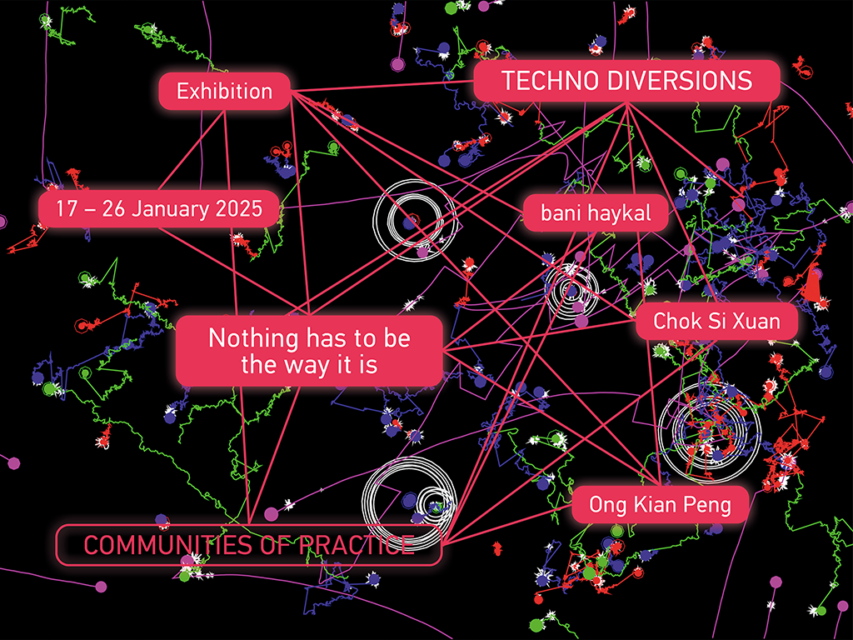
Exhibition from 17 to 26 January 2025
NTU Centre for Contemporary Art Singapore is pleased to present Nothing has to be the way it is, an exhibition featuring the artistic propositions created by Chok Si Xuan, bani haykal, and Ong Kian Peng as part of their involvement in Communities of Practice. Techno Diversions, a five-month programme curated by Anna Lovecchio that interlaces artistic research, transdisciplinary encounters, and the formation of communities around shared interests to propel transformative understandings of technology.
The uncanny symbiosis between humans and the digital devices, interactive interfaces, online platforms, and global infrastructures that increasingly operate our lives is a defining feature of contemporary society. In these wired times of machine intelligence and computational acceleration, microchip wars and platform powers, the artworks featured in this exhibition cast a sideway look at techno-driven progress. Moving across different conceptual frameworks and a multiplicity of mediums, Chok Si Xuan, bani haykal, and Ong Kian Peng share a common investment in reclaiming agency within the technosphere. They divert, possess, possibly disrupt the undisturbed existence of technological artefacts through gestures that question the escalation of technological sovereignty and, ultimately, the role of technology in our lives. Purposefully, these artists do not position themselves at the edge of advanced technologies. Rather, they interfere with existing apparatuses and instil into them worldviews other than those that originally brought them about. The systems they envisioned proceed by appropriations and approximations, frictions and forays, scrambled codes and enigmatic conjectures. In the essay “It Doesn’t Have To Be the Way It Is” which inspired the title of this exhibition, Ursula K. Le Guin remarks that the subversive power of the imagination “gnaw(s) at the very foundation of the belief that things have to be the way they are”. Nothing has to be the way it is hints at the endless permutations of how things can be.
Nothing has to be the way it is will take place in The Hall, NTU CCA Singapore’s programme space nestled at the heart of the Research Centre and launched in September 2024. This event marks the first time The Hall hosts a group exhibition, bringing home the Centre’s longstanding commitment to dwell upon and experiment with the spaces of the curatorial.
As participants in Communities of Practice. Techno Diversions, Chok Si Xuan, bani haykal, and Ong Kian Peng are conducting a residency at NTU CCA Singapore from October 2024 to February 2025. Revolving around critical engagements with the material, political, and spiritual layers of technology and the complexity of our relation to it, this multidimensional programme is a generative platform that provides artists with time, space, and resources to unravel their aesthetic inquiries and catalyse communities around their interests and creative processes.
The exhibition is couched between two series of public programmes— Empirical Workshops and the Transdisciplinary Lectures—developed in conversation with the artists themselves. Steeped in a do-it-yourself ethos, the Empirical Workshops took place in December 2024. Each workshop germinated by the artist’s own research and was aimed at creating knowledge through skill-sharing and the creative dabbling with raw materials. In Temporal Oscillations, Chok Si Xuan dived into the physics of circuitry and erratic electronics, teaching participants how to assemble common electronic components to modulate the flow of electricity and hijack standard systems of temporality. With METAL MACHINE MISCHIEF (or how to make noise music with bicycles), bani haykal took his workshop participants on an unconventional group ride. Through tinkering and drilling, cranking and whirring, discarded bicycle parts were assembled into unorthodox musical instruments activated in a final jam session that produced a one-of-a-kind audiovisual experience. Different wavelenghts resonated in Ong Kian Peng’s Natural Radio workshop where participants could explore a range of low frequency waves emitted by natural electromagnetic phenomena as a way to tune in to the inaudible voices of the environment.
Coming up in February 2025, the Transdisciplinary Lectures will bring the artists in conversations with philosophers, sociologists, scientists, and other creatives whose work significantly inspired them. Deepening the ramifications of their research in different disciplines, the Transdisciplinary Lectures will feature contributions by: Tiziano Bonini (Associate Professor, Sociology of Culture and Communication, University of Siena, Italy), Eugene Yew Siang Chua (Nanyang Assistant Professor of Philosophy, School of Humanities, NTU, Singapore), Lee Pooi See (Professor, School of Materials Science and Engineering, NTU, Singapore), Emiliano Treré (Beatriz Galindo Distinguished Professor, Language Theory and Communication Sciences, University of Valencia, Spain and Reader, Data Agency and Media Ecologies, Cardiff University, United Kingdom), and Boedi Widjaja (interdisciplinary artist, Singapore).
17 to 26 January 2025
Opening hours
Tuesday to Sunday, 12:00 – 7:00pm
Friday 24 and Saturday 25 January, 12:00 – 10:00pm
Closed on Monday
Curator Tours
Saturday 18 January, 3:00pm and 5:00pm
Artists Tour
Saturday 25 January, 3:00 – 4:00pm
The Hall
NTU CCA Singapore
Block 6 Lock Road, #01-09
Gillman Barracks, 108934
Part Of

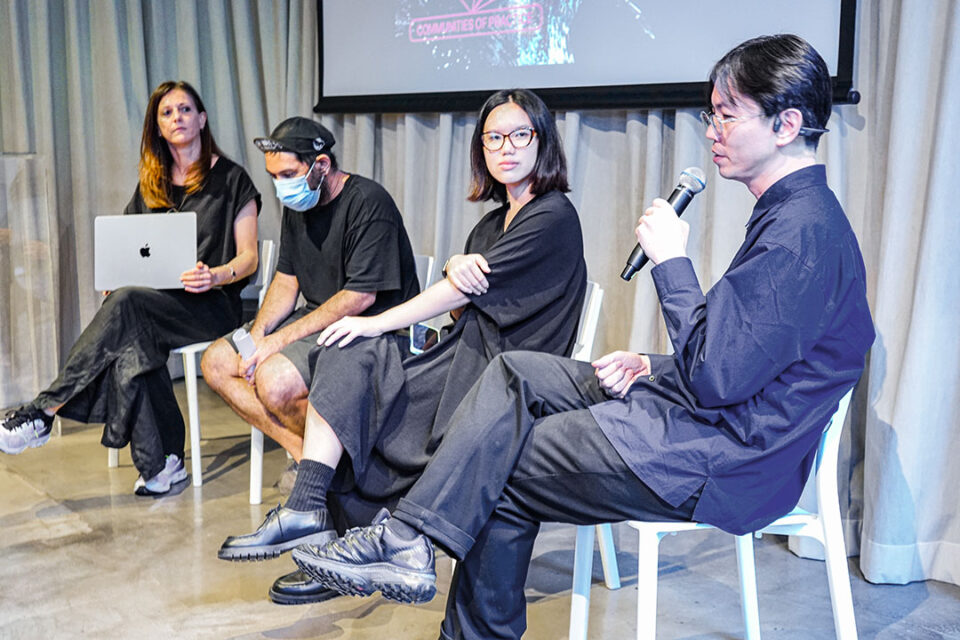
by Chok Si Xuan, bani haykal, and Ong Kian Peng
What drives an artist to reconfigure the inner mechanisms of devices we have grown increasingly reliant upon? What acts of mobilisation can an artist perform within existing technological infrastructures to cultivate different types of cultural, social, and emotional agency? Can the artistic imagination interrogate the spiritual dimensions of technology and respond to escalating environmental crises determined by society’s current course of development?
In this joint talk, artists Chok Si Xuan, bani haykal, and Ong Kian Peng reflect upon how these and other similar questions have oriented recent developments in their practices. By addressing structural opacities and power structures, and by fostering an ecological understanding of the relation between humans and technology, their work illuminates some dark corners of fast-paced technological advancement and experiments with alternative forms of being within existing structures. Their research is currently unfolding within the framework of Techno Diversions, the inaugural iteration of NTU CCA Singapore’s research platform Communities of Practice.
Communities of Practice fosters interdisciplinary collaborations and the coming together of communities around shared interests. It situates NTU CCA Singapore as an interdisciplinary body within the research-driven core of Nanyang Technological University, advancing its role as convener, capacity builder, and leading incubator in the arts sector.
Saturday, 9 November 2024, 3.00 – 4.30pm
The Hall, NTU CCA Singapore
Block 6 Lock Road, #01-09
Gillman Barracks, 108934
EMPIRICAL WORKSHOPS
This workshop will introduce participants to natural radio. Natural radio is the emission of Very Low Frequency (VLF) and Extremely Low Frequency (ELF) radio waves due to electromagnetic energy from natural phenomena. These emissions originate terrestrially from lightning and from the Sun’s interactions with the Earth’s magnetosphere, they are among the inaudible voices of the environment. If the low frequencies of these electromagnetic outbursts are transformed into acoustic waves, many of these signals may fall within the range of human hearing. Experiencing electromagnetic waves as acoustic waves will allow listeners to connect with the beauty and complexity of natural radio waves in a unique aural experience.
By the end of the workshop, participants will be able to assemble an analogue handheld radio device that tunes in to natural radio frequencies.
Participants are encouraged to bring their own headphones with a 3.5mm audio jack, along with an optional audio recorder to capture and share their auditory discoveries.
This workshop is part of the Empirical Workshop Series of Communities of Practice. Techno Diversions.
This workshop is suitable for age 18 and above.
No prior knowledge of electronics is required.
Saturday, 21 December 2024, 2 – 5pm
The Hall, NTU CCA Singapore
Block 6 Lock Road, #01-09
Gillman Barracks, Singapore, 108934
METAL MACHINE MISCHIEF (or how to make noise music with bicycles) by bani haykal
“Riding bikes ain’t s#!+ without climate justice, without land back, without liberation of everybody”
Christina Torres, Cyclista Zine
The bicycle is more than just a means of transportation. In our increasingly car-centric and carbon-heavy lifestyle, cycling is a climate action that slows down the rate at which our planet is burning. Inspiring stories from Gaza have shown us how bicycles can be radically repurposed into washing machines, sewing machines, and even power generators.
In the first part of the workshop, participants will be offered a set of unused bicycle components gathered by artist bani haykal and they will be guided to devise and conceptualise new musical or sonic instruments with them. In the second part, these unorthodox instruments will be played in a group jam session!
Participants are encouraged to bring personal items such as mallets, drumsticks, clarinet mouthpieces, and/or any musical bobs and bits they can incorporate into the instruments.
This workshop is part of the Empirical Workshop Series of Communities of Practice. Techno Diversions.
This workshop is suitable for age 18 and above.
No prior knowledge or experience is required.
Saturday, 7 December 2024, 10:30am – 12:30pm
The Hall, NTU CCA Singapore
Block 6 Lock Road, #01-09
Gillman Barracks, Singapore, 108934
Temporal Oscillations. Electronics workshop led by artist Chok Si Xuan
This workshop will explore how to use common electronic components to modulate the flow of electricity, assemble and hijack standard systems of temporality. Participants will learn how a 555 timer integrated circuit (IC) forms an astable multivibrator. The 555 timer IC is a tiny chip found in many everyday devices—blinking LED lights, kitchen timers, alarm systems, sound makers, etc.—that modulates the frequencies of electrical signals. The term ‘astable’ means ‘not stable’ because the circuit never settles into a single state, is a basic electronic circuit that generates a continuous oscillating output, switching between two voltage levels.
Working with pre-assembled circuits created by artist Chok Si Xuan, participants will be able to experiment with various components (small motors, LED lights, and speakers, etc) as outputs. Exploring the transformation of different forms of energy—chemical energy from batteries, mechanical energy , kinetic energy and byproduct thermal energy, the workshop accesses materiality as a manner of understanding the fundamental ways systems unfold.
Through engaging with electronic circuits in a hands-on and accessible way, participants can expect to develop a direct understanding of some visible and less visible aspects that power everyday technology. Participants are encouraged to bring their own components for experimentation. These may include battery-operated toys, LED lights or small light strips, buzzers or small speakers, direct current (DC) motors, small fans, switches or buttons, old electronic parts like sensors or wires, and similar items.
This workshop is part of the Empirical Workshop Series of Communities of Practice. Techno Diversions.
This workshop is suitable for age 18 and above.
No prior knowledge of electronics is required.
Saturday, 7 December 2024, 10:30am – 12:30pm
The Hall, NTU CCA Singapore
Block 6 Lock Road, #01-09
Gillman Barracks, Singapore, 108934

Transdisciplinary Lectures
Presentations by Dr Eugene Chua (Singapore) and Boedi Widjaja (Indonesia/Singapore) followed by a conversation with ong kian peng (Singapore)
What is reality? The models we use to conceptualise the world are increasingly under scrutiny, reshaped by the ecological crises of our time and the revelations of quantum theories. Classical distinctions between humans, non-humans, and objects are dissolving as we zoom in at the quantum level, revealing a world of entanglements and uncertainties. This event brings together artist Boedi Widjaja, whose practice explores the intangible and ephemeral, and philosopher of physics Eugene Chua, whose work delves into the complexities of quantum mechanics. Their presentations will be followed by a dialogue moderated by artist ong kian peng. The panel will unfold some intersections of art, science, and philosophy, offering new perspectives on how we perceive, construct, and engage with reality. Through this exchange, the audience will be offered new lenses for understanding the world and reimagine their place within a dynamic, interconnected cosmos.
Wednesday, 12 February 2025
7 – 8:30pm
The Hall, NTU CCA Singapore
Block 6 Lock Road, #01-09
Gillman Barracks, Singapore, 108934
Lecture by Professor Pooi See Lee (Singapore), followed by a conversation with artist Chok Si Xuan (Singapore)
Will electronics become flexible and soft? As technological advances shrink systems and transition from hard robots to soft machines, how will this affect the way we understand and relate to the devices we interact with?
Professor Lee Pooi See, whose research delves into human-machine interface, hybrid materials for soft robotics, and nanostructures, will share about the influences and current trajectories of material sciences and human-machine interfaces articulating her insights into the future of a softer and smaller world of technology. In conversation with Chok Si Xuan, the scientist and the artist will discuss the implications of a world driven by mechanisms that escape human vision and they will exchange ideas about the relational qualities of interfaces and the rise of biomimicry in the realm of technological innovation.
This event is generated by Chok Si Xuan within Communities of Practice. Techno Diversions, a research programme that aims to propel a transformative understanding of technology through artistic practices and transdisciplinary encounters.
Wednesday, 19 February 2025
7 – 8:30pm
The Hall, NTU CCA Singapore
Block 6 Lock Road, #01-09
Gillman Barracks, Singapore, 108934
Algorithms of Resistance. Tracing tactics of agency and solidarity within platform society
Online lecture by Tiziano Bonini (Italy) and Emiliano Treré (Italy/United Kingdom) followed by a conversation with bani haykal (Singapore)
oday, a growing number of social interactions, economic transactions, political engagements, and affective relations are enabled and regulated by a global network of online platforms operated through algorithms. As algorithmic infrastructures become enmeshed in the fabric of society, more and more aspects of everyday life are being captured and released in data streams that feed digital entities unilaterally coded and controlled by profit-driven tech companies. Through extensive online and offline fieldwork conducted across the Global North and the Global South, Tiziano Bonini and Emiliano Treré—co-authors of Algorithms of Resistance. The Everyday Fight Against Platform Power (The MIT Press, 2024)—ventured into uncharted alghoritmic territories. They encountered forms of agency, practices of resistance, and bonds of solidarity enacted by users who negotiate their own terms of existence within the platform regime. In this lecture, the speakers will reflect on how grassroots practices can spark emancipatory frictions that reinvent and disrupt the uneven power relation between users and platforms.
This event is generated by bani haykal within Communities of Practice. Techno Diversions, a research programme that aims to propel a transformative understanding of technology through artistic practices and transdisciplinary synergies.
Wednesday, 26 February 2025
7 – 8:30pm
The Hall, NTU CCA Singapore
Block 6 Lock Road, #01-09
Gillman Barracks, Singapore, 108934
As an artist and musician, bani haykal (b. 1985, Singapore) experiments with language, sound, and fiction. His work revolves around human-machine relationships / intimacies, and cultural identity formations reflecting critically on how language, tools and technologies have shaped and continue to shape our life experiences. From interfaces to interactions, from fictions to frictions, from commuting to communicating, the creative output of his research often involves the creation of DIY tools and it encompasses site-responsive installations, poetry, and performance as well as publications and music releases. He has participated in various festivals and exhibitions including Busan Biennale (South Korea, 2024), Seeing Sound (touring exhibiton, 2023 -2027), The Rumbling In-between with ila (Jendela Visual Arts Space, Esplanade, Singapore, 2023), [Alternate / Opt] Realities, State of Motion (Singapore, 2021) among many others. He has been a member of several music bands including B-Quartet, Erik Satay & The Kampong Arkestra, and The Observatory.
The Han Nefkens Foundation was established in 2009 with the aim of connecting people through art. In 2016, Han Nefkens decided to focus exclusively on supporting emerging and mid-career international video artists through Awards, Production Grants, and Mentorship Grants. The Foundation is not only involved in producing new works with the artists, but also finding international residencies, producing publications, purchasing working tools, finding technical support, and bringing artists into contact with art institutions and peers. With an extensive network in countries such as Thailand, Vietnam, Cambodia, Korea, Ecuador, Peru, Spain, and the Netherlands, the Foundation is able to present artists to a diverse and global audience.
Angela Ricasio Hoten is a research assistant at the School of Art, Design and Media, Nanyang Technological University supporting the research projects Climate Transformation Programme (2024–Present), Developing and Evaluating Digital Tools for Participatory Climate Change Mitigation (2025–Present) and previously the Environmentally-Engaged Artistic Practices in South, Southeast Asia and the Pacific (2023–2024). Angela holds a BA (Hons) in Environmental Studies and minor in Anthropology from Yale-NUS College, Singapore. She was also the undergraduate research assistant for ‘Lala Land: Singapore’s Seafood Heritage’ edited by Anthony Medrano, published by Epigram Books.
Ng Mei Jia is currently Research Associate at the School of Art, Design and Media, Nanyang Technological University, managing the research projects Climate Transformation Programme (2024–2027), Developing and Evaluating Digital Tools for Participatory Climate Change Mitigation (2025–2026) and a research assistant on Climate Crisis and Cultural Loss (2021–2024), Environmentally-Engaged Artistic Practices in South, Southeast Asia and the Pacific (2021–2023), and Understanding Southeast Asia as a ‘Geocultural’ Formation (2021–2023). She was previously a Project Officer (Intangible Cultural Heritage) at the National Heritage Board, Singapore. Mei Jia holds an MA in Southeast Asian Studies from the National University of Singapore.
NTU Centre for Contemporary Art Singapore presents the second-cycle exhibition of SEA AiR – Studio Residencies for Southeast Asian Artists in the European Union (SEA AiR), a programme developed by NTU CCA Singapore and funded by the European Union. Titled Passages, this exhibition features new works by artists Priyageetha Dia (Singapore), Ngoc Nau (Vietnam) and Saroot Supasuthivech (Thailand), inspired by their three-month-long residencies in Europe.
As part of the SEA AiR programme, Dia had undertaken her residency at Jan van Eyck Academie (Netherlands), Nau at Rupert (Lithuania) and Supasuthivech at Künstlerhaus Bethanien (Germany) through the summer. During their time in Europe, they were also funded for field trips supporting further inquiry into their respective areas of research. Passages speak of the three artists’ journeys across geographical and cultural boundaries from one continent to another; the cultural exchanges that take place during this time; and the continuous development of ideas as they return to their home countries to create new works for the exhibition in Singapore.
Employing new media technologies to aid their storytelling, each artist creates speculative narratives that traverse time and space, shifting between the past and present. Dia’s research on the colonial impact on Malayan plantations is manifested through soundscapes; Nau’s video work navigates the fast-changing urban and social landscape in Vietnam against a backdrop of its Socialist past and Supasuthivech’s installation traces the evolution of Thai funerary rituals and practices as they travel. While distinct in their artistic research and practices, their works evoke memories and explore meanings in liminal spaces, reverberating in their journey from one passage to the next.
Passages will be held through Singapore Art Week 2024, with a public programme taking place on 20 January 2024. Details will be updated here.
SEA AiR – Studio Residencies for Southeast Asian Artists in the European Union is made possible thanks to a generous grant of the European Union.
Passages
SEA AiR – Studio Residencies for Southeast Asian Artists in the European Union
Cycle 2 Exhibition
Opening reception:
28 November 2023, 6–9pm
Refreshments will be served
Opening hours:
1 December 2023 – 14 January 2024: Friday – Sunday, 1–7pm
19 – 28 January 2024: Tuesday – Sunday, 1–7pm
20 and 27 January 2024: Saturday, 1–9pm
Closed on 24, 25, 31 December 2023 and 1 January 2024
NTU CCA Singapore Residencies Studios
Block 38 Malan Road
Gillman Barracks
Singapore 109441

After a very successful first iteration of Climate Futures #1: Cultures, Climate Crisis and Disappearing Ecologies its second convening wants to build on its discussions and expand its understanding of the decline in cultural and ecological diversity in the region. It became very clear that such conversations require space and time to process complex issues, if we do not want to simplify and allow more than one way to process how people feel about their situations and want to be heard. Our futures require us to go beyond the status quo of current modes of operating. To not lose cultural knowledge and biodiversity Climate Futures #2: Belonging & Shared Responsibilities will share various narratives and practices that are already in place. It wants to further provide access to communities outside state and institutional structures to further nurture understanding of change in responsibilities and accountability.
The summit intents to further map how the climate crisis informs our contemporary world, and how diverse cultures can adjust or adapt without losing a sense of purpose. It comprises of discussions into alternative approaches to regional studies focusing on urgencies such as rising sea-levels and temperatures and the impact on natural resources of the region. A particular focus will be on areas such as the Mekong River and Delta (Myanmar, Laos, Thailand, Cambodia, Vietnam) and its water street to Indonesia, Malaysia and the Philippines including the Straits that plays an essential role in the regions shared history.
The holistic approach of Climate Futures #1: Cultures, Climate Crisis and Disappearing Ecologies showed already how it can successfully stimulate a debate between artists, designers, and architects, scientists, environmentalists, as well as local voices and policy makers. We seek to reach out to an even wider public including younger scholars and practitioners, as well as community leaders and policy makers from the ASEAN region.
The future of our shared prosperity relies on our collective ability to create an inclusive and sustainable foundation for growth.
Read the programme brochure here.
Thursday, 26 October – Saturday 28 October 2023
Sokhalay Angkor Villa Resort, Siem Reap, Cambodia
Thursday, 26 October
Join the livestream here with the passcode 668981.
9:30am Registration & Coffee
10:00am Opening Addresses
Dr Piti Srisangnam, Executive Director, ASEAN Foundation
H.E. Min Chandynavuth, Under-Secretary of State, Ministry of Culture and Fine Arts, Cambodia
Prof. Tim White, Vice President (International Engagement); President’s Chair in Materials Science and Engineering; Professor, School of Materials Science & Engineering.
Welcome and Introduction by co-curators Prof. Ute Meta Bauer (Germany/Singapore), Founding Director NTU Centre for Contemporary Art, and Professor School of Art, Design, and Media, NTU Singapore and Magdalena Magiera (Germany/Singapore), Curator Residencies and Programms, NTU Centre of Contemporary Art, Singapore
10:30am The Art of Living Lightly, Keynote Lecture by Rachaporn Choochuey (Thailand), Architect, Co-founder, Design Director, all(zone) ltd
11:40am Between Bots and the Biosphere: Machine Philosophy, Media Ecologies, and Digital Hieroglyphs for Climate Adaptation, Case Study by Nashin Mahtani (Indonesia), Director, PetaBencana.id
12:00pm An Uncommon History of The Common Fence: A Prologue (To the Coast), Case Study by Jason Wee (Singapore), Artist, Writer, Curator
12:20pm Sharing Climate Futures: Developing tools for climate care and action, Case Study by Prof. Ute Meta Bauer (Germany/Singapore), Founding Director NTU Centre for Contemporary Art, and Professor School of Art, Design, and Media, NTU Singapore
1:00pm Discussion with Rachaporn Choochuey (Thailand), Nashin Mahtani (Indonesia), and Jason Wee (Singapore). Moderated by Prof. Ute Meta Bauer (Germany/Singapore)
3:30pm Belonging & Sharing Responsibilities, Closed Workshop by Claudia Lasimbang a.k.a Yoggie, Technical Coordinator Watersheds and Communities, Forever Sabah, Philip Chin a.k.a. Linggit, Technical Coordinator Certified Sustainable Palm Oil, Forever Sabah, and Yee I-Lan (all Malaysia), artist
Friday, 27 October
Join the livestream here with the passcode 400242.
8:45am Registration & Coffee
9:00am Welcome & Introduction
9:10am Creative Digital Lab: how artists, cultural and creative professionals and technologists work together to explore the potentials of XR technology in protecting heritage, safeguarding intangible cultural heritage and contributing to climate action. Lecture by Kamonrat Mali Chayamarit (Thailand), Culture Programme Officer, Lao PDR alternate Focal Point, UNESCO Culture related Conventions Advocate
9:40am Ecology for Non-Futures, Case Study by Binna Choi (South-Korea), Artists, part of Unmake Lab
10:20am Climate impact on social process and social structure, Case study by Daovone Phonemanichane (Laos), Strengthening Climate Resilience Project Manager, Oxfam Mekong Regional Water Governance Program
10:40am When Nature has Economic Value, Case Study by Som Supaprinya (Thailand), Artist
11:20am Discussion with Kamonrat Mali Chayamarit (Thailand), Binna Choi (South-Korea), Daovone Phonemanichane (Laos), and Som Supaprinya (Thailand). Moderated by Bejamin Hampe (Australia), Project Director, KONNECT ASEAN
1:00pm Glimpse of Life on the Water, Closed Workshop Sessions by Sovann Ke (Cambodia), Project Manager, OSMOSE
Saturday, 28 October
Join the livestream here with the passcode 353177.
8:45am Registration & Coffee
9:00am Introduction & Welcome
9:15am Every (de)Force Evolves into A (de)Form, Lecture by Gahee Park (South-Korea), Curator, Seoul Museum of Art, Seoul
10:00am Pedagogy, Community, Art: Bottom-up Urbanism at Phnom Penh’s Wat Chen Dam Daek, Case Study by Lyno Vuth (Cambodia), Artist, and Eva Lloyd (Australia), Lecturer, University of New South Wales (UNSW)
10:20am Luang Prabang: From Cultural Landscape into Practice, Case Study by Phonepaseth Keosomsak (Laos), Architect, Artist
11:00am Snare for Birds: Rebelling Against an Order of Things, Case Study by Kiri Dalena (Philipines), Artist
11:20am Travelling through time, Case Study by Malin Yim (Cambodia), Artist
11:40am The New Word for World is Archipelago, Case Study by Nice Buenaventura (Philippines), Artist
12:00pm Discussion with Nice Buenaventura (Philippines), Kiri Dalena (Philipines), Phonepaseth Keosomsak (Laos), Gahee Park (South-Korea), Lyno Vuth (Cambodia), and Malin Yim (Cambodia). Moderated by Magdalena Magiera (Germany/Singapore)
2:30pm Visit of Blue Art Centre. Welcome by Sareth Svay (Cambodia), Artists, Director, Blue Art Centre
3:00pm Closing workshop by Cynthia Ong (Malaysia), Chief Executive Facilitator Forever Sabah Institute, LEAP
Curated by NTU CCA Singapore
Ute Meta Bauer, Founding Director and Magdalena Magiera, Curator, Residencies and Programmes
Supported by
ASEAN Secretariat
ASEAN-Korea Cooperation Fund
Mission of the Republic of Korea to ASEAN
ASEAN Senior Officials Meeting for Culture and Arts
Programme support by Ministry of Culture and Fine Art, Cambodia
PROJECT PARTNERS
ASEAN FOUNDATION
Since the formation of ASEAN in 1967, ASEAN has embarked on a journey to accelerate economic growth, social progress, and cultural development in the region. After three decades, ASEAN leaders recognised there remained inadequate shared prosperity, ASEAN awareness, and contact amongst the people of ASEAN. As a result, ASEAN leaders established the ASEAN Foundation during the ASEAN 30th Anniversary Commemorative Summit in Kuala Lumpur Malaysia on 15 December 1997.
KONNECT ASEAN
As the post-Cold War reality of a new world has taken shape and formed new directions and conversations, ASEAN has re-entered the contemporary art space via collaborative efforts between various ASEAN bodies. The Republic of Korea celebrated 30 years of diplomatic relations with ASEAN in 2019 and in the same year established KONNECT ASEAN, an ASEAN-Korea arts programme. Supported by the ASEAN-Korea Cooperation Fund and administered by the ASEAN Foundation, KONNECT ASEAN signals both an eagerness by ASEAN to revitalise its once integral role in contemporary visual arts and Korea’s sincerity in establishing closer ties with ASEAN.
The programme celebrates Southeast Asian and Korean arts using different platforms (exhibitions, education and conferences, public programmes, residencies, and publications and archives) to explore and discuss social, political, economic, and environmental issues in the region. The artists’ works and activities engages and strengthen the public’s understanding of ASEAN’s role in facilitating cultural diplomacy. Furthermore, the programme intends to connect with the three major stakeholder groups of government, business, and civil society to achieve the vision of an ASEAN Community. Outcomes provide permanent resources recording why ASEAN matters and its ongoing contribution to the region’s growth, prosperity, and stability.
NANYANG TECHNOLOGICAL UNIVERSITY
A research-intensive public university, Nanyang Technological University, Singapore (NTU Singapore) has 33,000 undergraduate and postgraduate students in the Engineering, Business, Science, Medicine, Humanities, Arts, & Social Sciences, and Graduate colleges. NTU is also home to world-renowned autonomous institutes—the National Institute of Education, S Rajaratnam School of International Studies, Earth Observatory of Singapore, and Singapore Centre for Environmental Life Sciences Engineering—and various leading research centres such as the Nanyang Environment & Water Research Institute (NEWRI) and Energy Research Institute @ NTU (ERI@N).
Under the NTU Smart Campus vision, the University harnesses the power of digital technology and tech-enabled solutions to support better learning and living experiences, the discovery of new knowledge, and the sustainability of resources. Ranked amongst the world’s top universities, the University’s main campus is also frequently listed among the world’s most beautiful. Known for its sustainability, over 95% of its building projects are certified Green Mark Platinum. Apart from its main campus, NTU also has a medical campus in Novena, Singapore’s healthcare district. For more information, visit ntu.edu.sg.
NTU CENTRE FOR CONTEMPORARY ART SINGAPORE
Situated within Singapore’s premier art precinct Gillman Barracks, NTU CCA Singapore is a pioneering institution that has been instrumental in shaping the contemporary art landscape in Singapore and beyond. With a focus on fostering creativity, innovation, and critical thinking, the Centre’s programmes have consistently challenged the status quo, encouraging artists to explore new realms of artistic expression. For more information, visit ntu.ccasingapore.org.
Image: Climate Futures #1, Jakarta (Indonesia), 2022. Courtesy NTU CCA Singapore, Konnect ASEAN & ASEAN Foundation.
Yan Jun (China) and Yuen Chee Wai (Singapore)
Time is still and we are in revolution
Live performance streamed through LCD screens, approx. 30 min.
Saturday, 16 September 2023
3:30pm – 4:15pm
NTU CCA Singapore Seminar Room
37 Malan Road, #01-04
Singapore 109452
Performance will start on time.
Admission is free on a first-come first-served basis.
Isn’t there a paradox in any revolution in that they circle back as they move forward? A revolving disc spins the two performers, together with their respective environments and audiences, at the same speed across vast geopolitical distances: an apartment in Bejing (Yan Jun) and former military barracks converted into artist studios in Singapore (Yuen Chee Wai). Set in a mysterious code, Time is still and we are in revolution is an experiment in remote improvisation made of electronics and vocals, cyclical contacts and recurring departures.
Time is still and we are in revolution results from an experimental working methodology developed by Yan Jun and Yuen Chee Wai. The first outcome of this ongoing collaboration, The Riddle of the Machine, was presented at the Trans-Southeast Asia Triennial Research Exhibition Series Review, Guangzhou, China, earlier in 2023.
BIOGRAPHIES
Yuen Chee Wai (Singapore) is a musician, artist, designer, and curator. Often inspired by perspectives glimpsed through the filmic eye and photographic lens, Yuen’s stylistic oeuvre in improvised music is marked by internalised reflections on memory and loss, invisibility and indeterminacy. His latest research interests are in mycology and caves. In 2008, together with Otomo Yoshihide (Japan), Ryu Hankil (South Korea), and Yan Jun (China), he formed FEN (Far East Network), an improvised music unit focusing on the multifaceted networks and collaborations between musicians and artists in Asian countries. He is also a member of The Observatory, in which he plays guitar, synth, and electronics. He tours extensively with FEN and The Observatory, and has presented at MIMI Festival, Lausanne Underground Music and Film Festival, All Ears Festival, Ftarri Festival, Gwangju Biennale and CTM Festival. Yuen was an Artist-in-Residence with NTU CCA Singapore in Cycle 8.
Yan Jun (China) is a musician and poet based in Beijing. His works involve electronics, feedback, site-specific installations, and noise. His improvisation sets follow the unstable relationship between microphones, speakers, the space and his body movement, to create subtle and unstable sound. He is a member of FEN (FarEastNetwork), Tea Rockers Quintet and Impro Committee, and has toured in the US, Australia, Europe and Asia. He has performed at Shanghai Biennale and received an honorary mention by Ars Electronica (Austria), and is the founder of Sub Jam label/organization. As a writer he has published and translated several books and poetry collections and attended the Rotterdam International Poetry Festival, and Berlin International Poetry Festival. Yan Jun was an Artist-in-Residence with NTU CCA Singapore in Cycle 2.
Dr. Yanyun Chen (b. 1986, Singapore) is a visual artist who works across drawings, new media, and installation. Her artistic practice unravels fictional and philosophical notions of embodiment exploring how heritage and legacies are grounded in the physicality of human and botanical forms. Her solo exhibitions include Stories of a Woman and Her Dowry, Grey Projects, Singapore (2019) and Scars that write us, part of the President’s Young Talents 2018, Singapore Art Museum (2018). She has participated in group exhibitions such as While She Quivers, Objectifs – Centre for Photography and Film, Singapore (2021); Thailand Biennale, Korat 2021 (2021); Clouds: The 6th International Exhibition on New Media Art 2020, CICA Museum, South Korea (2020); Fiction Non Fiction, Cultural Affairs Bureau, Macau (2019); 2291: Futures Imagined, Art Science Museum, Singapore (2019) among others. Yanyun has received the Young Artist Award in 2020 and the IMPART Art Prize in 2019. Her works were also awarded the Prague International Indie Film Festival Q3 Best Animation Award (2020), National Youth Film Awards Best Art Direction Award (2019), Singapore Art Museum President’s Young Talents People’s Choice Award (2018), and the Lee Kuan Yew Gold Medal Award (2009).
The multimedia practice of Ngoc Nau encompasses photography, holograms, and Augmented Reality (AR) and she is currently working with 3D software and other open source technologies to create new possibilities for video installation. In Nau’s work, different materials and techniques attempt to capture the subtle ways in which new media shape and dictate our views of reality. Blending traditional culture and spiritual beliefs with modern technologies and lifestyles, her work often responds to Vietnam’s accelerated urban development. She has participated in several exhibitions across Asia, including the Thailand Biennale, Korat (2021) and the Singapore Biennale (2019) among others. She also participated in documenta 15, Kassel, Germany (2022) with Sa Sa Art Projects.
During the residency, Ngoc Nau intends to research the impact of urbanisation and modernisation on contemporary living conditions, collective memories, traditional practices, and the natural landscape. Situating herself within the creative community of Rupert will allow her to explore Lithuanian cultural landscape and to access a new trove of materials, including oral traditions, historical archives, and ritual ceremonies. Through encounters will the local community, she intends to unearth the traditional values and ancient practices that have been lost to industrial and technological advancements in order to come to a better understanding of how different communities configure their values and identities within the fast-changing landscape of today. Nau is particularly interested in the gaps created by modern development in the intergenerational transmission of knowledge and she plans to experiment with new media technologies to imagine modes of being that reconcile the past and the future.
Since 2020, Joy Chee has been the resident bartender/gardener (or bardener, if you will) at Native, a Singaporean restaurant-bar focused on working with local and regional craftsmen and communities. Drawn to them for their ethos of sustainability and commitment to highlighting native produce, she has been working on rewilding the gardens with local kampung herbs and supporting the garden-to-table concept. When she’s not elbow-deep in compost, she can be found shaking up a cocktail or two at 52 Amoy Street.
Spanning moving image, sculpture, as well as performative installations, Priyageetha Dia (b. 1992, Singapore) addresses identity politics by questioning dominant narratives and socio-spatial relations. In the past few years, her practice has been consistently experimenting with a variety of world-making gestures that envision alternative futures. Her works have been part of several group exhibitions including, Attention Seeker, La Trobe Art Institute, Bendigo, Australia (2022); An Exercise of Meaning in a Glitch Season, National Gallery Singapore (2020); 2219: Futures Imagined, ArtScience Museum Singapore (2019). She was a recipient of the IMPART Art Award in 2019.
Jonathan Liuis a Visual Artist working primarily with photography within his practice. He is interested in the narratives formed through text and photographs. Drawn from his fascination of narratives and the relationship between the artist and the poet, his recent works attempt to mirror and question our reality through representation and fragmentation of the landscape. His work deals with concepts such as memory, post-memory and the search for the layers in-between with works having exhibited in the United Kingdom, China and Singapore. He graduated from London College of Communication with a BA (Hons) Degree in Photography and currently lectures in LASALLE College of the Arts, Singapore.
Clara Peh is the founder of NFT Asia, the biggest digital-native community focused on Asian and Asia-based artists and creatives within the NFT space. She curated Right Click + Save, Singapore’s first large-scale NFT exhibition in 2021.
Clara is currently Art Lead and Curator at Appetite Singapore, and also an Adjunct Lecturer at LASALLE College of the Arts in the School of Fine Arts. She was an Ambassador for the Singapore Pavilion at the 58th Venice Biennale and has held positions at Christie’s, the Economic Development Board and NTU CCA Singapore. She is also an independent arts writer and researcher. Her works are published on Hyperallergic, Yishu Journal of Contemporary Chinese Art, Art and Market, and more.
Course Details
Date:16 April 2022, Saturday
Time: 9:00am – 5:00pm
Venue: NTU CCA Singapore, The Seminar Room, Block 37 Malan Road, Singapore 109452
Course Fee: $513.60 (incl. GST) SkillsFuture Credits applicable for Singaporeans.
For enquiries, please email ntuccaeducation@ntu.edu.sg
About The Course
The Upward Trend: NFTs and On-Chain Art is an introductory course designed for those who are interested to learn about the background and history of crypto art, and are keen to navigate the concept of NFTs, the technology that underlies them and the ecosystems they propel.
During the course, our instructors from NFT Asia will provide an overview of the basic terminologies that surround NFTs, blockchain and Web 3.0. They will also spotlight the relationship between NFTs and contemporary art discourses, as well as its interactions and intersections with broader art communities, such as through Decentralised Autonomous Organisations (DAOs).
As a participant, you will examine case studies, recent writings on the technology and engage in group discussions. By exploring different considerations to utilising NFTs which include minting, displaying and community building you will gain insights into the future of NFTs and its potential impact on the roles of artists, creatives, museums, galleries and the art business at large.
Who Should Sign Up
Artists, Arts Managers, Cultural Workers, Designers, Collectors, Gallerists, Arts Enthusiasts
At The End of the Course, You Will…
1. Gain a confident and nuanced understanding of what NFTs are.
2. Be more familiar with art and creative infrastructures within and beyond the NFT ecosystem.
3. Develop a perspective of the implications of NFTs.
Your Course Instructors

Clara Peh is the founder of NFT Asia, the biggest digital-native community focused on Asian and Asia-based artists and creatives within the NFT space. She curated Right Click + Save, Singapore’s first large-scale NFT exhibition in 2021.
Clara is currently Art Lead and Curator at Appetite Singapore, and also an Adjunct Lecturer at LASALLE College of the Arts in the School of Fine Arts. She was an Ambassador for the Singapore Pavilion at the 58th Venice Biennale and has held positions at Christie’s, the Economic Development Board and NTU CCA Singapore. She is also an independent arts writer and researcher. Her works are published on Hyperallergic, Yishu Journal of Contemporary Chinese Art, Art and Market, and more.

Jonathan Liuis a Visual Artist working primarily with photography within his practice. He is interested in the narratives formed through text and photographs. Drawn from his fascination of narratives and the relationship between the artist and the poet, his recent works attempt to mirror and question our reality through representation and fragmentation of the landscape. His work deals with concepts such as memory, post-memory and the search for the layers in-between with works having exhibited in the United Kingdom, China and Singapore. He graduated from London College of Communication with a BA (Hons) Degree in Photography and currently lectures in LASALLE College of the Arts, Singapore.
To register, please click here
For enquiries, please email ntuccaeducation@ntu.edu.sg
Musician, artist, designer, and curator Yuen Chee Wai (b. 1975, Singapore) is known for his commitment to improvised music and experimental projects that explore memory and loss, indeterminacy and invisibility. Ranging from the obsolescent and the newfangled, his eclectic toolbox comprises noise, field recordings, found sounds as well as guitars and various electronic instruments which reverberate with critical perspectives inspired by philosophy, literature, film, and politics. Together with FEN (Far East Network), an improvised music quartet he co-formed in 2008, Yuen is active in triggering multifaceted collaborations across Asia. Since 2014, he is Project Director of Asian Music Network for which he co-curates Asian Meeting Festival. Yuen is also a member of the experimental band The Observatory with whom he plays guitar, efx and objects, and organises a range of projects such Playfreely and BlackKaji.
Between 1973 and 2013, Barbara London (United States) was curator at MoMA where she founded the video exhibition and collection programmes. She is also a pioneer of the integration of the Internet into curatorial practice. Among the exhibitions she organised are one-person shows with early mavericks such as Nam June Paik, Steina Vasulka, Joan Jonas, Shigeko Kubota, Bill Viola, VALIE EXPORT, Laurie Anderson, and Zhang Peili. Her thematic projects have included Looking at Music, parts 1-3 (2008–2011) and Soundings: A Contemporary Score (2013). Her writings have appeared in a range of catalogues and journals, including ArtForum, Yishu, Leonardo, ArtAsiaPacific, Art in America, Modern Painter, and Image Forum. Currently, she is completing a book with Phaidon and is teaching at Yale University School of Art, New Haven, United States.
Object-orientated ontology (OOO) is a 21st-century school of thought that rejects the primacy of human existence over non-human objects, thus generating different perspectives on ecological thinking. Combining an ongoing interest in natural environments threatened by urban development with his practice of capturing sonic emanations of the non-human inhabitants of our planet, Tang aims to further his understanding of OOO and sharpen theoretical tools that challenge anthropocentric hierarchies and understanding of nature. The space of the studio provides him with the opportunity to test immersive multisensorial installations that visualize and animate field recordings taken in various natural environments in Singapore. During the residency, the artist is working on new sound compositions and modes of listening that forge alternative connections between humans and nonhumans. He is also experimenting with drawing to create “visual scores” in response to his soundscapes.
Investigating Singapore’s role within the growing global phenomenon of “green cities”, Coburn will pursue research into Singapore’s development from “Garden City” to “City in a Garden”. He aims to delve into historical and emerging notions of green urbanism, framing the garden as a pedagogical, philosophical, and literary construct. Focusing on two specific case studies, he will place the multiple functions of Singapore Botanic Gardens in a wider historical prospective and explore the social and economic conditions which underlie the complex eco-tourist structure of Gardens by the Bay.
Established in 1998 out of a former candy factory in Yokohama, Japan, *CANDY FACTORY PROJECTS is an international platform for collaborative art projects. Since 2001, it has taken on a nomadic existence nestling itself in different institutions around the world to generate exhibitions, publications, and web projects. During the residency, Kogo will set up a local office of *CANDY FACTORY PROJECTS that will function as a research laboratory for site-specific explorations. Relying on several collaborators both physically and through digital platforms, he plans to delve into the geopolitical relationship between Singapore and its bordering countries engaging with vernacular materials such as local newspapers, posters, and media archives. With similar working methodologies, he also intends to observe the manifestations of Singaporean multilingual society in everyday life. The possible outcomes of this research can range from music videos to animated clips, multimedia installations, and special screenings.
Over the course of the residency, Taiki Sakpisit plans to develop A Certain Illness Difficult to Name, an installation that addresses instances of trauma and violence embedded in the process of nation building in Singapore and Thailand through the lens of an individual’s point of view. Looking at historical events through the eyes of a single character is an intentional strategy aimed to personalize and humanize history while, at the same time, composing an allegory of collective torment. Having so far mostly produced experimental short films, Taiki aims to use the space of the studio to test a more complex visual and aural installation that can elicit the sensorium of the viewer and trigger out-of-body experiences.
Škart is an experimental art/design collective founded by Djordje Balmazović and Dragan Protić in 1990 at the Faculty of Architecture in Belgrade. In Serbian, the word Škart means “trash/reject”, an allusion to the collective’s approach to creative endeavours. Using vernacular languages and low-tech media, Škart’s practice infiltrates the most unconventional settings and often engenders unorthodox, community-based collaborations. Revolving around poetry and the “architecture of the human relationships,” their projects have been developed in several institutions and independent spaces across Europe. Most recently, their work has been presented in exhibitions at Museum of Modern Art, Ljubljana, Slovenia, 2016; Galerija Nova, Zagreb, Croatia, 2015; Museum of Yugoslav History, Belgrade, Serbia, 2015; the Serbian Pavilion, Venice Biennial of Architecture, Italy, 2010.
With an investment in creative research that combines art, science, and technology, Irene Agrivina’s research project, A Perfect Marriage, investigates the symbiotic relationship between Azolla, an aquatic water fern, and Anabaena, a microscopic blue-green cyanobacterium. The two organisms have never been apart for 70 million years, co-evolving in complementary ways that allow them to be increasingly efficient. Besides ensuring their survival, other outcomes of this remarkably sustainable and mutually beneficial relationship involve the production of biofuel and textile dyes, the purification of water, and the reduction of global warming. During her residency, Agrivina aims to expand on her research and conduct experiments inspired by this unique symbiotic process using eco-friendly materials. A Perfect Marriage intends to emphasise the global importance of patterns of co-dependency and the potential of the photosynthesis process in connection with environmental issues.
Research interests:
– Techno-environmental models for decolonisation
– Intimate strategies for interspecies communication
– Soil culture, ecological systems, and indoor gardening
– Open-source interaction systems and cryptic dispersal networks
– Global logistics and remote collaborations
Inspired by terra preta (black soil) — the anthropogenic production of a type of dark, fertile soil by Amazonian farming communities in ancient and contemporary times — Nolan Oswald Dennis’ research project Black Earth Study Club braids “Black Earth” and “Black Studies” in a speculative disciplinary twist. This project pursues the cultivation of mutual knowledge through practices of solidarity and soil-making with an interest in the potentialities of telepresence, redistribution, and remote collaboration. The project involves developing “black earth readers”: digital micro/mesocosmic systems for producing anthropogenic soils; collaborative reading (strategies for reading with soil microbes); and hacking global logistics networks for material redistribution. Adopting the form of a “study club” as social assemblage and research method, the project will involve exchanges among practitioners from South America, Europe, South Africa and Singapore to cultivate an ‘other’ possibility of solidarity on a planetary scale.
The residency of Nolan Oswald Dennis was scheduled for April – June 2020, but the COVID-19 pandemic outbreak rendered international travel impossible. In order to continue to support artistic research and foster collaborations beyond borders, the NTU CCA Residencies Programme initiated Residencies Rewired, a project that trailblazes new pathways to collaboration.
Research Liaison: Kin Chui
Engaged with modes of resistance and emancipatory struggles, the artistic practice of Kin Chui scrutinises the imprints of colonial past on the present through a socially-oriented and collaborative approach.
Taking advantage of Singapore’s position as a science and technology hub, Sohr will dedicate his residency to refine existing strands of work and explore new ones. He aims to advance his research on the history, materials, and aesthetics of Printed Circuit Board (PCB) and, also, to pursue his investigation into the accessibility of art spaces for the disabled. During the residency, Sohr will gradually transform his studio into a temporary space for the production of new sculptures and installations.
Premised upon the methodologies of ethnographic fieldwork, Matthias Sohr’s (b. 1980, Germany) artistic practice results in sculptures and installations that draw from technology and social sciences to reflect a wide range of research interests, from medical anthropology to “Bureaucracy Studies”. He is currently pursuing a PhD in the History of Medicine, University of Lausanne, Switzerland.
Matthias Sohr obtained a Master of Visual Arts from the University of Art and Design Lausanne, Switzerland in 2013. He has been a visiting lecturer at the University of Arts and Industrial Design Linz, Austria (2011-2012); Berlin University of the Arts, Institute of Spatial Experiments, Germany (2010). His work has been exhibited at Museum of Contemporary Art Tokyo (MOT), Japan (2011) and Neue Nationalgalerie, Berlin, Germany (2014), among others.
Nikos Papastergiadis is the Director of the Research Unit in Public Cultures, and a Professor in the School of Culture and Communication at the University of Melbourne. Furthermore, he is a co- founder (with Scott McQuire) of the Spatial Aesthetics research cluster. He is the Project Leader of the Australian Research Council Linkage Project, “Large Screens and the Transnational Public Sphere,” and Chief Investigator on the ARC Discovery Project “Public Screens and the Transformation of Public Space.” Prior to joining the School of Culture and Communication, he was Deputy Director of the Australia Centre at the University of Melbourne, Head of the Centre for Ideas at the Victorian College of Arts, and lecturer in Sociology and recipient of the Simon Fellowship at the University of Manchester. Throughout his career, Papastergiadis has provided strategic consultancies for government agencies on issues of cultural identity and has worked in collaborative projects with international renowned artists and theorists.
Trinh T. Minh-ha is Professor of Gender & Women’s Studies and of Rhetoric at the University of California, Berkeley, and an award-winning artist and filmmaker. She grew up in South Vietnam during the Vietnam War and pursued her education at the National Conservatory of Music and Theater in Ho Chi Minh City. In 1970, she migrated to the United States where she continued her studies in music composition, ethnomusicology, and French literature at the University of Illinois, Urbana-Champaign. She embarked on a career as an educator and has taught in diverse disciplines which brought her to the National Conservatory of Music in Dakar, Senegal, where she shot her first film, Reassemblage. Trinh’s cinematic oeuvre has been featured in numerous exhibitions and film festivals. She has participated in biennales across the globe including Documenta11, Kassel (2002), and most recently at Manifesta 13, Marseille (2020). A prolific writer, she has authored nine books. She is the author of several books including Lovecidal: Walking with the Disappeared (2016), D-Passage: The Digital Way (2013), and Elsewhere, Within Here: Immigration, Refugeeism and the Boundary Event (2011). Her film Surname Viet Given Name Nam (1989) was presented as an installation within NTU CCA Singapore’s inaugural exhibition Paradise Lost (2014).
Sean Dockray (Australia) is an artist, writer, and programmer whose work explores the politics of technology, with a particular emphasis on artificial intelligences and the algorithmic web. He is also the founding director of the Los Angeles non-profit Telic Arts Exchange, and initiator of knowledge-sharing platforms, The Public School and Aaaaarg.
Jeremy Sharma is a visual artist and Lecturer for Fine Arts at LASALLE College of the Arts, Singapore. His practice addresses our present relationship to modernity and interconnectivity in an increasingly fragmented and artificial reality. Sharma was Artist-in-Residence at NTU CCA Singapore between May and July 2015. During his residency, Sharma focused on the idea of “vertical progression,” observing the logic of production, from the act of making to the moment of display. This research consolidated into the video work Vertical Progression (2016) that spans across two years, revealing the network of collaborators, scientists, fabricators, movers, and collectors involved in the process.
Currently, more than half of the world’s human population lives in urban areas. Urban growth poses challenges to the various city dwellers, and creates material demands that cause lasting damage to the wider environment. The climate crisis is already announcing threatening scenarios particularly for coastal regions and megacities located at coastlines. Global urbanisation and the exploitation of resources happen on the expense of human and other species alike. The Posthuman City features artists who propose a shift in perspective.
Taking NTU CCA Singapore’s overarching research topic Climates.Habitats.Environments. as point of departure, the exhibition The Posthuman City considers the possibilities of a conscious sharing of resources, and a respectful and mindful coexistence between humans and other species. Through imaginative propositions at the intersection of art, design, and architecture, the selected artists engage questions addressing issues of sustainability, water scarcity, invisible communities, nature as a form of culture, and suggest the implementation of lived indigenous knowledges. Examining the urban fabric in its condition as a habitat for a diversity of life forms, the featured works range from installations to time-based media.

Stressing the vital importance of clean water and the challenges of its scarcity around the world, the artist and design duo Lucy + Jorge Orta have developed a long-term project on water collection, purification, and distribution. OrtaWater focuses on the general issues surrounding clean water and the privatisation and corporate control effecting access to it. Starting from a rigorous analysis of this crucial resource through visual and textual research and collaborative workshops with engineers, Lucy + Jorge Orta create sculptures, large-scale installations, and public artworks, that are both artefacts and functional design. One angle of their research—low-cost water purification devices enabling filthy water to be pumped and filtered directly from local sources—is translated into Portable Water Fountain (2005) and Mobile Intervention Unit (2007). These devices have been used to purify and distribute water from the Venice’s Canal Grande (2005) and the Huang Pu River in Shanghai (2012), among others, and now from the creek that runs through Gillman Barracks.
Similarly combating water pollution, Irene Agrivina’s Soya C(o)u(l)ture is a mixed media installation that demonstrates how to transform wastewater from tofu and tempeh production into usable biomaterials, such as fuel, fertiliser, and leather-like fabrics. Soya C(o)u(l)ture was developed in collaboration with XXLab, an all-female transdisciplinary collective that Agrivina co-founded. Usually, large amounts of wastewater pollute the water in the rivers surrounding the plants, which in turn causes cholera and skin and bowel diseases in humans. Soya C(o)u(l)ture intends to divert this wastewater from tofu factories and put it in a homegrown starter culture medium to create useful products. A biological process using various bacteria and cell cultures, for instance Acetobacter xylinum, generates alternative energy sources, foodstuffs, and biological material. This process creates cellulose sheets that can either be used for consumption—nata de coco, a variant made of coconut water, is a popular snack food—or further processed (pressed, dried, enhanced with colouring and coating) to make clothing and craft materials. This biological procedure can be reproduced in any household using normal kitchen utensils in combination with open-source software and simple hardware. In this way, the project could provide women in poverty-stricken regions with opportunities to increase their income.

Indigenous peoples of various territories around the world, with deep historical and cultural ties to their land, have preserved sustainable ways of living that respect the limits of the planet’s resources. The artist and architect Marjetica Potrč’s Earth Drawings refer to these unique indigenous cosmogonies and their essential knowledges, based on research done over the past 15 years, centred on indigenous communities, such as the Asháninkas (in the Brazilian state of Acre in Amazonia), the Aboriginal (in Australian), and the Sami (in northern Norway), The Earth Drawings, a series on paper, point to the growing alliances between indigenous groups and bottom-up initiatives in the effort to ensure a more resilient future, beyond the social and economic agreement of the neoliberal order. Potrč stresses that the world’s diverse societies, taken together, form an intelligent organism: when necessary, they self-generate new models of existence and coexistence—a precondition for human resilience on Earth. Sharing life experiences is, after all, a basic human condition. Coexistence on Earth requires new foundations that foreground collective ownership of the land and a socially-conscious individualism.

Planetary coexistence of species acknowledges the presence and agency of diverse forms of intelligence. The artist Nicholas Mangan is inspired by termites and their capacity to build sophisticated and dynamic architectures that provide a model for decentralised social and economic organisation. The starting point of Termite Economies (Phase 1) was the anecdote that Australia’s Commonwealth Scientific and Industrial Research Organisation (CSIRO) researched termite behaviour in the hope that the insects might one day lead humans to gold deposits; a proposal to exploit the natural activity of termite colonies for economic gain. Mangan, on the contrary, proposes that the termites’ way of living in colonies might suggest other complex and global-scale systems for people to live and work together, better regulating and metabolising human consumption, production, and digestion. Termite Economies combines footage Mangan filmed on locations in Western Australia, alongside archival video and table-mounted sculptures, to speculate on the use of termites as miners and ruminating on how capitalism puts nature to work. The 3D-printed models reference existing infrastructures, for instance an underground tunnelling system for Tindals Mining Centre, a gold mine in Western Australia. The idea was to produce a 1:100 scale model to train termites.
In Bangkok Opportunistic Ecologies, the design practice Animali Domestici studied the urbanity of Bangkok from a non-anthropocentric perspective, focusing on the presence of pythons. Mapping the city through a snake’s experience, the resulting tapestry puts multiple beings of different species at the centre, displacing the human from its exceptionalism. The graphic realisation is freely inspired by the representation techniques, colour palettes, and composition of Thai traditional mural paintings. Their work process translates research and statistics on the Thai capital into multiple encapsulated narratives, including such elements as sewerage, canals, water swamps, and rain water “cracked” pipes—typical spots used by snakes, according to fire department experts—, as well as folkloric cultural practices like the numerology and superstitions connected to the shape and location of the animals.
In Untitled (Human Mask), the artist Pierre Huyghe films a monkey, Fuku-chan, who in real life has a work permit as a “waitress” in a traditional sake house in Tokyo. In the film, the animal is wearing a dress and a wig, as well as a white, human-like mask created by Huyghe. Made of resin, the mask is inspired by traditional Japanese Noh theatre masks, where only the main actor wears a mask, meant to show the essential traits of the character. The film’s first images are drone shots of a devastated landscape, that of Fukushima in 2011, after the earthquake-triggered tsunami caused the meltdown of three nuclear plant reactors. It then shifts to an empty restaurant and house, where we follow Fuku-chan moving around in the dark. Fuku-chan is seen acting, and seems to be waiting, shaking her leg, looking at her nails, playing with her hair. A cat appears, and we see close-ups of insects and cockroaches. Raising questions about the essence of human nature and of non-human forms of intelligence and communication, the work points at the prevailing relationship of domination between humans and other species.

Ghostpopulations, a series of collages by the artist Ines Doujak, combines ill human bodies with flora and fauna, transforming drawings from 19th-century medical textbooks into provocative assemblages that investigate desperation as an economic force. Doujak points out that entire populations uproot and flee in the direction of the faintest glimmer of hope, only to find themselves in the worst of predicaments: abandoned and deported, sold, abused or stigmatised forever, circulating as extremely cheap and disposable commodities. While she is giving visibility to such marginalised, abused, and displaced populations, these collages draw a dystopian mirage, reminding us of the pending threat of pandemic illnesses.
Death, from a post-humanist perspective, is not only inevitable and part of life, but is an event that is already in our past. The artist and entrepreneur Jae Rhim Lee developed a burial suit as an environmentally-conscious alternative to conventional funerary processes, shifting the negative narratives around death. The presented Infinity Burial Suit, a handcrafted garment that is worn by the deceased, is completely biodegradable, and co-created with zero waste fashion designer Daniel Silverstein. In addition, the Forever Spot Pet Shroud is featured, also consisting of a built in biomix of mushrooms and other microorganisms that together do three things: aid in decomposition, work to neutralise toxins found in dead bodies, and transfer nutrients to plant life, enriching the earth and fostering new life. Highlighting the importance of decompiculture—the cultivation of waste-decomposing organisms—, this project also suggests a strong link between human resistance to mortality and climate change denial. She advocates for a post-mortem responsibility towards the natural world and a direct engagement with our own mortality, making funerals new beginnings instead of endpoints, becoming more emotionally and socially accessible.
A parable on economic crashes, financial trading, mixed martial arts, and general contemporary culture, artist and writer Hito Steyerl’s large-scale architectural environment features Liquidity Inc., a single-screen projection that uses water and liquidity as guiding tropes. Opening with the quote “be water, my friend” by martial arts legend and actor Bruce Lee, the film comments on the circulation of digital images, big data, information, financial assets, labour, and weather systems. The installation consists of a double-sided projection screen in front of a blue, wave-like ramp, where the viewers find themselves in “troubled water.” Steyerl merges CGI and green screen scenes with an assortment of embedded videos, swipes, clips, scrolls, and pop-up windows, that include the story of Jacob Wood, a former financial analyst who lost his job during the 2008 economic recession and decided to turn his mixed martial arts hobby into a new career. The intricate mesh of late capitalism structures needs to be hijacked in order to allow space for new ecological and sustainable policies that value people and life over profit.
The Posthuman City, through artistic propositions, intends to open a discussion about the imbalanced relationship between an anthropocentric thinking that puts the human at the centre, and the fact that the urban environment is a habitat for many life forms. In her book The Posthuman (2013), Rosi Braidotti calls for resilience, stating that “sustainability does assume faith in a future, and also a sense of responsibility for ‘passing on’ to future generations a world that is liveable and worth living in. A present that endures is a sustainable model of the future.”
Curated by Ute Meta Bauer, Professor, NTU ADM, and Founding Director, NTU CCA Singapore, and Laura Miotto, Associate Professor, NTU ADM
The accompanying public programmes include seminars addressing techno-optimism and eco-hacktivism on 23 November 2019, and biodiver-city and urban futurism on 18 January 2020, deepening the discussion around posthumanism and the urban condition.
Hito Steyerl is a German filmmaker, artist and writer whose work explores the complexities of the digital world, art, capitalism, and the implications of Artificial Intelligence for society. Steyerl studied cinematography and documentary filmmaking at the Academy of Visual Arts in Tokyo, the University of Television and Film in Munich, and holds a Ph.D in philosophy from the Academy of Fine Arts, Vienna. The most formative parts of her education, however, include working as a stunt-girl and bouncer.
Hito Steyerl is interested in the proliferation and circulation of images in our globalized world. She often works with the format of the video essay, combining a heterogeneous range of material, including interviews, found footage, fictional dramatizations, pop-music sound tracks, and first-person voiceovers. Her work focuses on the intersection of media technology, political violence, and desire by using humor, charm, and reduced gravity as political means of expression. Her sources range from appropriated low-fi clips and sounds to mostly misquoted philosophical fittings. These elements are condensed in rambling essayistic speculation in both text and imagery. Through her oversensitivity to analogies, Steyerl both collects and creates stories describing realities that are stranger than fiction and reflected upon in galloping thought experiments. Her work has been exhibited in numerous solo and group exhibitions including documenta 12, Taipei Biennial 2010, and 7th Shanghai Biennial. Her written essays have proliferated more on- than offline in journals such as e-flux and eipcp. She has published filmic and written essays centred around questions of globalization, urbanism, racism and nationalism. She is also involved in the movement of feminist migrants and women of colour in Germany.
Steyerl teaches New Media Art at University of the Arts in Berlin. As well as being a visiting professor for Cultural and Gender Studies, at University of Arts, Berlin, she has lectured at Goldsmith’s College, London and at the Center for Curatorial Studies, Bard College, Annandale-on-Hudson, among other institutions. A collection of her essays was published in The Wretched of the Screen (2012).
Nicholas Mangan is a multidisciplinary artist who lives and works in Melbourne. He is senior lecturer at Monash University. Through a practice bridging drawing, sculpture, film, and installation, Mangan creates politically astute and disconcerting assemblages that address some of the most galvanising issues of our time; the ongoing impacts of colonialism, humanity’s fraught relationship with the natural environment, and the complex and evolving dynamics of the global political economy. His recent solo exhibitions include Limits to Growth, Monash University Museum of Art (MUMA), Melbourne, the Institute of Modern Art (IMA), Brisbane, Kunst-Werke Institute of Contemporary Art, Berlin, Dowse Art Museum, Wellington (2016); Ancient Lights, Chisenhale Gallery, London, (2015); Some Kinds of Duration, Centre for Contemporary Photography, Melbourne, (2012). His work has been included in major international exhibitions including Biennale of Sydney (2018); Let’s Talk About the Weather: Art and Ecology in A Time of Crisis, Guangdong Times Museum, Guangzhou (2018); 74 million million million tons, Sculpture Center, New York (2018); The National 2017: new Australian art, AGNSW, Sydney (2017); 4.543 BILLION. The Matter of matter, CAPC, Bordeaux, (2017); New Museum Triennial: Surround Audience, New York (2015); 9th Bienal do Mercosul, Porto Alegre (2013); and the 13th Istanbul Biennial (2013).
Lucy + Jorge Orta are a French husband-wife art duo made up of Lucy Orta (b. United Kingdom, 1966) and Jorge Orta (b. Argentina, 1953). Their collaborative visual arts practice employs a diversity of media including drawing, sculpture and performance to realize major bodies of work that address key social and ecological challenges of our time. Amongst their most emblematic bodies of work are: Refuge Wear and Body Architecture, portable minimum habitats bridging architecture and dress; Nexus Architecture investigates alternative models of the social link; The Gift, the biomedical ethics of organ donation and the heart as a metaphor for life; HortiRecycling and 70 x 7 The Meal question the local and global food chain and rituals of community feasting; OrtaWater and Clouds reflect on water scarcity and the problems arising from its pollution and corporate control; Antarctica considers the effects of climate change on migration; and Amazonia explores interwoven ecosystems and their value to our natural environment.
Lucy + Jorge Orta’s artwork has been the focus of important survey exhibitions, including: the Argentine representation at the 46th Venice Biennale International Art Exhibition, Italy (1995); The Curve, Barbican Art Gallery, London, UK and Fondazione Bevilacqua La Masa, Venice Biennale, Italy (2005); Museum Boijmans Van Beuningen, Rotterdam, Holland (2006); Biennial of the End of the World, Ushuaia and the Antarctic Peninsula (2007); Hangar Bicocca spazio d’arte, Milan, Italy (2008); Natural History Museum, London, UK (2010); MAXXI National Museum of XXI Century Arts, Rome, Italy and Shanghai Biennale, China (2012); Yorkshire Sculpture Park, UK (2013); Herbert F. Johnson Museum of Art, USA and Parc de la Villette, Paris, France (2014); London Museum Ontario, Canada (2015); Attenborough Arts Centre, Leicester and City Gallery and Museum, Peterborough, UK (2016); Humber Street Gallery, Hull, UK (2017); Ikon Gallery Birmingham, UK (2018).
Jae Rhim Lee is a visual artist, designer, researcher as well as the founder and director of the Infinity Burial Project. From developing city-wide soil remediation plans for the City of New Orleans to teaching art and design at MIT and building recycling systems, furniture and wearables, Jae Rhim’s work spans multiple disciplines, including art and design, city planning, psychology, and science. JR has lectured about and exhibited her work internationally and is the recipient of numerous grants and fellowships, including the Creative Capital Foundation, MIT, the MAK Center for Art +Architecture, and the Universitate der Kunste Berlin. She is a TED Fellow and Lecturer and Fellow at the ‘d.School’ (Hasso Plattner Institute of Design) at Stanford University.
Pierre Huyghe attended the École Supérieure d’Arts Graphiques (1981–82) and the École Nationale Supérieure des Arts Décoratifs (1982–85). Based in New York, he is the Artistic Director of Okayama Art Summit 2019. In the 1990s, Huyghe emerged as part of a wave of second generation Conceptualists known for their relational aesthetics approach towards art. Throughout his career, he has been involved in multimedia collaborations with other artists. His works, which seek a high degree of control over the viewer’s experience, often present themselves as complex systems characterised by a wide range of life forms, inanimate things, and technologies. His constructed organisms combine not only biological, technological, and fictional elements, they also produce an immersive, constantly changing environment, in which humans, animals, and nonbeings learn, evolve, and grow. In 2001, he received a Special Award from the Jury of the Venice Biennale and in 2002, he was awarded the Solomon R. Guggenheim Museum’s Hugo Boss Prize. His recent projects/exhibitions include UUmwelt at the Serpentine Gallery, London (2018); Skulptur Projekte Münster (2017); The Roof Garden Commission at the Metropolitan Museum of Art, New York (2015); a touring solo exhibition at the Centre Pompidou, Paris, and other museums (2013–14); and Documenta 13 (2012).
Ines Doujak is an artist, researcher, and writer, who teaches in the areas of visual culture and material aesthetics with a queer-feminist, anti-racist, anti-colonial focus. Doujak received two research grants from the Austrian Science Fund: Loomshuttles, Warpaths (2010–18), a study of textiles to investigate their global history characterised by cultural, class, and gender conflict; and Utopian Pulse: Flares in the Darkroom (2013–15). She studied at the University of Applied Arts in Vienna (1988–93). Selected exhibitions include Actually, the Dead are not Dead, Bergen Assembly (2019); Possibilities for an Non-Alienated Life, Kochi Muziris Biennale, Kerala (2018); A Beast, a God, and a Line, Dhaka Art Summit, Para Site, Hong Kong, TS1 Yangon, and Museum of Modern Art, Warsaw (2018); Arte para pensar la nueva razón del mundo, Muntref, Buenos Aires (2017); The Conundrum of Imagination, Leopold Museum, Vienna (2017); Not Dressed for Conquering, Württembergischer Kunstverein, Stuttgart (2016); The Beast and the Sovereign, MACBA, Barcelona (2015); Ape Culture, Haus der Kulturen der Welt, Berlin (2015); The School of Kyiv, Kyiv Biennial (2015); Universes in Universe, São Paulo Biennial (2014); Garden of Learning, Busan Biennale (2012); The Potosi Principle, Museo Nacional Centro de Arte Reina Sofía, Madrid (2010); and Documenta 12, Kassel (2007).
Artist, technologist, and educator Irene Agrivina (b.1976, Indonesia) works at the intersection between art, science, and technology. A founding members and current co-director of House of Natural Fiber (HONF) in Yogyakarta, she is engaged in collaborative, cross-disciplinary, and multimedia actions responding to social, cultural, and environmental challenges. She also co-founded XXLab in 2013, an all-female collective focusing on arts, science, and free technology. Her projects have been presented internationally at IFVA New Media Art Festival, Hong Kong (2017); 5th Anyang Public Art Project, South Korea (2016); Ars Electronica Festival, Linz, Austria (2015) and Pixelache Festival, Helsinki, Finland (2013).
Marjetica Potrč is an artist and architect. Her work includes drawing, architectural case studies, and public art projects. Since 2011, she leads a class of participatory practice, Design for the Living World, at the University of Fine Arts (HFBK) in Hamburg, Germany. In Potrč’s view, the sustainable solutions that are implemented and disseminated by communities serve to empower these communities and help create a democracy built from below. Potrč has received numerous awards, including the Hugo Boss Prize (2000) and the Vera List Center for Arts and Politics Fellowship (2007) at The New School in New York, United States.
NTU CCA Singapore is pleased to present the pioneering and visionary work of artist Tomás Saraceno for the first time in Southeast Asia. Situated at the intersection between art, architecture and science, Saraceno’s artistic practice is an articulation of a utopian vision for new forms of sustainable living and cohabitation.
Arachnid Orchestra. Jam Sessions at NTU CCA Singapore is a new production by Tomás Saraceno commissioned by the centre that brings his long-term research on spider webs into the realm of sound. The artist uses spider webs as musical instruments embodying the incredible structural properties of the spider’s silk, but also the spider’s sophisticated mode of communication through vibrations.
Arachnid Orchestra. Jam Sessions is a pioneering investigation by Saraceno and his studio in Berlin that involves a range of collaborators from various universities and disciplines. The exhibition space is turned into an interactive sound and visual installation, a process-driven laboratory for experimentation that pushes the boundaries of interspecies communication.
As an extension of the exhibition, a dedicated website (www.arachnidorchestra.org) will operate as a research platform and playful hypertext of musical tuning.
The making of each film transforms the way I see myself and the world. Once I start engaging in the process of making a film or in any artistic excursion, I am also embarking upon a journey whose point of arrival is unknown to me.”
—Trinh T. Minh-ha
Trinh T. Minh-ha. Films. is the first institutional exhibition of filmmaker, music composer, writer, anthropologist, feminist and postcolonial theorist Trinh T. Minh-ha in Asia, presented in an exhibition format. Five of her films—Forgetting Vietnam (2015), Night Passage (2004), The Fourth Dimension (2001), A Tale of Love (1995) and Shoot for the Contents (1991), filmed over a quarter of a century, in different parts of Asia—are simultaneously on view in five small-scale movie theatres in The Exhibition Hall. As the viewer wanders from one theatre to the next, the proximity of the films enables their narratives to interrelate. This spatial configuration took its point of departure from Trinh’s exhibition at the Secession, Vienna, in 2001.

Forgetting Vietnam, framed by two ancient Vietnamese myths, was made in commemoration of the 40th anniversary of the end of the Vietnam war, touching on the memory of trauma. Night Passage, inspired by Miyazawa Kenji’s novel Milky Way Railroad (1927), narrates the spiritual journey of a young female immigrant and her two companions, into a world of in-between realities. Shot in Japan, The Fourth Dimension is Trinh’s first digital film. Using special video effects to composite images and sound in multiple layers, this film is an exploration of time through rituals of religion and culture, new technology and everyday reality. A Tale of Love is a retelling of 19th-century Vietnamese poem The Tale of Kiều (1820), through a modern-day Vietnamese immigrant in the United States. In this film, Trinh experiments with various cinematic techniques and elements. Shoot for the Contents, an excursion into allegories, explores cultural and political shifts in China, as refracted by the June Fourth incident in Beijing.
Presented in the Centre’s Single Screen from 31 October 2020 is Trinh’s newest cinematic work, What about China? (Part I of II, 2020–21). Initiated by NTU CCA Singapore, and co-commissioned with Rockbund Art Museum (RAM), Shanghai, the film takes the notion of harmony in China as a site of creative manifestation, and draws from footage shot in 1993 and 1994, in Eastern and Southern China, specifically from provinces Anhui, Hubei, Zhejiang, Fujian and Guangxi—linked to the remote origins of Chinese civilisation.

Through Trinh T. Minh-ha. Writings., a display of Trinh’s books on reading platforms along the passageway connecting the five theatres in The Exhibition Hall, as well as Why are they so afraid of a lotus?, presented in The Lab by CCA Wattis Institute for Contemporary Arts (Wattis), San Francisco, that showcases its year-long research season on her multifaceted practice, viewers are able to encounter her extensive writing that is core to her practice.
Trinh’s early films, Surname Viet Given Name Nam (1989), Naked Spaces—Living is Round (1985), and Reassemblage (1982), are part of an online film programme, Speaking / Thinking Nearby. Other films selected echo strands of discussions in Trinh’s layered practice, ranging from ethics of representation, to aspects of migration, global socio-politics, and feminism.
Besides the film programme Speaking/ Thinking Nearby, other public programmes include Mother Always Has a Mother, an online convening presented by the Centre, Wattis, and RAM, and “There is no such thing as documentary”, a conference that brings together filmmakers, film historians, and curators to question the politics embedded in presentation and representation, perception, context, and the spatial.
This is NTU CCA Singapore’s final presentation in its current exhibition space, its opening coinciding with the Centre’s seventh anniversary. By the end of this exhibition, the Centre would have hosted 55 exhibitions since its inception in 2013, inaugurated by the show Paradise Lost (2014), featuring works by Trinh T. Minh-ha alongside those of Zarina Bhimji and Fiona Tan.
Trinh T. Minh-ha. Films. is curated by Ute Meta Bauer (Germany/Singapore), Founding Director, NTU CCA Singapore, and Professor, NTU ADM.
This project focuses on the multi-layered practice of Trinh T. Minh-ha as a filmmaker, writer, music composer and educator, generating a multi-year (2019–2022) research and programme partnership between NTU CCA Singapore, RAM, Wattis, and the Württembergischer Kunstverein Stuttgart.
Falke Pisano’s current research addresses the development of modern science and its process of institutionalization. Started in 2015, The Value of Mathematics explores the cultural implications of Western paradigms that posit mathematics as the objective language of the natural world. The notions of progress, rationality and universality embedded in the official discourse are destabilized as the artist negotiates different modes of thinking and opens up the possibility for diversity, pluralism, and heterogeneity in the realm of empirical sciences. During the residency she plans to broaden her understanding of colonial history and practices of decolonization by exploring the context of Southeast Asia. Conjunctly, she also intends to focus on biomedicine—the enduring paradigm of 20th century medicine that has shaped a normative idea of the body— exploring the influence of different cultural conditions on the creation of a multiplicity of bodies.
Alexandra Murray-Leslie (b 1970, Australia) is a researcher and pop-artformer working in the field of wearable musical instrument design for performance, PhD candidate, Creativity and Cognition Studios, The University of Technology, Sydney and founder and member of Chicks on Speed. Her current practice-based research project focuses on the development of interactive footwear designs for live-art with possible health applications.TheBipedShoes are a joint research project between The University of Technology, Sydney, SymbioticA, University of Western Australia, Department of Kinesiology, College of Health & Human Development, The Pennsylvania State University and shoe-designer Max Kibardin. Alex has published her research widely, including Journal for critical Studies in Fashion and Beauty, New Interfaces for Musical Expression Conference proceedings, Carol Rama, MACBA, 2015 and International Symposium for Wearable Computers 2014.
Animali Domestici (Antonio Bernacchi and Alicia Lazzaroni) is a duo and design practice based in Bangkok. They focus on the development of experimental and speculative projects, products and processes, beyond the dichotomies of culture and nature, ‘infra-ordinary’ and ‘ab-normal’, human and non-human.
With admittedly fragmented and heterogeneous sources of inspiration, they are interested in post-anthropocentric spaces, subjects and materialities, in human and animal behavior, vernacular crafts and traditions, popular tastes and everyday life references, rendered ‘lifestyles’ and marketing strategies. Animali Domestici is also intensively involved in teaching and research and have been coordinating the International Program in Design and Architecture (INDA) at Chulalongkorn University in Bangkok, Thailand.
Armin Linke is a photographer and filmmaker who combines a range of contemporary image-processing technologies in order to blur the borders between fiction and reality. He was Research Affiliate at MIT Visual Arts Program Cambridge, guest professor at the IUAV Arts and Design University in Venice, and professor for photography at the University for Arts and Design Karlsruhe. Linke analyses the formation, the gestaltung of our natural, technological, and urban environment, perceived as a diverse space of continuous interaction. His photographs and films function as tools to become aware of the different design strategies. Concerned with different possibilities of dealing with image archives and their respective manifestations, Linke works with his own archive, as well as with other media archives, challenging conventional practices, whereby the questions of how photography and film are installed and displayed become increasingly important. In a collective approach with artists, designers, architects, historians, and curators, narratives are procured on the level of multiple discourses.
Hallam Stevens (Australia/Singapore) is Associate Professor of History in the School of Humanities at Nanyang Technological University and the Associate Director of the NTU Institute of Science and Technology For Humanity. He is the author of Life out of Sequence: a data-driven history of bioinformatics (Chicago, 2013), Biotechnology & Society: an introduction (Chicago, 2016), and the co-editor of Postgenomics: Perspectives on Life After the Genome (Duke, 2015). At NTU he teaches courses on the history of the life sciences and the history of information technology.
Hito Steyerl is a German filmmaker, artist and writer whose work explores the complexities of the digital world, art, capitalism, and the implications of Artificial Intelligence for society. Steyerl studied cinematography and documentary filmmaking at the Academy of Visual Arts in Tokyo, the University of Television and Film in Munich, and holds a Ph.D in philosophy from the Academy of Fine Arts, Vienna. The most formative parts of her education, however, include working as a stunt-girl and bouncer.
Hito Steyerl is interested in the proliferation and circulation of images in our globalized world. She often works with the format of the video essay, combining a heterogeneous range of material, including interviews, found footage, fictional dramatizations, pop-music sound tracks, and first-person voiceovers. Her work focuses on the intersection of media technology, political violence, and desire by using humor, charm, and reduced gravity as political means of expression. Her sources range from appropriated low-fi clips and sounds to mostly misquoted philosophical fittings. These elements are condensed in rambling essayistic speculation in both text and imagery. Through her oversensitivity to analogies, Steyerl both collects and creates stories describing realities that are stranger than fiction and reflected upon in galloping thought experiments. Her work has been exhibited in numerous solo and group exhibitions including documenta 12, Taipei Biennial 2010, and 7th Shanghai Biennial. Her written essays have proliferated more on- than offline in journals such as e-flux and eipcp. She has published filmic and written essays centred around questions of globalization, urbanism, racism and nationalism. She is also involved in the movement of feminist migrants and women of colour in Germany.
Steyerl teaches New Media Art at University of the Arts in Berlin. As well as being a visiting professor for Cultural and Gender Studies, at University of Arts, Berlin, she has lectured at Goldsmith’s College, London and at the Center for Curatorial Studies, Bard College, Annandale-on-Hudson, among other institutions. A collection of her essays was published in The Wretched of the Screen (2012).
inhabitants (Portugal/United States) is an online channel for exploratory video and documentary reporting. Founded in New York in late 2015 by visual artists Mariana Silva and Pedro Neves Marques, inhabitants produces and streams short-form videos intended for free, online distribution. All episodes are available at www.inhabitants-tv.org, as well as on Vimeo, YouTube, Facebook, and Instagram.
Dr Janelle Thompson (United States/Singapore) is an environmental microbiologist whose research and teaching drive towards careful stewardship of energy and water. Her ongoing work harnesses bacteria as indicators of water quality and for bioproduction of renewable fuels. She holds graduate degrees from Stanford University and MIT and is newly appointed as an Associate Professor at the Asian School of the Environment, NTU, and Principal Investigator (PI) at the Singapore Centre for Environmental Life Sciences Engineering. In previous roles she taught Environmental Engineering at MIT and was Associate Director and PI at the Singapore-MIT Alliance for Research and Technology.
Julian ‘Togar’ Abraham is an artist and musician. His practice develops at the junction between art, environment, science, technology, and culture. Between April and June 2016, Togar was Artist-in-Residence at NTU CCA Singapore where he researched on the possibilities of converting diabetic urine into a renewable source of energy. Drawing on his research and his interest in DIY production, Togar led several workshops during his residency, spreading knowledge and first-hand experience about processes of fermentation and distillation.
Philippe Pirotte is Rector of Staatliche Hochschule für Bildende Künste – Städelschule, and Director of Portikus, Frankfurt, and Visiting Professor (2018/19) of MA Museum Studies and Curatorial Practices, School of Art, Design and Media, NTU.
Richard Streitmatter-Tran (b. 1972, Vietnam) lives and works in Ho Chi Minh City. Since 2013, his practice has shifted from performance and new media to sculpture, painting, and drawings. This “return to craft” is fueled by a preoccupation with material knowledge over concept and is framed by a deep-rooted interest into modes of learning that used to be passed down through generations and are now being erased by the diffusion of new technologies.
His solo and collaborative works have been exhibited internationally including Hong Kong Arts Centre (2017), Palais de Tokyo, Paris, France (2015), Singapore Art Museum (2016, 2012, 2009), Asia Triennial, Manchester, United Kingdom (2011), Singapore Biennale (2008, 2006), among many others. Streitmatter-Tran has also been involved in numerous writing, education, and curatorial projects. In 2010, he established DIA/PROJECTS, an experimental art space in Ho Chi Minh City. He also co-curated with Russell Storer the exhibition The Mekong at The Queensland Art Gallery, Brisbane, Australia (2009) that was part of the 6th Asia Pacific Triennial.
Dr Serina Abdul Rahman (Singapore/Malaysia) is a conservation scientist and environmental anthropologist. Her research interests lie in human, floral, and faunal marine communities, as well as their interaction and preservation. She specialises in sustainable development and education; community empowerment; environmental issues; and innovations; including development for urban and rural poor. In 2004, she moved to Malaysia to dedicate her time to marine environmental organisations and island/coastal communities. In 2009, she co-founded Kelab Alami, a community organisation in a fishing village in Johor to empower the community through environmental education for habitat conservation. Since 2015, the programme evolved to focus on community capacity-building.
Working at the intersection between media arts and biology, Soyo Lee (b.1976, South Korea) mobilises archival materials and museological codes of display to critically examine conventions of collecting, manipulating, and displaying life-forms. In 2017, she initiated Lifeforms in Culture, an independent publishing platform dedicated to artistic and cultural inquiries about biological organisms. Her work has been included in group exhibitions at venues such as Seoul Museum of Art (2018); Museum of Modern and Contemporary Art, Seoul, South Korea (2015, 2016) and Museum of Contemporary Art, Sydney, Australia (2016). The installation Wet Specimen Conservation (2014) is on permanent display at the Mütter Museum of the College of Physicians of Philadelphia, United States. She holds a PhD from the Rensselaer Polytechnic Institute, United States.
Takuji Kogo (b. 1965, Japan) lives and works in Fukuoka. He is the director of the Kitakyushu Biennial and founder of *CANDY FACTORY PROJECTS. Working mainly in digital and web-based media, he has produced a large body of works both as a solo artist and in various collaborative configurations. Together with American artist John Miller, he founded a virtual band whose videos have been shown in venues such as Neuer Berliner Kunstverein, Berlin, Germany (2015) and New Museum, New York, United States (2013). *CANDY FACTORY PROJECTS has been presented at The Private Museum, Singapore (2017); Kalmar Konstmuseum, Sweden (2015); Küstlerhaus Stuttgart, Germany (2010), among other venues.
Ursula Biemann is an artist, writer, and video essayist who investigates global relations under the impact of the accelerated mobility of people, resources, and information. Her works explore space and mobility, and more recently ecology, oil, and water. Her video installations have been exhibited in museums and international art biennials worldwide. She received a doctor honoris causa in Humanities by the Umeå University, Sweden, and the Prix Meret Oppenheim, the national art award of Switzerland. She has a BFA from the School of Visual Arts and attended the Whitney Independent Study Program in New York (1988). Biemann’s research is currently based at the Zurich University for the Arts.
Video Earth Tokyo is a community-oriented video art collective serving as a network for people making video in Japan. It was founded in 1971 by Ko Nakajima, a pioneer of video art and computer animation. He recorded local communities, social activities, interventions, and performance experiments using a portable video recorder—a communication tool employed by the collective to promote communal awareness. The collective broadcast their documentaries and experimental works on cable television and participated in international exhibitions as well as computer graphics conferences.
Zai Tang (b. 1984, United Kingdom) is an artist, composer, and sound designer based in Singapore. Employing a wide range of analogue and digital technologies, his practice experiments with different ways to translate the audible in visual phenomena. Recent exhibitions and collaborations include 2nd Yinchuan Biennale, China (2018); Resident Frequencies, National Gallery Singapore (2017); Railtrack Songmaps, Gillman Barracks, Singapore (2016); SOUND: Latitudes & Attitudes, Institute of Contemporary Arts Singapore (2014). Tang participated as a guest musician to Tarek Atoui‚ exhibition The Ground: From the Land to the Sea, NTU CCA Singapore (2018).
Fish Story, to be continued presents an investigation of the global maritime industry, an extensive research of the late artist, theorist, photography historian and critic, Allan Sekula. Showing for the first time in Southeast Asia, NTU CCA Singapore will juxtapose chapters from Fish Story (1988 – 1993) alongside two film works, Lottery of the Sea (2006) and The Forgotten Space (2010) co-directed with Nöel Burch. With a focus on the core works of his explorations of the maritime world, this exhibition aims to emphasise Allan Sekula’s sustained argument that the sea is the “forgotten space” of the contemporary global economy. Fish Story, to be continued will include works from the collections of Fond Regional d’art contemporain Bretagne, the Museum of Modern Art (MoMA), New York and Thyssen Bornemisza Art Contemporary (TBA 21), Vienna.
An International Symposium is organised on the occasion of Fish Story, to be continued on Saturday 26 September 2015. Bringing together different researchers and artists who have collaborated or share common interests with Allan Sekula’s work, the symposium will focus on key themes of his practice including questions of critical realism in contemporary art and representation of labour.
This exhibition is part of NTU CCA Singapore’s curatorial programme PLACE.LABOUR.CAPITAL., a trandisciplinary research addressing the complexities of a world in flux and the network of connections that such underlying elements define at both local and global scale.