This research is an inquiry into curatorial, artistic, and academic networks of exchange that foster a pluriversal understanding of Southeast Asia. It will highlight the potential of open-ended curatorial, artistic and textual endeavours that formulate their own modus operandi. Analysing motivations, methods, and audiences of three distinct art initiatives by local practitioners will provide valuable insights for the writing of future cultural policies and alternative metrics to evaluate the impact of nonconforming approaches within regional studies. This will reshape and expand policies and programmes that seek to internationalise or regionalise Singapore art scenes. Acknowledging the long-term impact of such critical thinking and the creation of alternative knowledges and transnational networks would advance traditional perspectives in Southeast Asian scholarship and its funding mechanisms.
Research Outputs
Understanding Southeast Asia as a “Geocultural Formation”: Three Case Studies of Artistic Initiatives from the Region Closed-Door Forum
Programme
Welcome by Ahmad Mashadi, Introduction by Ute Meta Bauer and David Teh
ROUND-ROBIN: INTRODUCING THE CASE STUDIES, response by John Tain
The Flying Circus Project, Introduction by SEON, Presentation by Ong Keng Sen
Southeast of Now: Directions in Contemporary Art and Modern Art in Asia, Introduction by Ho Tzu Nyen, Presentation by Thanavi Chotrapdit, Vera Mey and Roger Nelson
The Critical Dictionary of Southeast Asia, Introduction by Ong Keng Sen, Presentation by Ho Tzu Nyen
CONVERSATION: PATRICK FLORES & HSU FANG-TZE, moderated by Siddhartha Perez
CONVERSATION: GRIDTHIYA GAWEEWONG & MELATI SURYODARMO, moderated by Ute Meta Bauer
PANEL: HEIDI ARBUCKLE & KATHLEEN DITZIG, moderated by David Teh
Granted by

NTU Centre for Contemporary Art Singapore (NTU CCA Singapore) presents the two-part research presentation Climate Crisis and Cultural Loss. First unfolding at TBA21–Academy’s Ocean Space in Venice, Italy, the research inquiry later materialises in another configuration at ADM Gallery, a university gallery under the School of Art, Design, and Media (NTU ADM) at Nanyang Technological University Singapore.
This twofold exhibition marks the conclusion of the eponymous research project led by Principal Investigator Ute Meta Bauer at NTU ADM. The inquiry started by asking: how has the slow erosion of diverse, multicultural, and more-than-human ways of living over time impacted the environments in which we live, and what are the longer-term consequences on habitats? Can we begin again with culture, to induce a necessary paradigm shift in the way we think about and respond to the climate crisis? Extending connections and conversations seeded during the inaugural cycle of TBA21–Academy’s The Current fellowship programme led by Bauer from 2015 to 2018, Climate Crisis and Cultural Loss continues to build archipelagic networks across the Alliance of Small Island Developing States, deepening existing collaborations with Oceania Centre for Arts, Culture and Pacific Studies in Fiji, and developing new ones further in the South Pacific Ocean, through the art and media non-profit organisation Further Arts in Vanuatu.
Bridging conversations from the Pacific to Singapore in the Riau Archipelago, former fellows of TBA21–Academy’s The Currentand current research collaborators artist Nabil Ahmed, social anthropologist Guigone Camus, artist Kristy H.A. Kang, legal scholar Hervé Raimana Lallemant-Moe, and artists Armin Linke and Lisa Rave, join Singapore-based researchers Co-Investigator Sang-Ho Yun and Denny Chee of the Earth Observatory of Singapore – Remote Sensing Lab (EOS–RS) and the Asian School of the Environment, NTU ADM research staff Soh Kay Min and Ng Mei Jia, historian Jonathan Galka, and community organiser Firdaus Sani, as they explore the impacts of extreme weather, rising seas, climate displacement, ocean resource extraction, and the disappearance of material cultural traditions, occurring across what the visionary Pacific thinker Epeli Hau’ofa has termed “our sea of islands.” Featuring interviews, data visualisations, documentation, writings, and artisanal crafts made in collaboration with or generously gifted to the research team by knowledge bearers, community leaders, scientists, scholars, and artists, including writer and curator Frances Vaka’uta, masi artist Igatolo Latu,human rights defender Anne Pakoa and anthropologist Cynthia Chou, the exhibitions present the rich, complex, and multi-layered research findings accumulated over three years, since the Climate Crisis and Cultural Loss project first started in 2021.
At TBA21–Academy’s Ocean Space, the Climate Crisis and Cultural Loss research inquiry sits adjacent to the exhibition Restor(y)ing Oceania, comprising two new site-specific commissions by Latai Taumoepeau and Elisapeta Hinemoa Heta. Curated by Bougainville-born artist Taloi Havini, whose curatorial vision is guided by an ancestral call-and-response method, the exhibition materialises as a search for solidarity and kinship in uncertain times, in order to slow down the clock on extraction and counter it with reverence for the life of the Ocean.
At ADM Gallery, Climate Crisis and Cultural Loss is presented alongside the companion show Sensing Nature, curated by Gallery Director Michelle Ho. The exhibition showcases artists representing diverse disciplines, each offering their interpretation of the natural world and its intersection with urban life. Through reflection and experimentation, these works invite viewers to reassess our perceptions and behaviors toward the environment and phenomena beyond human influence. They advocate for a renewed understanding of society’s connection to nature and the land.
Climate Crisis and Cultural Loss is supported by the Ministry of Education, Singapore, under its Academic Research Fund Tier 2 grant. The research presentation at Ocean Space coincides with the 60th International Art Biennale in Venice, Italy, with public programmes taking place through the exhibition durations in both Venice and Singapore.
Opening Dates
Ocean Space exhibition preview:
March 22, 6pm
Ocean Space, Venice, Chiesa di San Lorenzo Castello
Opening hours
March 23–October 13, 2024: Wednesday to Sunday, 11am–6pm
Ocean Space
Chiesa di San Lorenzo Castello 5069, Venice
April 12–May 24, 2024: Monday to Friday, 10am–5pm
ADM Gallery
81 Nanyang Drive, Singapore 637458
This project examines how climate crisis and cultural loss interconnect. The core objective is the co-production of knowledge that can lead to a changed understanding of environmental justice, which, in turn, will suggest changes in existing legal and policy frameworks. The project hypothesises that a fundamental connection between people and their environments has been lost in contemporary urban contexts, resulting in feelings of indifference towards the climate crisis or unexplained feelings of climate anxiety.
It deploys a research team with transdisciplinary methods to build on emerging environmental jurisprudence in the Pacific region and produce narrative visualisations demonstrating the links between cultural loss and climate change. By combining scholarly knowledge with cultural and artistic practices, the project will develop an innovative framework for addressing the impact of accelerated climate change. Using tools from visual studies and forensic architecture, from ethnography and law, to make scientific evidence on climate change socially robust and impactful, it will also create a relay between local perspectives and knowledge generated in different academic fields. Data visualisation and audiovisual presentations of ecological and cultural loss will be instrumental to transform ecological grief and loss into catalysts for climate action. Such narrative visualisations make visible the necessity to re-establish a direct relation between human societies and the environment, especially in the rapidly-changing urban fabric of a metropolis like Singapore.
Research Outputs
Climate Crisis and Cultural Loss Research Presentation, 23 March–13 October 2024, TBA21-Academy Ocean Space, Venice, Italy
Climate Crisis and Cultural Loss Research Presentation, 12 April–24 May 2024, ADM Gallery, 81 Nanyang Drive, Singapore
Special Issue: Climate Crisis and Cultural Loss (Vol. XXVII, 2024), Comparative Law Journal of the Pacific (CLJP), Victoria University of Wellington
Research Publications:
Ahmed, N., Bauer, U. M., & Lallemant-Moe, H. R. (2024, October). Introductions to Cultural loss and climate change. Comparative Law Journal of the Pacific, Special Issue: Climate Crisis and Cultural Loss.
Ahmed, N., Camus, G., Lallemant-Moe, H. R., & Rave, L. (2022, November). Cultural loss and climate change – A new field of research. Comparative Law Journal of the Pacific, 28.
Soh, K. M. (2024, May). Monsoon equinox. Issue 13: Weather. LASALLE College of the Arts.
Shaleh, A. (2024, October). Linking the commons and climate change to collective actions. Comparative Law Journal of the Pacific, Special Issue: Climate Crisis and Cultural Loss.
10 Nov 2020, Tue 05:30 PM – 07:00 PM
24 Nov 2020, Tue 05:30 PM – 07:00 PM
8 Dec 2020, Tue 05:30 PM – 07:00 PM
22 Dec 2020, Tue 05:30 PM – 07:00 PM
2 Feb 2021, Tue 05:30 PM – 07:00 PM
16 Feb 2021, Tue 05:30 PM – 07:00 PM
Online
This reading group will be held over three modules with each consisting of two sessions discussing a selection of texts on related topics. Participants are highly encouraged to attend both sessions for each module to ensure continuity and quality of discourse.
Sign up here to attend Module 1, Module 2 or Module 3.
Led by visual artist and writer Nurul Huda Rashid and film scholar Phoebe Pua, both PhD candidates, National University of Singapore.
This reading group takes ideas central to Trinh T. Minh-Ha’s writing as points of access to raise questions about the imagined histories, geographies, and communities of Southeast Asia. Over six sessions, the group will discuss themes of storytelling, feminism, and identities, and explore terms such as “third world,” “nusantara,” “woman,” and “native” with an eye towards interpreting them as acts and articulations of counter-narrative.
BIOGRAPHY
Phoebe Pua (Singapore) is a PhD candidate with the Department of English Language and Literature at NUS. Her dissertation is concerned with the controversial figure of the third world woman, as seen particularly in contemporary films from Southeast Asia.
Nurul Huda Rashid (Singapore) is a PhD candidate in Cultural Studies at NUS. Her research interests focus on images, narratives, visual and sentient bodies, feminisms, and the intersections between them.
Course Details
Date: 10 September 2022, Saturday
Time: 10:00am – 12:00pm
Venue: NTU CCA Singapore, Block 6 Lock Road, Gillman Barracks, Singapore 108934
Course Fee: $85.60 (incl. GST), per adult/child pair
For enquiries, please email ntuccaeducation@ntu.edu.sg
About The Course
Edible Wild is a 2-hour workshop aimed at bringing parents and their children closer to nature. Despite the greenery that surrounds us in our concrete jungle, it is easy to overlook the plants that flank our sidewalks. As the world moves at an ever-increasing pace, we need the occasional reminder to slow down and reconnect with the earth – and one of the best ways to do so is to learn how to care for it.
This workshop is a gentle introduction to the myriad of herbs – both common and uncommon – that can be found growing around our garden city, as well as a chance to understand their history and uses. Participants will learn simple plant identification techniques, understand the structure of a plant, as well as pick up basic gardening skills that they can use at home. The overall goal is to renew a sense of wonder in our green companions, while providing the skills to identify and care for them.
At The End of the Course, You Will…
● Learn how to identify edible local plants from The Farm at NTU CCA Singapore
● Learn general plant identification techniques (leaf shape, flowers, stem structure etc.)
● Pick up basic gardening techniques to grow and care for your own edible greens (proper watering, checking/enriching the soil, checking for pests, pruning & propagation)
● Create simple infusions with ingredients from the garden
Target Audience
Parent/child groups where the children are 7 years old and above.
Open College programmes are offered on 2 tracks; Discovery and Immersive Series. Discovery Series programmes are short exploratory courses that allow participants to explore topics outside their usual fields of interest, and acquire basic knowledge and skillsets that may be transferrable to other areas of study and work. By contrast, Immersive Seriesprogrammes are more in-depth and led by professional educators, researchers and critical thinkers in their fields of expertise. Through a blend of practical projects and discussions to stimulate critical thinking and dialogue, participants will deep dive into a subject matter and gain new perspectives.
NTU Centre for Contemporary Art Singapore is pleased to announce the launch of STAR Residencies (Science, Technology, Art & Research), a new residency programme aimed at fostering the cross-pollination between artistic and scientific research. Through partnerships with select NTU research institutes, STAR Residencies embeds artistic residencies at the core of the University, creating a unique opportunity for exchange between artists and academic researchers. A pioneering programme in the context of Singapore and Southeast Asia, STAR Residencies stems from NTU CCA Singapore’s decade-long expertise in developing innovative platforms for knowledge making, creative experimentation, and transdisciplinary collaborations.
For its inaugural cycle, STAR Residencies unfolds in partnership with NTU Earth Observatory of Singapore (EOS), a research institute of Nanyang Technological University dedicated to the scientific observation of the forces that shape our changing planet. Regarded as a leader on a broad spectrum of geosciences in the Asia-Pacific region, EOS gathers critical data and develops vital knowledge about geohazards, climate change, and their impact on human societies. This collaboration expands Centre’s long-standing research on Climates.Habitats.Environments. and its continued commitment to critical artistic practices that engage with ecological complexities, climate change, and sustainability to advance the collective awareness of planetary interconnectedness in times of environmental distress.
The artists participating in the first iteration STAR Residencies are: Ng Hui Hsien, The Observatory (Dharma, Cheryl Ong, Yuen Chee Wai), and Zarina Muhammad. They were selected from a pool of 19 candidates (nominated by experts in the field) by a Selection Committee composed of: Dr Karin Oen, Director, NTU CCA Singapore, Senior Lecturer and Head of Department, Art History, NTU School of Humanities; Lauriane Chardot, Assistant Director, Community Engagement, Earth Observatory of Singapore, NTU; and Haeju Kim, Senior Curator and Head of Residencies, Singapore Art Museum.
The first cycle of STAR Residencies takes place from April 2025 to March 2026. Within the programme’s framework, artists are granted unprecedented access to processes and methodologies of fundamental scientific research, state-of-the-art laboratories, data sets, and extensive international networks, being provided with the exceptional opportunity to immerse themselves in EOS’s dynamic scientific community wherein they can expand their intellectual horizon, explore ideas, forge new means of artistic inquiry, and engage creatively with Earth systems and ecological complexities. The programme will conclude with an exhibition in March 2026 that will showcase the research projects developed during the residency. In the words of Karin Oen, “STAR Residencies mark an important new chapter for NTU CCA Singapore in which the intersections of artistic and scientific research can thrive with the support of the broader academic community at NTU.”
With creative practices that span photography, performance, installation, and sound, the artists will conduct independent research on a variety of Earth systems, interweaving different bodies of knowledge in aesthetic outcomes that foster the awareness of ecological interconnectedness and of the complexity of human relation to nature. Drawing on her background in ethnography, Ng Hui Hsien intends to complement the scientific strategies used to evaluate environmental changes and geohazards with indigenous ecological knowledge shaped by lived experience, oral traditions, and direct observation, creating evocative insights into practices of ecological coexistence. The Observatory will expand their engagement with subterranean phenomena and geological formations. Deepening their understanding of the volcanic arcs that shape Southeast Asia and of the processes of rock formation, they will develop a project that resonates from deep time to contemporary existence. Driven by a process-led and constellatory approach to collaboration, Zarina Muhammad will engage with different scientists to expand epistemic frameworks for ecological witnessing, looking at weather formations, underwater ecologies, polycosmologies and the interdependency of environmental knowledge systems.
STAR Residencies is developed and curated by Dr Anna Lovecchio, Curator, NTU CCA Singapore.
NTU Centre for Contemporary Art Singapore is pleased to present Nothing has to be the way it is, an exhibition featuring the artistic propositions created by Chok Si Xuan, bani haykal, and Ong Kian Peng as part of their involvement in Communities of Practice. Techno Diversions, a five-month programme curated by Anna Lovecchio that interlaces artistic research, transdisciplinary encounters, and the formation of communities around shared interests to propel transformative understandings of technology.
The uncanny symbiosis between humans and the digital devices, interactive interfaces, online platforms, and global infrastructures that increasingly operate our lives is a defining feature of contemporary society. In these wired times of machine intelligence and computational acceleration, microchip wars and platform powers, the artworks featured in this exhibition cast a sideway look at techno-driven progress. Moving across different conceptual frameworks and a multiplicity of mediums, Chok Si Xuan, bani haykal, and Ong Kian Peng share a common investment in reclaiming agency within the technosphere. They divert, possess, possibly disrupt the streamlined existence of technological artefacts through gestures that question the escalation of technological sovereignty and, ultimately, the role of technology in our lives. Purposefully, these artists do not position themselves at the edge of advanced technologies. Rather, they interfere with existing apparatuses and instil into them worldviews other than those that originally brought them about. The systems they envisioned proceed by appropriations and approximations, frictions and forays, scrambled codes and enigmatic conjectures. In the essay “It Doesn’t Have To Be the Way It Is” which inspired the title of this exhibition, Ursula K. Le Guin remarks that the subversive power of the imagination “gnaw(s) at the very foundation of the belief that things have to be the way they are”. Nothing has to be the way it is hints at the endless permutations of how things can be.
The exhibition will take place in The Hall, NTU CCA Singapore’s programme space nestled at the heart of the Research Centre and launched in September 2024. This event marks the first time The Hall hosts a group exhibition, bringing home the Centre’s longstanding commitment to dwell upon and experiment with the spaces of the curatorial.
As participants in Communities of Practice. Techno Diversions, Chok Si Xuan, bani haykal, and Ong Kian Peng are conducting a residency at NTU CCA Singapore from October 2024 to February 2025. Revolving around critical engagements with the material, political, and spiritual layers of technology and the complexity of our relation to it, this multidimensional programme is a generative platform that provides artists with time, space, and resources to unravel their aesthetic inquiries and catalyse communities around their interests and creative processes.
Nothing has to be the way it is is couched between two series of public programmes— Empirical Workshops and the Transdisciplinary Lectures—developed in conversation with the artists themselves. Steeped in a do-it-yourself ethos, the Empirical Workshops took place in December 2024. Each workshop germinated by the artist’s own research and was aimed at creating knowledge through skill-sharing and the creative dabbling with raw materials. In Temporal Oscillations, Chok Si Xuan dived into the physics of circuitry and erratic electronics, teaching participants how to assemble common electronic components to modulate the flow of electricity and hijack standard systems of temporality. With METAL MACHINE MISCHIEF (or how to make noise music with bicycles), bani haykal took his workshop participants on an unconventional group ride. Through tinkering and drilling, cranking and whirring, discarded bicycle parts were assembled into unorthodox musical instruments activated in a final jam session that produced a one-of-a-kind audiovisual experience. Different wavelenghts resonated in Ong Kian Peng’s Natural Radio workshop where participants could explore a range of low frequency waves emitted by natural electromagnetic phenomena as a way to tune in to the inaudible voices of the environment.
Coming up in February 2025, the Transdisciplinary Lectures will bring the artists in conversations with philosophers, sociologists, scientists, and other creatives whose work significantly inspired them. Deepening the ramifications of their research in different disciplines, the Transdisciplinary Lectures will feature contributions by: Tiziano Bonini (Associate Professor, Sociology of Culture and Communication, University of Siena, Italy), Eugene Yew Siang Chua (Nanyang Assistant Professor of Philosophy, School of Humanities, NTU, Singapore), Lee Pooi See (Professor, School of Materials Science and Engineering, NTU, Singapore), Emiliano Treré (Beatriz Galindo Distinguished Professor, Language Theory and Communication Sciences, University of Valencia, Spain and Reader, Data Agency and Media Ecologies, Cardiff University, United Kingdom), and Boedi Widjaja (interdisciplinary artist, Singapore).
About Communities of Practice
Conceived as a seedbed for experimentation, Communities of Practice is a shapeshifting research platform that brings forth communities at the intersection of artistic practices. Holding a space where artistic research can develop through interdisciplinary collaborations, exchanges, and processes of co-creation, Communities of Practice advances the role of NTU CCA Singapore as convener, capacity builder, and incubator in the arts sector.
Lecture & Screening of Kimi Takesue’s film That Which Once Was (2011)
Low-lying islands, including Singapore, are increasingly exposed to the risks of sea level rise caused by multiple factors, including the rapid melting of ice at the two poles. This event explores the diverse impacts of climate change, such as displacement. In Kimi Takesue’s fictional film, That Which Once Was, that takes place in 2032, an eight-year old boy from the Caribbean, is coming to terms with a new life in a harsh northern climate. Haunted by memories of the flooding that left him homeless and orphaned, he forms a bond with an Inuk ice carver, likewise displaced, who helps him confront his past. Kim Hie Lim (Associate Professor, Asian School of Environment, and Singapore Centre for Environmental Life Sciences Engineering) will introduce the history of forced migration, already caused by rising sea levels, overlaying data on physical landscapes with genomic data in order to trace gene flow from Southeast Asia to South Asia. Followed by a conversation between film director Kimi Takesue, Assistant Professor Kim Hie Lim and Professor Ute Meta Bauer (Professor, School of Art, Design, and Media, Nanyang Technological University and Senior Principal Research Fellow, NTU Centre for Contemporary Art Singapore).
Tuesday, 18 March 2025
6:30pm – 8:30pm
The Hall, NTU CCA Singapore
Free admission. Register here.
This event is part of The Cross-Cultural Gaze: A Retrospective of Kimi Takesue’s Films curated by Dr Ella Raidel (Assistant Professor, School of Art, Design and Media, NTU) with the support of NTU CCA Singapore and Women@NTU.
Kimi Takesue’s retrospective is a special segment of the programme Look / See: The Female Gaze in Cinema (7 – 30 March 2025) organised by Asia Film Archive to celebrate International Women’s Day.
Find out about Kimi Takesue’s other talks and screenings through the link below.
The first iteration of NTU CCA Singapore’s new research platform, Communities of Practice. Techno Diversions convenes three Singaporean artists—Chok Si Xuan, bani haykal, and Ong Kian Peng—whose practice engage with the material, cultural, and emotional layers of technology, its evolving role in contemporary life, and the complexity of our relation to it. As a multidimensional platform that entwines artistic research, experimentation, and the formation of communities across shared interests, Techno Diversions aims to propel a transformative understanding of what technology is through the lens of artistic practices that pursue the renewal of our agency within the technosphere and the re-enchantment with its tools. In an increasingly techno-driven society, these artists embrace the urgency to think critically about the conceptual parameters and material manifestations of technological progress charting new paths of significance by creative acts of repurposing, disrupting, and re-envisioning commonly accepted ideas and existing devices.
As participants in the programme, the artists are offered a five-month residency at the NTU CCA Singapore Research Centre from October 2024 to February 2025 and the agency to shape a research framework in ways that are conducive to the advancement of their practice. The research framework may entail seminars, screenings, peer-oriented sessions, workshops or other programmes engaging interlocutors from various fields. Oriented towards the production and circulation of knowledge, these gatherings will be organised in close collaboration with the participating artists with the goal to unravel their aesthetic inquiries while also catalysing communities and propelling public discourse around the subjects and methodologies of their research.
The programme will culminate with the production of new artworks that will be presented in an exhibition at NTU CCA Singapore during the Singapore Art Week 2025 (17 – 26 January 2025).
Communities of Practice. Techno Diversionsis curated by Dr Anna Lovecchio, Curator, Programmes.
About Communities of Practice
Conceived as seedbed for experimentation, Communities of Practice is a shapeshifting research platform that brings forth communities at the intersection of artistic practices. Holding a communal space where artistic research can develop through interdisciplinary collaborations, exchanges, and processes of co-creation, Communities of Practice situates NTU CCA Singapore within the research-driven core of Nanyang Technological University by configuring the Centre as an interdisciplinary body and advancing its role as convener, capacity builder, and leading-edge incubator in the arts sector.
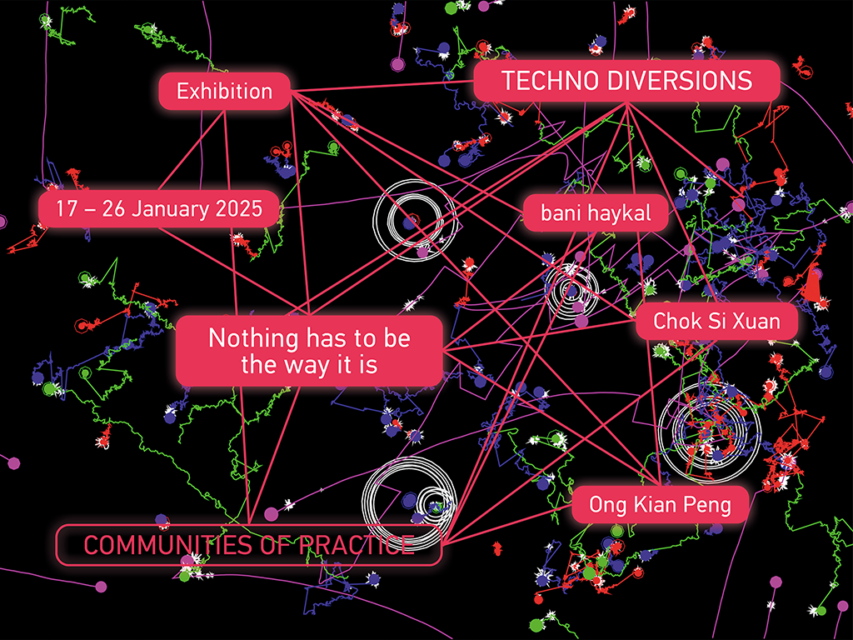
Exhibition from 17 to 26 January 2025
NTU Centre for Contemporary Art Singapore is pleased to present Nothing has to be the way it is, an exhibition featuring the artistic propositions created by Chok Si Xuan, bani haykal, and Ong Kian Peng as part of their involvement in Communities of Practice. Techno Diversions, a five-month programme curated by Anna Lovecchio that interlaces artistic research, transdisciplinary encounters, and the formation of communities around shared interests to propel transformative understandings of technology.
The uncanny symbiosis between humans and the digital devices, interactive interfaces, online platforms, and global infrastructures that increasingly operate our lives is a defining feature of contemporary society. In these wired times of machine intelligence and computational acceleration, microchip wars and platform powers, the artworks featured in this exhibition cast a sideway look at techno-driven progress. Moving across different conceptual frameworks and a multiplicity of mediums, Chok Si Xuan, bani haykal, and Ong Kian Peng share a common investment in reclaiming agency within the technosphere. They divert, possess, possibly disrupt the undisturbed existence of technological artefacts through gestures that question the escalation of technological sovereignty and, ultimately, the role of technology in our lives. Purposefully, these artists do not position themselves at the edge of advanced technologies. Rather, they interfere with existing apparatuses and instil into them worldviews other than those that originally brought them about. The systems they envisioned proceed by appropriations and approximations, frictions and forays, scrambled codes and enigmatic conjectures. In the essay “It Doesn’t Have To Be the Way It Is” which inspired the title of this exhibition, Ursula K. Le Guin remarks that the subversive power of the imagination “gnaw(s) at the very foundation of the belief that things have to be the way they are”. Nothing has to be the way it is hints at the endless permutations of how things can be.
Nothing has to be the way it is will take place in The Hall, NTU CCA Singapore’s programme space nestled at the heart of the Research Centre and launched in September 2024. This event marks the first time The Hall hosts a group exhibition, bringing home the Centre’s longstanding commitment to dwell upon and experiment with the spaces of the curatorial.
As participants in Communities of Practice. Techno Diversions, Chok Si Xuan, bani haykal, and Ong Kian Peng are conducting a residency at NTU CCA Singapore from October 2024 to February 2025. Revolving around critical engagements with the material, political, and spiritual layers of technology and the complexity of our relation to it, this multidimensional programme is a generative platform that provides artists with time, space, and resources to unravel their aesthetic inquiries and catalyse communities around their interests and creative processes.
The exhibition is couched between two series of public programmes— Empirical Workshops and the Transdisciplinary Lectures—developed in conversation with the artists themselves. Steeped in a do-it-yourself ethos, the Empirical Workshops took place in December 2024. Each workshop germinated by the artist’s own research and was aimed at creating knowledge through skill-sharing and the creative dabbling with raw materials. In Temporal Oscillations, Chok Si Xuan dived into the physics of circuitry and erratic electronics, teaching participants how to assemble common electronic components to modulate the flow of electricity and hijack standard systems of temporality. With METAL MACHINE MISCHIEF (or how to make noise music with bicycles), bani haykal took his workshop participants on an unconventional group ride. Through tinkering and drilling, cranking and whirring, discarded bicycle parts were assembled into unorthodox musical instruments activated in a final jam session that produced a one-of-a-kind audiovisual experience. Different wavelenghts resonated in Ong Kian Peng’s Natural Radio workshop where participants could explore a range of low frequency waves emitted by natural electromagnetic phenomena as a way to tune in to the inaudible voices of the environment.
Coming up in February 2025, the Transdisciplinary Lectures will bring the artists in conversations with philosophers, sociologists, scientists, and other creatives whose work significantly inspired them. Deepening the ramifications of their research in different disciplines, the Transdisciplinary Lectures will feature contributions by: Tiziano Bonini (Associate Professor, Sociology of Culture and Communication, University of Siena, Italy), Eugene Yew Siang Chua (Nanyang Assistant Professor of Philosophy, School of Humanities, NTU, Singapore), Lee Pooi See (Professor, School of Materials Science and Engineering, NTU, Singapore), Emiliano Treré (Beatriz Galindo Distinguished Professor, Language Theory and Communication Sciences, University of Valencia, Spain and Reader, Data Agency and Media Ecologies, Cardiff University, United Kingdom), and Boedi Widjaja (interdisciplinary artist, Singapore).
17 to 26 January 2025
Opening hours
Tuesday to Sunday, 12:00 – 7:00pm
Friday 24 and Saturday 25 January, 12:00 – 10:00pm
Closed on Monday
Curator Tours
Saturday 18 January, 3:00pm and 5:00pm
Artists Tour
Saturday 25 January, 3:00 – 4:00pm
The Hall
NTU CCA Singapore
Block 6 Lock Road, #01-09
Gillman Barracks, 108934
Part Of

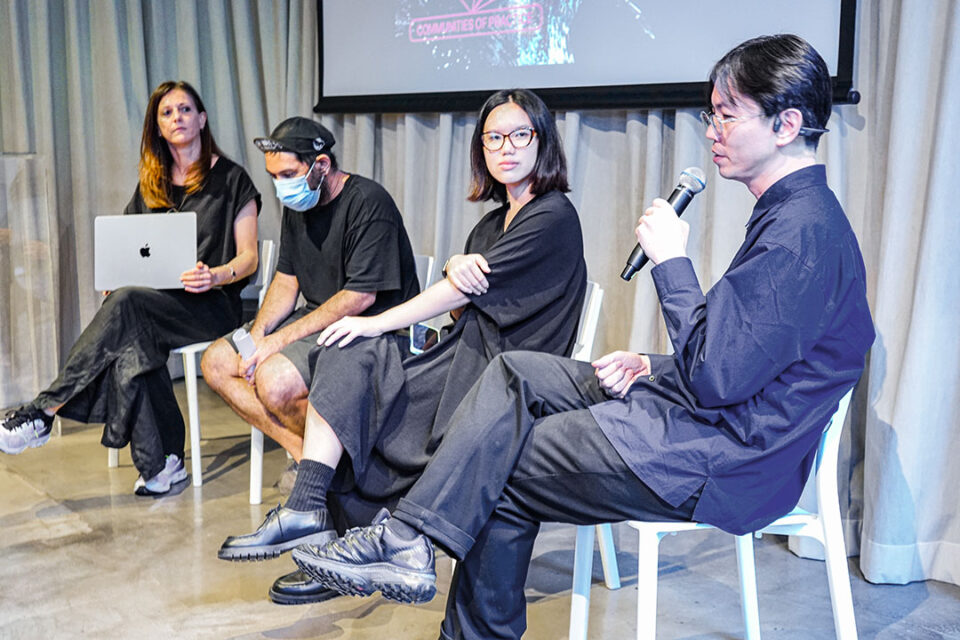
by Chok Si Xuan, bani haykal, and Ong Kian Peng
What drives an artist to reconfigure the inner mechanisms of devices we have grown increasingly reliant upon? What acts of mobilisation can an artist perform within existing technological infrastructures to cultivate different types of cultural, social, and emotional agency? Can the artistic imagination interrogate the spiritual dimensions of technology and respond to escalating environmental crises determined by society’s current course of development?
In this joint talk, artists Chok Si Xuan, bani haykal, and Ong Kian Peng reflect upon how these and other similar questions have oriented recent developments in their practices. By addressing structural opacities and power structures, and by fostering an ecological understanding of the relation between humans and technology, their work illuminates some dark corners of fast-paced technological advancement and experiments with alternative forms of being within existing structures. Their research is currently unfolding within the framework of Techno Diversions, the inaugural iteration of NTU CCA Singapore’s research platform Communities of Practice.
Communities of Practice fosters interdisciplinary collaborations and the coming together of communities around shared interests. It situates NTU CCA Singapore as an interdisciplinary body within the research-driven core of Nanyang Technological University, advancing its role as convener, capacity builder, and leading incubator in the arts sector.
Saturday, 9 November 2024, 3.00 – 4.30pm
The Hall, NTU CCA Singapore
Block 6 Lock Road, #01-09
Gillman Barracks, 108934
EMPIRICAL WORKSHOPS
This workshop will introduce participants to natural radio. Natural radio is the emission of Very Low Frequency (VLF) and Extremely Low Frequency (ELF) radio waves due to electromagnetic energy from natural phenomena. These emissions originate terrestrially from lightning and from the Sun’s interactions with the Earth’s magnetosphere, they are among the inaudible voices of the environment. If the low frequencies of these electromagnetic outbursts are transformed into acoustic waves, many of these signals may fall within the range of human hearing. Experiencing electromagnetic waves as acoustic waves will allow listeners to connect with the beauty and complexity of natural radio waves in a unique aural experience.
By the end of the workshop, participants will be able to assemble an analogue handheld radio device that tunes in to natural radio frequencies.
Participants are encouraged to bring their own headphones with a 3.5mm audio jack, along with an optional audio recorder to capture and share their auditory discoveries.
This workshop is part of the Empirical Workshop Series of Communities of Practice. Techno Diversions.
This workshop is suitable for age 18 and above.
No prior knowledge of electronics is required.
Saturday, 21 December 2024, 2 – 5pm
The Hall, NTU CCA Singapore
Block 6 Lock Road, #01-09
Gillman Barracks, Singapore, 108934
METAL MACHINE MISCHIEF (or how to make noise music with bicycles) by bani haykal
“Riding bikes ain’t s#!+ without climate justice, without land back, without liberation of everybody”
Christina Torres, Cyclista Zine
The bicycle is more than just a means of transportation. In our increasingly car-centric and carbon-heavy lifestyle, cycling is a climate action that slows down the rate at which our planet is burning. Inspiring stories from Gaza have shown us how bicycles can be radically repurposed into washing machines, sewing machines, and even power generators.
In the first part of the workshop, participants will be offered a set of unused bicycle components gathered by artist bani haykal and they will be guided to devise and conceptualise new musical or sonic instruments with them. In the second part, these unorthodox instruments will be played in a group jam session!
Participants are encouraged to bring personal items such as mallets, drumsticks, clarinet mouthpieces, and/or any musical bobs and bits they can incorporate into the instruments.
This workshop is part of the Empirical Workshop Series of Communities of Practice. Techno Diversions.
This workshop is suitable for age 18 and above.
No prior knowledge or experience is required.
Saturday, 7 December 2024, 10:30am – 12:30pm
The Hall, NTU CCA Singapore
Block 6 Lock Road, #01-09
Gillman Barracks, Singapore, 108934
Temporal Oscillations. Electronics workshop led by artist Chok Si Xuan
This workshop will explore how to use common electronic components to modulate the flow of electricity, assemble and hijack standard systems of temporality. Participants will learn how a 555 timer integrated circuit (IC) forms an astable multivibrator. The 555 timer IC is a tiny chip found in many everyday devices—blinking LED lights, kitchen timers, alarm systems, sound makers, etc.—that modulates the frequencies of electrical signals. The term ‘astable’ means ‘not stable’ because the circuit never settles into a single state, is a basic electronic circuit that generates a continuous oscillating output, switching between two voltage levels.
Working with pre-assembled circuits created by artist Chok Si Xuan, participants will be able to experiment with various components (small motors, LED lights, and speakers, etc) as outputs. Exploring the transformation of different forms of energy—chemical energy from batteries, mechanical energy , kinetic energy and byproduct thermal energy, the workshop accesses materiality as a manner of understanding the fundamental ways systems unfold.
Through engaging with electronic circuits in a hands-on and accessible way, participants can expect to develop a direct understanding of some visible and less visible aspects that power everyday technology. Participants are encouraged to bring their own components for experimentation. These may include battery-operated toys, LED lights or small light strips, buzzers or small speakers, direct current (DC) motors, small fans, switches or buttons, old electronic parts like sensors or wires, and similar items.
This workshop is part of the Empirical Workshop Series of Communities of Practice. Techno Diversions.
This workshop is suitable for age 18 and above.
No prior knowledge of electronics is required.
Saturday, 7 December 2024, 10:30am – 12:30pm
The Hall, NTU CCA Singapore
Block 6 Lock Road, #01-09
Gillman Barracks, Singapore, 108934

Transdisciplinary Lectures
Presentations by Dr Eugene Chua (Singapore) and Boedi Widjaja (Indonesia/Singapore) followed by a conversation with ong kian peng (Singapore)
What is reality? The models we use to conceptualise the world are increasingly under scrutiny, reshaped by the ecological crises of our time and the revelations of quantum theories. Classical distinctions between humans, non-humans, and objects are dissolving as we zoom in at the quantum level, revealing a world of entanglements and uncertainties. This event brings together artist Boedi Widjaja, whose practice explores the intangible and ephemeral, and philosopher of physics Eugene Chua, whose work delves into the complexities of quantum mechanics. Their presentations will be followed by a dialogue moderated by artist ong kian peng. The panel will unfold some intersections of art, science, and philosophy, offering new perspectives on how we perceive, construct, and engage with reality. Through this exchange, the audience will be offered new lenses for understanding the world and reimagine their place within a dynamic, interconnected cosmos.
Wednesday, 12 February 2025
7 – 8:30pm
The Hall, NTU CCA Singapore
Block 6 Lock Road, #01-09
Gillman Barracks, Singapore, 108934
Lecture by Professor Pooi See Lee (Singapore), followed by a conversation with artist Chok Si Xuan (Singapore)
Will electronics become flexible and soft? As technological advances shrink systems and transition from hard robots to soft machines, how will this affect the way we understand and relate to the devices we interact with?
Professor Lee Pooi See, whose research delves into human-machine interface, hybrid materials for soft robotics, and nanostructures, will share about the influences and current trajectories of material sciences and human-machine interfaces articulating her insights into the future of a softer and smaller world of technology. In conversation with Chok Si Xuan, the scientist and the artist will discuss the implications of a world driven by mechanisms that escape human vision and they will exchange ideas about the relational qualities of interfaces and the rise of biomimicry in the realm of technological innovation.
This event is generated by Chok Si Xuan within Communities of Practice. Techno Diversions, a research programme that aims to propel a transformative understanding of technology through artistic practices and transdisciplinary encounters.
Wednesday, 19 February 2025
7 – 8:30pm
The Hall, NTU CCA Singapore
Block 6 Lock Road, #01-09
Gillman Barracks, Singapore, 108934
Algorithms of Resistance. Tracing tactics of agency and solidarity within platform society
Online lecture by Tiziano Bonini (Italy) and Emiliano Treré (Italy/United Kingdom) followed by a conversation with bani haykal (Singapore)
oday, a growing number of social interactions, economic transactions, political engagements, and affective relations are enabled and regulated by a global network of online platforms operated through algorithms. As algorithmic infrastructures become enmeshed in the fabric of society, more and more aspects of everyday life are being captured and released in data streams that feed digital entities unilaterally coded and controlled by profit-driven tech companies. Through extensive online and offline fieldwork conducted across the Global North and the Global South, Tiziano Bonini and Emiliano Treré—co-authors of Algorithms of Resistance. The Everyday Fight Against Platform Power (The MIT Press, 2024)—ventured into uncharted alghoritmic territories. They encountered forms of agency, practices of resistance, and bonds of solidarity enacted by users who negotiate their own terms of existence within the platform regime. In this lecture, the speakers will reflect on how grassroots practices can spark emancipatory frictions that reinvent and disrupt the uneven power relation between users and platforms.
This event is generated by bani haykal within Communities of Practice. Techno Diversions, a research programme that aims to propel a transformative understanding of technology through artistic practices and transdisciplinary synergies.
Wednesday, 26 February 2025
7 – 8:30pm
The Hall, NTU CCA Singapore
Block 6 Lock Road, #01-09
Gillman Barracks, Singapore, 108934
The Han Nefkens Foundation was established in 2009 with the aim of connecting people through art. In 2016, Han Nefkens decided to focus exclusively on supporting emerging and mid-career international video artists through Awards, Production Grants, and Mentorship Grants. The Foundation is not only involved in producing new works with the artists, but also finding international residencies, producing publications, purchasing working tools, finding technical support, and bringing artists into contact with art institutions and peers. With an extensive network in countries such as Thailand, Vietnam, Cambodia, Korea, Ecuador, Peru, Spain, and the Netherlands, the Foundation is able to present artists to a diverse and global audience.
Angela Ricasio Hoten is a research assistant at the School of Art, Design and Media, Nanyang Technological University supporting the research projects Climate Transformation Programme (2024–Present), Developing and Evaluating Digital Tools for Participatory Climate Change Mitigation (2025–Present) and previously the Environmentally-Engaged Artistic Practices in South, Southeast Asia and the Pacific (2023–2024). Angela holds a BA (Hons) in Environmental Studies and minor in Anthropology from Yale-NUS College, Singapore. She was also the undergraduate research assistant for ‘Lala Land: Singapore’s Seafood Heritage’ edited by Anthony Medrano, published by Epigram Books.
Ng Mei Jia is currently Research Associate at the School of Art, Design and Media, Nanyang Technological University, managing the research projects Climate Transformation Programme (2024–2027), Developing and Evaluating Digital Tools for Participatory Climate Change Mitigation (2025–2026) and a research assistant on Climate Crisis and Cultural Loss (2021–2024), Environmentally-Engaged Artistic Practices in South, Southeast Asia and the Pacific (2021–2023), and Understanding Southeast Asia as a ‘Geocultural’ Formation (2021–2023). She was previously a Project Officer (Intangible Cultural Heritage) at the National Heritage Board, Singapore. Mei Jia holds an MA in Southeast Asian Studies from the National University of Singapore.
After a very successful first iteration of Climate Futures #1: Cultures, Climate Crisis and Disappearing Ecologies its second convening wants to build on its discussions and expand its understanding of the decline in cultural and ecological diversity in the region. It became very clear that such conversations require space and time to process complex issues, if we do not want to simplify and allow more than one way to process how people feel about their situations and want to be heard. Our futures require us to go beyond the status quo of current modes of operating. To not lose cultural knowledge and biodiversity Climate Futures #2: Belonging & Shared Responsibilities will share various narratives and practices that are already in place. It wants to further provide access to communities outside state and institutional structures to further nurture understanding of change in responsibilities and accountability.
The summit intents to further map how the climate crisis informs our contemporary world, and how diverse cultures can adjust or adapt without losing a sense of purpose. It comprises of discussions into alternative approaches to regional studies focusing on urgencies such as rising sea-levels and temperatures and the impact on natural resources of the region. A particular focus will be on areas such as the Mekong River and Delta (Myanmar, Laos, Thailand, Cambodia, Vietnam) and its water street to Indonesia, Malaysia and the Philippines including the Straits that plays an essential role in the regions shared history.
The holistic approach of Climate Futures #1: Cultures, Climate Crisis and Disappearing Ecologies showed already how it can successfully stimulate a debate between artists, designers, and architects, scientists, environmentalists, as well as local voices and policy makers. We seek to reach out to an even wider public including younger scholars and practitioners, as well as community leaders and policy makers from the ASEAN region.
The future of our shared prosperity relies on our collective ability to create an inclusive and sustainable foundation for growth.
Read the programme brochure here.
Thursday, 26 October – Saturday 28 October 2023
Sokhalay Angkor Villa Resort, Siem Reap, Cambodia
Thursday, 26 October
Join the livestream here with the passcode 668981.
9:30am Registration & Coffee
10:00am Opening Addresses
Dr Piti Srisangnam, Executive Director, ASEAN Foundation
H.E. Min Chandynavuth, Under-Secretary of State, Ministry of Culture and Fine Arts, Cambodia
Prof. Tim White, Vice President (International Engagement); President’s Chair in Materials Science and Engineering; Professor, School of Materials Science & Engineering.
Welcome and Introduction by co-curators Prof. Ute Meta Bauer (Germany/Singapore), Founding Director NTU Centre for Contemporary Art, and Professor School of Art, Design, and Media, NTU Singapore and Magdalena Magiera (Germany/Singapore), Curator Residencies and Programms, NTU Centre of Contemporary Art, Singapore
10:30am The Art of Living Lightly, Keynote Lecture by Rachaporn Choochuey (Thailand), Architect, Co-founder, Design Director, all(zone) ltd
11:40am Between Bots and the Biosphere: Machine Philosophy, Media Ecologies, and Digital Hieroglyphs for Climate Adaptation, Case Study by Nashin Mahtani (Indonesia), Director, PetaBencana.id
12:00pm An Uncommon History of The Common Fence: A Prologue (To the Coast), Case Study by Jason Wee (Singapore), Artist, Writer, Curator
12:20pm Sharing Climate Futures: Developing tools for climate care and action, Case Study by Prof. Ute Meta Bauer (Germany/Singapore), Founding Director NTU Centre for Contemporary Art, and Professor School of Art, Design, and Media, NTU Singapore
1:00pm Discussion with Rachaporn Choochuey (Thailand), Nashin Mahtani (Indonesia), and Jason Wee (Singapore). Moderated by Prof. Ute Meta Bauer (Germany/Singapore)
3:30pm Belonging & Sharing Responsibilities, Closed Workshop by Claudia Lasimbang a.k.a Yoggie, Technical Coordinator Watersheds and Communities, Forever Sabah, Philip Chin a.k.a. Linggit, Technical Coordinator Certified Sustainable Palm Oil, Forever Sabah, and Yee I-Lan (all Malaysia), artist
Friday, 27 October
Join the livestream here with the passcode 400242.
8:45am Registration & Coffee
9:00am Welcome & Introduction
9:10am Creative Digital Lab: how artists, cultural and creative professionals and technologists work together to explore the potentials of XR technology in protecting heritage, safeguarding intangible cultural heritage and contributing to climate action. Lecture by Kamonrat Mali Chayamarit (Thailand), Culture Programme Officer, Lao PDR alternate Focal Point, UNESCO Culture related Conventions Advocate
9:40am Ecology for Non-Futures, Case Study by Binna Choi (South-Korea), Artists, part of Unmake Lab
10:20am Climate impact on social process and social structure, Case study by Daovone Phonemanichane (Laos), Strengthening Climate Resilience Project Manager, Oxfam Mekong Regional Water Governance Program
10:40am When Nature has Economic Value, Case Study by Som Supaprinya (Thailand), Artist
11:20am Discussion with Kamonrat Mali Chayamarit (Thailand), Binna Choi (South-Korea), Daovone Phonemanichane (Laos), and Som Supaprinya (Thailand). Moderated by Bejamin Hampe (Australia), Project Director, KONNECT ASEAN
1:00pm Glimpse of Life on the Water, Closed Workshop Sessions by Sovann Ke (Cambodia), Project Manager, OSMOSE
Saturday, 28 October
Join the livestream here with the passcode 353177.
8:45am Registration & Coffee
9:00am Introduction & Welcome
9:15am Every (de)Force Evolves into A (de)Form, Lecture by Gahee Park (South-Korea), Curator, Seoul Museum of Art, Seoul
10:00am Pedagogy, Community, Art: Bottom-up Urbanism at Phnom Penh’s Wat Chen Dam Daek, Case Study by Lyno Vuth (Cambodia), Artist, and Eva Lloyd (Australia), Lecturer, University of New South Wales (UNSW)
10:20am Luang Prabang: From Cultural Landscape into Practice, Case Study by Phonepaseth Keosomsak (Laos), Architect, Artist
11:00am Snare for Birds: Rebelling Against an Order of Things, Case Study by Kiri Dalena (Philipines), Artist
11:20am Travelling through time, Case Study by Malin Yim (Cambodia), Artist
11:40am The New Word for World is Archipelago, Case Study by Nice Buenaventura (Philippines), Artist
12:00pm Discussion with Nice Buenaventura (Philippines), Kiri Dalena (Philipines), Phonepaseth Keosomsak (Laos), Gahee Park (South-Korea), Lyno Vuth (Cambodia), and Malin Yim (Cambodia). Moderated by Magdalena Magiera (Germany/Singapore)
2:30pm Visit of Blue Art Centre. Welcome by Sareth Svay (Cambodia), Artists, Director, Blue Art Centre
3:00pm Closing workshop by Cynthia Ong (Malaysia), Chief Executive Facilitator Forever Sabah Institute, LEAP
Curated by NTU CCA Singapore
Ute Meta Bauer, Founding Director and Magdalena Magiera, Curator, Residencies and Programmes
Supported by
ASEAN Secretariat
ASEAN-Korea Cooperation Fund
Mission of the Republic of Korea to ASEAN
ASEAN Senior Officials Meeting for Culture and Arts
Programme support by Ministry of Culture and Fine Art, Cambodia
PROJECT PARTNERS
ASEAN FOUNDATION
Since the formation of ASEAN in 1967, ASEAN has embarked on a journey to accelerate economic growth, social progress, and cultural development in the region. After three decades, ASEAN leaders recognised there remained inadequate shared prosperity, ASEAN awareness, and contact amongst the people of ASEAN. As a result, ASEAN leaders established the ASEAN Foundation during the ASEAN 30th Anniversary Commemorative Summit in Kuala Lumpur Malaysia on 15 December 1997.
KONNECT ASEAN
As the post-Cold War reality of a new world has taken shape and formed new directions and conversations, ASEAN has re-entered the contemporary art space via collaborative efforts between various ASEAN bodies. The Republic of Korea celebrated 30 years of diplomatic relations with ASEAN in 2019 and in the same year established KONNECT ASEAN, an ASEAN-Korea arts programme. Supported by the ASEAN-Korea Cooperation Fund and administered by the ASEAN Foundation, KONNECT ASEAN signals both an eagerness by ASEAN to revitalise its once integral role in contemporary visual arts and Korea’s sincerity in establishing closer ties with ASEAN.
The programme celebrates Southeast Asian and Korean arts using different platforms (exhibitions, education and conferences, public programmes, residencies, and publications and archives) to explore and discuss social, political, economic, and environmental issues in the region. The artists’ works and activities engages and strengthen the public’s understanding of ASEAN’s role in facilitating cultural diplomacy. Furthermore, the programme intends to connect with the three major stakeholder groups of government, business, and civil society to achieve the vision of an ASEAN Community. Outcomes provide permanent resources recording why ASEAN matters and its ongoing contribution to the region’s growth, prosperity, and stability.
NANYANG TECHNOLOGICAL UNIVERSITY
A research-intensive public university, Nanyang Technological University, Singapore (NTU Singapore) has 33,000 undergraduate and postgraduate students in the Engineering, Business, Science, Medicine, Humanities, Arts, & Social Sciences, and Graduate colleges. NTU is also home to world-renowned autonomous institutes—the National Institute of Education, S Rajaratnam School of International Studies, Earth Observatory of Singapore, and Singapore Centre for Environmental Life Sciences Engineering—and various leading research centres such as the Nanyang Environment & Water Research Institute (NEWRI) and Energy Research Institute @ NTU (ERI@N).
Under the NTU Smart Campus vision, the University harnesses the power of digital technology and tech-enabled solutions to support better learning and living experiences, the discovery of new knowledge, and the sustainability of resources. Ranked amongst the world’s top universities, the University’s main campus is also frequently listed among the world’s most beautiful. Known for its sustainability, over 95% of its building projects are certified Green Mark Platinum. Apart from its main campus, NTU also has a medical campus in Novena, Singapore’s healthcare district. For more information, visit ntu.edu.sg.
NTU CENTRE FOR CONTEMPORARY ART SINGAPORE
Situated within Singapore’s premier art precinct Gillman Barracks, NTU CCA Singapore is a pioneering institution that has been instrumental in shaping the contemporary art landscape in Singapore and beyond. With a focus on fostering creativity, innovation, and critical thinking, the Centre’s programmes have consistently challenged the status quo, encouraging artists to explore new realms of artistic expression. For more information, visit ntu.ccasingapore.org.
Image: Climate Futures #1, Jakarta (Indonesia), 2022. Courtesy NTU CCA Singapore, Konnect ASEAN & ASEAN Foundation.
As part of his interest in trauma and the potential of ritual healing through performance, during the residency Irfan Kasban intends to work on a long-term research project tentatively titled Port of Reciprocity, with a special focus on “Acoustic Sculptures and Communal Activations for the Burn-out Artist”. Reacting to the tightly-knit architecture of Singapore’s public housing estates where the boundaries of individual and communal life are strictly compartmentalised and sound spillages are regarded as nuisances, the artist aims to unpack the socially-accepted notions that define noise pollution in the country. Irfan will experiment with building acoustic sculptures inspired by organic shapes that will augment the human voice without electronic intervention and enhance conscious listening through communal activations. Oscillating between different sonic dimensions, the human voice will be cast as a mode of disruption and forging connections. Throughout the residency, the artist also intends to conduct interviews and group discussions with fellow artists and creatives as a way of better understanding the causes of burnout and formulating strategies against it.
The transdisciplinary practice of Irfan Kasban (b. 1987, Singapore) weaves together multiple roles such as playwright, theatre director, lighting and sound designer, and multimedia artist. Often engaging in collaborations with fellow artists as a method of experimenting across mediums, Irfan creates intricate worlds guided by a principle of visceral ephemerality in an attempt to redefine boundaries between performance, artwork, artist, and audience. Since 2010, he is the Associate Artist at the Singapore-based theatre company Teater Ekamatra. His recent theatre directions include King (2020-2023) and performance lecture The Death of Singapore Theatre as Scripted By The Infocomm Media Development Authority of Singapore (2022), and the immersive theatrical installation The Silence of a Fallen Tree (2020) amongst many others. Irfan received National Arts Council Singapore’s Young Artist Award in 2020.
The research-driven conceptual practice of Anthony Chin (b. 1969, Singapore) grows out of site-specific engagements with the historical, social, and architectural stratifications of a place. Through the articulation of ordinary materials into poetic installations, his work unravel the latent power structures and complex geopolitical narratives that undergird the colonial past and the post-colonial present. He has regularly presented his work in Singapore and abroad. His recent solo exhibitions include S$1,996/- S$831.06/-, Comma Space, Singapore (2021); TROPHY, Metropolitan Museum of Manila, Philippines (2020); and Western Pacific, Mo Shang Experiment, Beijing, China (2016). Among the group exhibitions are SAM Contemporaries: Residues & Remixes, Singapore Art Museum, Singapore (2023); For the House; Against the House, Gillman Barracks, Singapore (2022); Concept 88, Comma Space, Singapore (2022); three editions of OH! Open House, amongst others. Anthony has previously taken part in other residency programmes such as National NAC-MET international Artist Residency, Manila, Philippines (2020) and Taipei International Artists Residency season 4, Taiwan (2018).
Pursuing her ongoing research into intergenerational conflicts and trauma, Yanyun Chen will spend her residency examining methods of discipline within the family context. With a focus on Singaporean personal and communal childhood histories of discipline and punishment, the artist will explore how the indelible traces of disciplinary behaviour linger on in people’s bodies and minds and bleed into the everyday. Observing the irony and self-deprecating humour that come into play as a self-soothing practice in the retelling of such memories, she will also seek to unpack the heterogeneous ways in which pain and violence are remembered by conducting fieldwork, literary investigations, and interviews. The research weaves through histories of punishment and discipline in Singapore. Ultimately the artist intends to create large scale drawings that address these intergenerational wounds through the lens of medical, ethnographic, historical, and material studies.
In the Singaporean-Malay slang, “world” is used to signal boastful aspirations towards a social status higher than one’s own, often conveyed through self-aggrandising story-telling. Utilising this as an alternative framework to the postcolonial notion of “worlding”, whereby one’s conceptualisation of the world is devised through colonial attachments, the artist will spend his residency investigating the multitude of meanings behind the word’s usages as a way of unravelling sociolinguistic constructs and processes of identity formation. This research will ultimately result in lens-based explorations that engage with “world” through conceptual propositions and visual arrangements comprising archival photos and sociohistorical accounts.
With a body of work spanning across film, installation, and photography, the artistic practice of Zulkhairi Zulkiflee (b. 1991, Singapore) is committed to exploring Malay identity and its social ontology. His lens-based artworks investigate themes of Malayness in relation to local and global contexts, social agency, knowledge production, and notions of taste. Zulkhairi recently concluded his first solo exhibition, Proximities at Objectifs – Centre for Photography and Film, Singapore (2022). His work has also been presented in group exhibitions such as Kenduri Seni Nusantara, Patani, Thailand, Singapore Shorts ‘22, Asian Film Archive, Singapore, Mini Film Festival, S-Express Singapore, Kuching, Malaysia, and The Singapore Pavilion, Expo 2020, Dubai, United Arab Emirates (all 2022); The Body as a Dream, Art Agenda SEA, Singapore (2021) and How to Desire Differently, Lim Hak Tai Gallery, Nanyang Academy of Fine Arts, Singapore (2020) among others. Zulkhairi is also an educator, independent curator, and founder of Sikap, a project group that engages with the creative value of ‘let do’ in the form of organizational experiments. He was the Curatorial Winner of the IMPART Awards in 2020.
Priyageetha Dia is an arts practitioner who experiments with time-based media, 3D animation and game engine software. Her practice addresses the transnational migration of ethnic communities and the intersections of the colonial production with land, labour and capital in Southeast Asia through speculative methods and counter-narratives. She has been invited to participate in several exhibitions including the Kochi-Muziris Biennale, India (2022); Attention Seeker, La Trobe Art Institute, Bendigo, Australia (2022); An Exercise of Meaning in a Glitch Season, National Gallery Singapore (2020); 2219: Futures Imagined, ArtScience Museum Singapore (2019). She was a recipient of the IMPART Art Award in 2019.
The migratory movements of her ancestral lineage from Southern India to Malaysia, and later to Singapore, sparked Priyageetha’s deep-seated engagement in South Asian diasporic histories, the labour relations that underlie plantation agriculture in Malaya and the vast terrain of colonial narratives. Interweaving these research threads in her multimedia practice, her works figure alternative histories that empower subaltern forms of existence.
During her residency at Jan Van Eyck Academie, the artist is interested in delving deeper into the emergence and expansion of agro-industrial plantation projects, the dispossession and displacement of lands and communities in Southeast Asia, and their relation to The Netherlands through archival research. Moreover, the residency will provide her with a supportive environment to articulate critical viewpoints and counter-narratives through her ongoing and self-led experiments with computer-generated imagery (CGI), animation technologies and game engine software while also allowing her to gain an understanding of issues related to contemporary transnational interactions within Southeast Asia and Europe.
Drawing from oral histories and unwritten memories, the works of Saroot Supasuthivech unearth the multiplicity of narratives embedded in specific locations. His installations often combine moving image and sound to conjure the affective aura of a site and bring forth its intangible socio-historical stratifications. Using photogrammetry techniques, he turns 2D images into 3D models as a way of to blur the lines between the real and the mythical. His latest video installation, River Kwai: This Memorial Service Was Held in the Memory of the Deceased (2022), was featured in the Discoveries Section at Art Basel Hong Kong 2022.
For his residency at Künstlerhaus Bethanien, Saroot Supasuthivech will research the encounters of cultures, faiths and rituals among immigrant communities and local inhabitants. He is especially interested in the spiritual beliefs and ceremonial traditions by which humans ritualise the moment of death. With a focus on the historical impact of immigration on funerary practices across different regional and religious contexts, the artist will survey specific burial sites and rituals in Germany and Thailand looking at how foreign communities enact their funerary traditions abroad.
Major sites of interest for his research are the Protestant Cemetery in Bangkok and the Kurpark (Spa Park) in Bad Homburg, the only town outside of Thailand that features two Sala Thai (open pavilions). The Sala were gifted to the city of Bad Homburg by King Chulalongkorn of Siam (1853 to 1910) as a token of gratitude after the monarch’s illness was healed in the spa town in 1907. From the materials gathered through field trips, interviews and archival research, the artist plans to develop a video installation that will convey the mystical structures of those sites as well as the spiritual intersections engendered by global migrations.
The multimedia practice of Ngoc Nau encompasses photography, holograms, and Augmented Reality (AR) and she is currently working with 3D software and other open source technologies to create new possibilities for video installation. In Nau’s work, different materials and techniques attempt to capture the subtle ways in which new media shape and dictate our views of reality. Blending traditional culture and spiritual beliefs with modern technologies and lifestyles, her work often responds to Vietnam’s accelerated urban development. She has participated in several exhibitions across Asia, including the Thailand Biennale, Korat (2021) and the Singapore Biennale (2019) among others. She also participated in documenta 15, Kassel, Germany (2022) with Sa Sa Art Projects.
During the residency, Ngoc Nau intends to research the impact of urbanisation and modernisation on contemporary living conditions, collective memories, traditional practices, and the natural landscape. Situating herself within the creative community of Rupert will allow her to explore Lithuanian cultural landscape and to access a new trove of materials, including oral traditions, historical archives, and ritual ceremonies. Through encounters will the local community, she intends to unearth the traditional values and ancient practices that have been lost to industrial and technological advancements in order to come to a better understanding of how different communities configure their values and identities within the fast-changing landscape of today. Nau is particularly interested in the gaps created by modern development in the intergenerational transmission of knowledge and she plans to experiment with new media technologies to imagine modes of being that reconcile the past and the future.
Tekla Aslanishvili (b. 1988, Georgia) is an artist, filmmaker and essayist based between Berlin and Tbilisi. Her works emerge at the intersection of infrastructural design, history and geopolitics.
Tekla graduated from the Tbilisi State Academy of Arts in 2009 and she holds a MFA from the Berlin University of the Arts – the department of Experimental Film and New Media Art. Aslanishvili’s films have been screened and exhibited internationally at PACT Zollverein, Neue Berliner Kunstverein, Baltic Triennial, Short Film Festival Oberhausen, Kasseler Dokfest, Kunsthalle Münster, EMAF – European Media Art Festival, Videonale 18, Tbilisi Architecture Biennial. She is a 2018–2019 Digital Earth fellow, the nominee for Ars-Viva Art prize 2021 and the recipient of the Han Nefkens Foundation – Fundació Antoni Tàpies Video Art Production Award 2020.
Since 2020, Joy Chee has been the resident bartender/gardener (or bardener, if you will) at Native, a Singaporean restaurant-bar focused on working with local and regional craftsmen and communities. Drawn to them for their ethos of sustainability and commitment to highlighting native produce, she has been working on rewilding the gardens with local kampung herbs and supporting the garden-to-table concept. When she’s not elbow-deep in compost, she can be found shaking up a cocktail or two at 52 Amoy Street.
Spanning moving image, sculpture, as well as performative installations, Priyageetha Dia (b. 1992, Singapore) addresses identity politics by questioning dominant narratives and socio-spatial relations. In the past few years, her practice has been consistently experimenting with a variety of world-making gestures that envision alternative futures. Her works have been part of several group exhibitions including, Attention Seeker, La Trobe Art Institute, Bendigo, Australia (2022); An Exercise of Meaning in a Glitch Season, National Gallery Singapore (2020); 2219: Futures Imagined, ArtScience Museum Singapore (2019). She was a recipient of the IMPART Art Award in 2019.
During the residency, Lyno will explore the entangled histories of colonialism, modernisation, and urbanisation focusing on the Garden of Tropical Agronomy, located in the Bois de Vincennes, one of the largest public parks in Paris which hosted the International Colonial Exposition in 1931. The exposition featured several architectural representations of the colonies, including Cambodia and Indochina, the remnants of which are still extant today surrounded by modern facilities. The artist is interested in excavating the politics of the built environment to understand the historical role architecture has played in the construction of imperialist agendas and the lingering implications of colonial symbolism and power structures in the present.
Find out more about SEA AiR.
Vuth Lyno is an artist, curator, and educator who is interested in space, cultural history, and the production of knowledge through social relations. Drawing on a wide range of materials such as interviews, artifacts, and newly made objects, he creates spatial configurations that weave together personal stories and collective bodies of knowledge. Participatory and experimental in nature, his artistic and curatorial approach is rooted in communal learning and aims to engage a multiplicity of voices in the production of meaning. He is a member of Stiev Selapak, a collective which founded and co-runs Sa Sa Art Projects in Phnom Penh, a long-term initiative committed to the development of the contemporary visual arts landscape in Cambodia. His work has been presented at several group exhibitions and institutions such as the Bangkok Art and Culture Centre, Thailand (2020) and the 9th Asia Pacific Triennial, Brisbane, Australia (2019), amongst others.
Hoo Fan Chon is a visual artist whose practice explores taste and foodscapes as cultural and social constructs. His research-driven projects examine how value systems fluctuate as people move from one culture to another. Reframing mundane aspects of everyday life with irony and wry humour, his multimedia works address notion of cultural authenticity and they set in motion the frictions and the overlaps produced by the migration of cultural symbols between different sociocultural contexts. Hoo recently received a solo exhibition at The Back Room, Kuala Lumpur, Malaysia (2021) and he has participated in a number of group shows in Asia. Also active as a curator and a grassroot cultural producer, he is involved with Run Amok Gallery, an art gallery and alternative space in George Town he co-founded in 2013.
The purpose of the award is to encourage recent graduates of NTU ADM’s research-oriented MA and PhD programmes and the MA in Museum Studies and Curatorial Practices (MSCP, co-chaired by NTU CCA Singapore) to engage in practical projects utilising the SGD$5000 award to investigate the topic of Spaces of the Curatorial as an extension of their research and coursework. Now in its third year, the 2022 award goes to Thomas Ragnar, a 2021 graduate of the MA in Museum Studies and Curatorial Practices, for Endless Return Pack v.1, a compilation album featuring artists working within expanded and experimental dance music genres from Singapore and Southeast Asia. The project is co-curated with Sher Chew (aka XUE), founder of the series Endless Return.
The selection committee included Prof Ute Meta Bauer and two invited jurors: Ms Siddharta Perez, Curator at NUS Museum, and Dr Adele Tan, Senior Curator at National Gallery Singapore.
The album will be released in 2022. Ragnar describes Endless Return as “a regenerative rave experiment.” Upon the announcement of the award, he commented: “Since August 2020, Endless Return have hosted several online events programmed with music, dance, and video projects by artists across Southeast Asia who work with rave culture, energy, history and aesthetics. The Platform Projects Curatorial Award will support the migration offline of Endless Return in 2022 through publishing initiatives, music and video releases, and live events developed by XUE and myself together with Endless Return‘s larger artistic community.”
“The Platform Projects Curatorial Award is a rare opportunity for emerging curators to realise a project and is a necessary initiative especially during a time when arts funding is contracting globally” says Ute Meta Bauer, Founding Director, NTU CCA Singapore, and Professor, NTU School of Art, Design and Media.
Ragnar adds that: “The MA programme offered jointly by ADM and NTU CCA Singapore boldly champions curatorial approaches and positions that make a conscious effort to take risks and depart from the often delimiting contexts of contemporary art, and of its hyper-specialised conditions. I am honoured to realise these positions and approaches with my collaborator XUE with the support of the Platform Projects grant. Both XUE and I are grateful to be enabled to support and advance the forward-thinking underground and regenerative spirit of Endless Return‘s artistic communities.”
The Award’s Pilot Programme supported <!DOCTYPE work>, a collaborative curatorial effort conceived by 2019 MA MSCP graduates Tian Lim, Shireen Marican, and Leon Tan, presented in The Lab at NTU CCA Singapore from 22 August – 18 October 2020. The next edition of the award went to Of Limits Collective, a group of five 2020 MA MSCP alumni comprising: Sneha Chaudhury, Weiqin Chay, Ace Lê, Jason Leung, and Beatrice Morel. They realized their exhibition Of Limits in March 2021 at the Stamford Arts Centre, featuring work by six artists from Southeast Asia, with most artworks having been produced during the COVID-19 pandemic.
On the occasion of the Pilot Programme, launched in 2020, Savita Apte from Platform Projects commented on behalf of her former co-directors Shareen Khattar and Christine Pilsbury: “We are all of one mind and delighted that Platform Projects can still be significant for a younger generation of curators.”
Committed to socially engaged practices, multi-disciplinary theatre practitioner Han Xuemei (b. 1987, Singapore) employs art as a tool for bringing communities together and engaging the audience in visceral and personal ways. In her practice, she creates spaces and experiences that incite participants to think outside the box of existing paradigms and articulate forms of hope and resistance. Since 2012, she is Resident Artist at the Singapore-based theatre company Drama Box. Her recent projects include the experiential installation FLOWERS (2019), the community project The Gift (2018), and the participatory experience Missing: The City of Lost Things (2018).
Thinking in terms of borders and boundaries, either physical and symbolic, the artist intends to map out the lived experience of forced mobility and dispossession as well as its underlying power struggles and emotional trails. His research will revolve specifically on migrant songs, a cultural expression often characterized by melancholic melodies and sombre lyrics that speaks of longing, hard work, and perseverance. Conveying the experience of otherness and stirring emotions of communality, migrant songs haunts our times of unprecedented global mass migration and the contemporary debates surrounding exclusionary nationalist politics. Through participatory workshops aimed at lyric writing, music composition, and vocalisation, migrant songs will be created and disseminated in an effort to redraw boundaries of belonging.
In our third episode, we open up this platform for the first time to a guest interviewer. We invited artist and filmmaker Kent Chan to pick the brain of our Artist-in-Residence Yeo Siew Hua. Beyond being both filmmakers and artists, Siew Hua and Kent have been occasional collaborators in the past and, most importantly, they are also long-time friends. Hear them speak candidly about the intertwined cycles of art-making and fund-raising, the blurred line between cinema and visual arts, as well as the philosophical underpinnings and the importance of collaboration in Siew Hua’s practice.
The practice of Yeo Siew Hua (b. 1985, Singapore) spans film directing and screenwriting. His films probe the darkest side of contemporary society through narratives layered with mysterious atmospheres, inscrutable characters, and mythological references, all steeped in arresting visuals and sounds. His last feature film A Land Imagined (2018) harnessed recognition around the world receiving the Golden Leopard at the 71st Locarno Film Festival and the Best Original Screenplay and Best Original Music Score Awards at the 56th Taipei Golden Horse Film Festival.
After A Land Imagined, Siew Hua has created a number of short films, one of which, An Invocation to the Earth (2020), commissioned by the Singapore International Film Festival and TBA21, was co-produced with NTU CCA Singapore. An Invocation to the Earth can be viewed online at www.stage.tba21.org. During the residency, Siew Hua has been completing his next major production titled The Once and Future, an expanded cinema project which will premiere at the Singapore International Festival of Arts 2022. In 2021, he received the Young Artist Award, Singapore’s highest award for young arts practitioners.
Kent Chan (b. 1984, Singapore) is an artist, curator, and filmmaker currently based in Amsterdam. His practice weaves encounters between art, fiction, and cinema with a particular interest in the tropical imagination, colonialism, and the relation between heat and art. He has held solo presentations at Bonnefanten Museum, Maastricht, Netherlands (2020-21), National University Singapore Museum (2019-21) and SCCA-Ljubljana, Centre for Contemporary Arts, Slovenia (2017). He was Artist-in-Residence at Jan van Eyck Academie (2019-20) and at NTU CCA Singapore (2017-2018).
Contributors: Yeo Siew Hua, Kent Chan
Conducted by: Anna Lovecchio
Programme Manager: Kristine Tan
Sound Engineer: Ashwin Menon (The Music Parlour)
Intro & Outro Music: Tini Aliman
Cover Image & Design: Arabelle Zhuang, Kristine Tan
Credits:
06’42”: Audio excerpt from Yeo Siew Hua, A Land Imagined, 2018. Courtesy the artist.
11’46”: Audio excerpt from Yeo Siew Hua, The Obs: A Singapore Story, 2014. Courtesy the artist.
22’55”: Audio excerpt from Yeo Siew Hua, The Once and Future, 2022. Courtesy the artist.
40’49”: Audio excerpt from Yeo Siew Hua, The Lover, The Excess, The Ascetic and the Fool, 2021. Courtesy the artist.
Anton Ginzburg is known for his films, sculptures, paintings, and text-based printed work that investigates historical narratives and poetic studies of place, representation, and post-Soviet identity. He earned a BFA from The New School for Social Research and an MFA from Bard College, Milton Avery Graduate School of Arts. His work has been shown at the 54th Venice Biennale; the Blaffer Art Museum at the University of Houston; Southern Alberta Art Gallery, Canada; Palais de Tokyo, Paris; the San Francisco Museum of Modern Art; White Columns, New York; Lille 3000, Euralille, France; and the first and second Moscow Biennales. His films have been screened at the Whitechapel Gallery, London; Rotterdam International Film Festival; Dallas Symphony Orchestra; Nasher Sculpture Center, Dallas; Les Rencontres Internationales, Paris; Haus der Kulturen der Welt, Berlin; and New York Film Festival/Projections; among others.
As artist and musician, bani haykal (Singapore, b. 1985) experiments with language, sound, and fiction. His work revolves around human-machine relationships/intimacies, and cultural identity formations reflecting critically on how language, tools and technologies have shaped and continue to shape our life experiences. From interfaces to interactions, from fictions to frictions, from commuting to communicating, the creative output of his research often involves the creation of DIY tools and it encompasses site-responsive installations, poetry, and performance as well as publications and music releases.
Bhenji Ra is an interdisciplinary artist who reframes performance through a combination of dance, choreography, video, and installation. Her work is often concerned with the dissection of cultural theory and identity. She uses spectacle and her own personal histories to explore themes of race, sexuality, and gender, giving voice to hidden and marginalised communities, and suggesting alternative modules of community. He is part of Sydney-based collective Club Ate.
Jef Geys was among Europe’s most respected yet under-acknowledged artists. Producing artwork since the 1950s, Geys’ practice probes the construction of social and political engagement, and his work radically embraces art as being intertwined with everyday life. Geys graduated from the Antwerp Arts Academy before settling in Balen in the Kempen region of Belgium, where from 1960 to 1989, he taught art at a state school, focusing on educational experimentation in the arts. Since the late 1960s, Geys has been the editor and publisher of his local newspaper, the Kempens Informatieblad, and subsequently produced them in line with his exhibitions. He is known for his meticulous archive of his work, which in turn becomes generative of other works.
Jesper List Thomsen is an artist and writer. Recent exhibitions and performances include Hollis and Money, ICA, London and Künstlerhaus, Stuttgart; Speak Through You, Hot Wheels Projects, Athens; A Social Body Event, Serpentine Gallery, London; Micro-Composition, Rozenstraat, Amsterdam; The body, the body, the tongue, Reading International; Hand and Mind, Grand Union, Birmingham; The boys the girls and the political, Lisson Gallery, London; and One Hour Exhibition, South London Gallery, London. A book-length collection of his texts will be published in Autumn 2018 by Juan de la Cosa (John of the Thing). He is also a part of the artist collective Am Nuden Da.
Justin Shoulder works in performance, sculpture, and video. His main body of work, Fantastic Creatures, comprises invented beings and alter-personas based on interpretations of mythology, folktale, and fantasy. These creatures are embodied through movement and elaborate, hand-crafted costumes and prostheses, forging connections between queer, migrant, spiritual, and intercultural experiences. He is part of Sydney-based collective Club Ate.
Liang Shaoji’s practice intersects science and nature, biology and bio-ecology, weaving and sculpture, and installation and performance. He has been working with silkworms for almost three decades, using the life process of these insects as a medium. Liang graduated from the Zhejiang Academy of Fine Arts (now renamed China Academy of Fine Arts, Hangzhou) in 1965 and studied at the university’s Varbanov Institute of Tapestry. Now working in Tiantai, Zhejiang Province, his works are filled with a sense of meditation, philosophy, and poetry, while illustrating the inherent beauty of silk. Selected exhibitions include Cloud Above Cloud, Museum of China Academy of Art, Hangzhou (2016); What About the Art?, Contemporary Art from China, Al Riwaq, Doha (2016); Liang Shaoji: Back to Origin, ShanghART Gallery, Shanghai (2014); Art of Change, Hayward Gallery, London (2012); Liang Shaoji, Prince Claus Fund, Amsterdam (2009); among others. He was awarded the Prince Claus Award in 2009 and the Chinese Contemporary Art Award (CCAA) in 2002. In September 2018, Liang will have a solo exhibition at M Woods, Beijing.
Louise Neo is a botanical researcher and the co-author of Wayside Flowers of Singapore, a full-colour guidebook that showcases the diversity of wildflowers in Singapore and interesting facts about each species. Neo is a contributor to Urban Forest (uforest.org), a non-profit online platform that aims to provide an accessible and convenient identification guide to the diversity of plants in Singapore and the region.
Luke Fowler is an artist, filmmaker and musician based in Glasgow. His work explores the limits and conventions of biographical and documentary filmmaking, and has often been compared to the British Free Cinema of the 1950s. Working with archival footage, photography and sound, Fowler’s filmic montages create portraits of intriguing, counter cultural figures, including Scottish psychiatrist R. D. Laing and English composer Cornelius Cardew.
Maggie Segale is a dancer, artist, and teacher with a focus on performing and interdisciplinary, collaborative work. She graduated from the Juilliard School, where she received multiple awards and fellowships including the 2014 Entrepreneurship Fellowship for her writing on self-image and dance. Segale works with Helen Simoneau Danse, Bryan Arias, and artist Cally Spooner, having collaborated with A24 Films, Center for Innovation in the Arts, Roya Carreras in the upcoming Pussy Riot music video, composer Zubin Hensler, and Matilda Sakamoto. Segale choreographed the opera Role of Reason at the Interarts Festival 2018, and was an Artist-in-Residence at the New Jersey Dance Theatre Ensemble (2016).
Manish Nai concentrates on the material qualities of the various substances he utilises in his work. His interest is in the discovery of abstract forms through the physical manipulation of matter, and the new life assumed by cast-offs when transformed from objects of use to objects of art. Using the colour indigo (indigo dye), itself loaded with a multitude of representations and associations, this opens up the visual form to subjectivities in the interpretation of the medium throughout time. Nai’s work was included in A beast, a god, and a line, curated by Cosmin Costinas, which debuted during the Dhaka Art Summit 2018 and subsequently travelled to Para Site, Hong Kong (2018). In 2017, the Fondation Fernet Branca in St. Louis, France, presented a comprehensive exhibition of the artist’s paintings, murals, sculptures, and photographs. The exhibition will travel to the Het Noordbrabants Museum in The Netherlands. Other group exhibitions include Asymmetrical Objects, Dr Bhau Daji Lad Museum, Mumbai (2018); the Kochi-Muziris Biennale (2014); and the Shanghai Biennale (2012). He has newly completed an 18-metre-long sculpture as a permanent installation in Mumbai’s Bandra-Kurla Complex. His works are on view at the Sculpture Park at Madhavendra Palace, Rajasthan, India (2017–18), and at the Smart Museum of Art in Chicago as part of its permanent collection.
Maria Loboda is a Berlin-based artist who creates enigmatic spaces that dive deep into rich historical narratives and the current state of affairs. She has exhibited at dOCUMENTA (13), Kassel; Museo Reina Sofía, Madrid; Kunstverein Braunschweig; Palais de Tokyo, Paris; among others. She will have solo exhibitions at Schirn Kunsthalle Frankfurt, in November 2018, and at Museo Rufino Tamayo, Mexico City, in 2019.
Mariana Silva has exhibited and screened her work at Anthology Film Archives, New York (2018); Gwangju Biennale (2016); Moscow Biennale (2016); and EDP Foundation, Lisbon (2015); among others. Solo shows include For more Information, fluent, Santander (2018); Camera Traps, Gulbenkian Museum, Lisbon (2018); Audience Response Systems, Parkour, Lisbon (2014); P/p, Mews Project Space, London (2013); Environments, e-flux exhibition space, New York (2013); and The Organization of Forms, Kunsthalle Lissabon, Lisbon (2011). She was a resident at Gasworks (2016), Zentrum Paul Klee Sommerakademie, Bern (2010), and at ISCP, New York (2009–10). Together with artist Pedro Neves Marques, she runs Inhabitants, an online channel for exploratory video and documentary reporting (inhabitants-tv.org).
Ming Wong builds layers of cinematic language, social structure, identity, and introspection through re-telling world cinema and popular culture in videos, installations, and performances. He often “mis-casts” himself in multiple roles in a foreign language, interconnecting concepts of gender, representation, culture, and identity. Wong represented Singapore at the 53rd Venice Biennale (2009). He has had solo exhibitions at leading institutions worldwide and has participated in international biennials, including Performa, New York; Asia Pacific Triennial of Contemporary Art, Brisbane; and Sydney Biennale, among others.
Peter Daniel Sipeli is passionate about storytelling because he believes that stories humanise people by showing that we all face the same choices, struggles, and triumphs. A well-known spoken word artist, he was instrumental in the revitalisation of the Fiji SLAM in Suva. He founded the Poetryshop Fiji to fill a development gap for new and emerging local writers, as well as the only online Pacific islands arts magazine ARTalk. Having worked for 10 years with NGOs as a human rights and LGBTQ activist, he has also worked in the Fiji Arts Council and in the Dean’s Office at the Fiji School of Medicine. Additionally, he managed the popularised ROC Sunday street market.
Phi Phi Oanh’s work is informed by her inquiry into lacquer as a material combined with her studies of the Vietnamese lacquer painting (sơn mài) tradition. Drawing from the hybrid nature of her personal history, Oanh constructs pictorial and evocative installations that reconfigure culturally-specific signs and symbols, creating familiar yet distinctive experiential spaces. In 2004 she was awarded a Fulbright Scholarship to study traditional Tranh Sơn Mài (Vietnamese lacquer painting) in Hanoi, which has since become a key medium in her practice. She has had solo exhibitions at L’Espace, Alliance Française in Hanoi; Artcore in Los Angeles; Art League in Houston; as well as El Palacio Nacional de la Cultura in Managua. In 2016, she was commissioned to create Pro Se, a work for the National Gallery Singapore and also showed her monumental Specula in the Singapore Biennale (2013).
Stan VanDerBeek was an American experimental filmmaker at the forefront of technology. He began making films in 1955 and working with computers in 1965, when he produced multimedia pieces and computer animation in collaboration with Bell Labs. In the 1970s, he constructed “Movie-Drome,” an immersive audio-visual laboratory for a new kind of cinema-stage. His multimedia experiments in “expanded cinema” included movie murals, projection systems, planetarium events, and explored early computer graphics and image processing systems, merging art with technology and dance with films. He was a fellow at the Center for Advanced Visual Studies at MIT (1969–72 and 1976–77).
Teo Siyang is a full-time data analyst with a biology degree and the founder of Urban Forest (uforest.org), which aims to provide information about the diversity of plants in Singapore. The platform was built on the belief that the first step in conservation is enabling people to identify the nature around them so they can foster a deeper connection with it.
Vivian Xu’s practice focuses on the exploration and intersection of electronic and bio media. While creating new forms of machine logic, life, and sensory systems, Xu explores the possibilities of designing a series of hybrid bio-machines that are capable of generating self-organised silk structures that combine the silkworms’ natural production process with automated computational systems of production. She is the co-founder of Dogma Labs, a cross-disciplinary laboratory based in Shanghai, dedicated to integrating design, research, education, and production with the areas of computation, biology, and digital fabrication. Xu holds an MFA in Design and Technology from Parsons the New School for Design, New York (2013) and is currently a Global Pre-Doctoral Fellow at New York University Shanghai. Xu has exhibited and lectured at various institutions around the world, including the National Art Museum of China, Beijing; Central Academy of China, Beijing; Chronus Art Center, Shanghai; Rockbund Art Museum, Shanghai; Art Laboratory Berlin; SymbioticA, the University of Western Australia; and China Academy of Art, Hangzhou.
Vladimir Erofeev was a pioneer of expedition cinema in the Soviet Union, advocating for increased attention and investment in edifying non-fiction films made to win the interest of broad audiences. In summer 1927, a trek to the mountainous Pamir region, known as the “Roof of the World,” in present-day Kyrgyzstan and Tajikistan, was organised by the Sovkino studio in co-operation with the Geological Committee. Erofeev worked with prominent geologist Dmitrii Nalivkin and ethnographer Mikhail Andreyev, who had both extensively researched the area and contributed to the planning for the crew’s journey. The film starts off in Moscow, the symbolic centre of the new empire, leading through Samara and Orenburg, to Tashkent and Osh, and further on to the Pamir Mountains of Central Asia. The film features the expedition’s progress through crossing mountain rivers, traversing snowy passes and descending into valleys in bloom, while at the same time recording the daily practices of the Krygz nomads, the religious customs of a Tajik village community, finally entering Dushanbe, observing the city life in the capital of Soviet Tajikistan. The final result demonstrates a portrait of a rich and vibrant region in which the interaction of various cultures have not yet fully streamlined to the requirements of the uniformed all-Soviet world.